Friday, August 07, 2009

Grabbing Pavano

Twins acquire Carl Pavano (RHP) from the Cleveland Indians

The logical take on this is that there is nothing to lose, but that's not quite right. Something is lost. How much depends on your opinion of the front office.

If your opinion is not high (and that seems to be the predominant view lately), then there is nothing to lose. Plus, there is something fairly significant to gain, just not where you thought it would be.

It isn't in the starting rotation. Pavano's performance most closely resembles the guy he's likely replacing, Francisco Liriano. A lot of the numbers - ERA, WHIP, HRs, Innings - are almost identical. Pavano gives up more hits and Liriano gives up more walks. Liriano strikes more out, but that hasn't done him much good. Pavano has had a pretty good run going for the last month or so, but a couple of bad outings in July messed that up.

Would I trust Pavano more than Liriano over the next month-plus? Not really. But I wouldn't trust him less.

No, the benefit is on the correlating move. Liriano gets to move into the bullpen which is good news for two reasons - check that - three reasons, because it gets RA Dickey out of there. It also gives the Twins potentially a new dominant guy in the 'pen. Batters are hitting .172 against Liriano over his first 15 pitches and .225 against him over his first 30. That sounds a lot like a 7th or 8th inning setup man, which would be a significant improvement.

The other good reason is that it might protect Liriano's arm. Liriano's innings aren't high, but a lot of those short inning games still resulted in plenty of pitches. Considering he woke up with forearm pain (which is often a symptom of elbow problems) a couple of weeks ago, it might pay to lower his innings.

But it has a cost, too. This move makes it much less likely that the Twins will try and claim any other starting pitchers on waivers this month. The Twins biggest problem for the last two weeks has been their starting rotation, and this move cements that the solution must come from internal improvment, whether that be players stepping up, minor leaguers filling gaps, or Rick Anderson voodoo.

Of course, that's only a cost if you had any faith that Bill Smith's front office was going to make a better move. Fair or not, for most of Twins Territory, that's a small risk we're willing to accept.

Sunday, August 02, 2009

Arms

The Twins entered yesterday ranked 21st in the major leagues in runs against.

Read that last sentence again. I'm not talking about something minor or quirky here. I'm talking about runs given up, arguably half the game. We've talked a lot about the middle infield, and the #2 hitter, and the bottom of the order, but it is damn hard to be a legitimate contending team when you're pitching and defense are ranked in the bottom third of the majors.

This weekend reflected that ranking. Friday's game can probably be written off in part because Nick Blackburn was just left in too long, but Ron Gardenhire has made that mistake several times this season, and four innings later we saw why. Having milked three innings from the two reliable relievers he has, Gardenhire turned the game over to the rest of the bullpen and watched his closely contested game turn into an 11-5 rout.

Neither Gardenhire or the Twins have many options at this point in the 'pen. Jose Mijares is the third most relieable arm in the bullpen, and he's walked 17 guys in 35 innings while primarily facing left-handed batters. RA Dickey started well, but has an ERA of 8.38 since July 1st. Brian Duensing has been servicable, though he has a WHIP of 1.50 as a reliever. Bobby Keppel looked promising, but has now given up 11 runs and 15 hits in his last six appearances. And Jesse Crain continues to be a wreck.

That's three players - Dickey, Keppel and Crain - who are essentially dead wood right now, waiting to be trimmed. And this weekend, they all got to pitch, because the Twins have three starting pitchers who are also maddeningly inconsistent. Glen Perkins has been good when healthy, very bad when not, and now we don't know what he is. (Though it's worth noting that with an infield defense as full of holes as this one, he deserved a better fate on Sunday.) Anthony Swarzak is a young pitcher, and pitching like a young pitcher. And Francisco Liriano has struggled with his control and self-confidence from inning-to-inning, let alone game-to-game.

How bad is it? I'm including Scott Baker, who has a 4.86 ERA as one of the good starters. The final count is four reliable pitchers, five inconsistent pitchers, and three guys who could very well be swapped out to give a Rochester guy his chance.

That's the situation the Twins face with two months left. The final third of the season is supposed to be when a team makes a run. But this year, the run is going to need to be powered by the Twins arms, not their legs.

Friday, July 31, 2009

The Middle Infield Puzzle (w Saturday Update)

The Twins got Orlando Cabrera, but it isn't clear that their middle infield puzzle is solved. We won't know exactly what roster move this leads to until after tonight's game, but it would seem that it means Alexi Casilla will be sent to Rochester.

Could it be a bullpen arm? After all, there are seven guys in that bullpen. I doubt it. With Liriano's health up in the air a little, I can't see them getting rid of Brian Duensing or RA Dickey yet. Bobby Keppel has been good enough that he can't be sent down yet. Jesse Crain just had his best outing.

So how does the infield look then? Well, hard to say after these notes by Ron Gardenhire before the game.
Q: Will [Brendan] Harris get more time at second? Gardy: No. Harry's going to be moving around the infield. He'll probably play right out there at third base when Crede's down, and some at shortstop if I need to give [Cabrera] a break, and we'll move him around.
Q: Will
Nicky [Punto] become your primary second baseman?
Gardy: No. We'll move them all around. I'm going to move them all around as best I can.


I'm assuming Gardy is playing it close to the vest out of respect to Casilla, who is starting tonight. I suppose the other option is to send Brian Buscher down. That would give Casilla a last chance to establish himself at 2B, while Mark Grudzielanek starts doing the same in New Britain. But, that seems unlikely given that he's the only left-handed bat on the bench.

Speaking of Grudzielanek, I asked Bill Smith if this move affects his future role on the team.

Q: You also have Grudzielanek starting at Double-A tonight. Does this change his role or anything? Are they likely to form the core of the middle infield in the future?
Smith: They are completely unrelated. They are completely unrelated. Mark Grudzielanek is again a veteran right-handed bat, who has been a good hitter for a lot of years and hadn't been signed through the winter. We signed him. He's worked out in our rookie club for a week. He's going to start playing with Double-A and we'll see what happens with him over the next month.


It's worth noting that right now, there isn't room for him on this roster. If he comes up, Gardy really will be able to move Harris and Punto all around.

------------------------------

Saturday Morning Update: It's all but official. If Cuddyer's back doesn't open up a space, Brian Buscher will be the odd man out. It seems Gardy was being pretty straight-forward about Nick Punto and Brendan Harris in that both of them are now utility infielders and they'll give Alexi Casilla more chances to show what he can do.

The Twins are often criticized about not being patient enough with prospects, but Casilla is a pretty good counter-example. And for good reason - he really has nothing left to prove at AAA. If your someone who believes that minor league performance means something, this is a pretty good example of where the Twins agree with you.

As for Mark Grudzielanek, I spoke with a member of Twins management yesterday that said that he looked "pretty rusty". I guessed as much when they kept him in rookie ball for a week-and-a-half instead of just a week, and when rumors flew that the Twins were still chasing Freddy Sanchez this week. The guess from this source was that Grudzielanek would need closer to a month than a couple of weeks before he was ready to be recalled. I also heard he only has a 25-day contract, so if he's going to come up, it won't be later than the home series against Baltimore that starts on the 24th.

However, the Twins start also start a series at Kansas City on the 21st. You gotta think that Grudzielanek would be pushing himself pretty hard to play against his old team.

This sets up an interesting side story for the next few weeks. Casilla has his last chance to prove he can play second base regularly for this organization, while simultaneously in New Britain, Grudzielanek has his last chance to prove he can play second base regulary in the majors. If you start seeing large doses of Harris or Punto at second base, and Grudz is putting up decent numbers in AA, expect to see a change in late August.

It also introduces an equally dramatic but uglier story. I blogged earlier about how the Twins likely wouldn't send down Buscher because he's the only left-handed bat on the bench. This move does that. Are the Twins really willing to give that up just to give Casilla yet more rope to hang himself? Maybe, but Kelsie Smith also suggests that the Twins might want to show Justin Morneau that spoken words sometimes have consequences.

Thursday, July 30, 2009

More Good News Than Bad

Hey gang,

It's 1 AM, and I don't have a lot of time to post, but let's touch on today's events, because I think the tone needs to be more optimistic than pessimistic. Let's start with the bad stuff and work our way forward...

1) Pirates trade Freddy Sanchez to someone else
This is bad news, and it's made worse by the revelation that he offered to sign a 3-year contract with the Pirates for a reasonable $20 million. How much would Twins Territory like the NL Batting Champion batting second over the next three years? The Giants got him, and it cost them a promising AA pitcher who is in the top 30 prospects in the minors according to Baseball America. To match that, the Twins would've either needed to raid their starting rotation or offer up some multiple prospects, so it's not like they couldn't match it.

But the national view on this is that the Pirates did very well, and maybe even plundered the Giants. Which suggests that either some teams like the Twins were in this thing and driving up the bidding (which would be good news), or that Giants GM Brian Sabean just isn't that bright (that's who the Twins traded AJ Pierzynski to). Either way, the Twins are off the hook for that one.

2) Cleveland has decided that they will suck - and not just this year.
Trading away Mark DeRosa, Ryan Garko and Rafael Betancourt is one thing. Trading away Cliff Lee is another thing entirely. He's the reigning Cy Young winner, he was under contract next year, and the Indians most critical need for next year is starting pitching. The only way he's traded is if GM Mark Shapiro is throwing in the towel for next year as well as this year. And apparently Shapiro has admitted as much.

So looking at 2010, you have a Royals team that is an offensive (both meanings) mess. The Tigers are getting older and can't likely sustain that stratospheric payroll. And now the Indians look like they won't really be trying. That leaves the White Sox, who have done a great job of rebuilding while staying competitive, and the Twins, who are clutching their prospects like a dog on a bone.

The future looks wide open. Maybe it is a good idea to hang onto the kids.

3) Twins win!
Hanging onto kids might be especially prudent considering it looks more and more like the Twins can take this thing without much help. Last night's win moved the Twins to 7-5 versus the White Sox, and they're 6-2 versus the Tigers. In the era of the unbalanced schedule, that's the sort of thing that makes a huge difference, and the Twins have so far been better head-to-head against either of the other competitive AL Central teams.

The Twins have the easiest schedule the rest of the way, and have 10 games that they get to still play against the Tigers. Making up ground will not be a problem....

And it's also reassuring to see that the heroes of tonight's game were Alexi Casilla (who we all hope recovers his stroke enough to eventually bat second in the order, Jesse Crain (supposed to be the answer to the 8th innings setup dilemma) and Brian Duensing (who could help provide depth to the rotation or be trade bait.)

The trades today set up those players and this team to win their 5th postseason appearance this decade (or 6th if you include last year's one-game playoff). It's often preached that one should "zig" while the rest of the world "zags". On one of the busiest trading days this decade, the Twins did just that. And while we didn't get the big name we wanted, this organization looks awfully well positioned for the future.

Thursday, July 23, 2009

The Dangers of Anticipation

It looks like we'll need to wait until at least Sunday.

No, I'm not talking about how long we'll need to wait to to get this team out of this funk, though that's probably true too. I wrote a little bit last year about how the Twins always have one gut-wrenching west coast road trip like this. (And then David Wintheiser was kind enough to actually research it and tell me I'm imagining things in the comments. But I would like to revisit that. Our record might not be terrible, but it's bad. And I remember our worst losses and worst moments of the season happen on these trips.) In any case, I'm not talking about this trip. (Ever, hopefully.) No, I'm talking about....

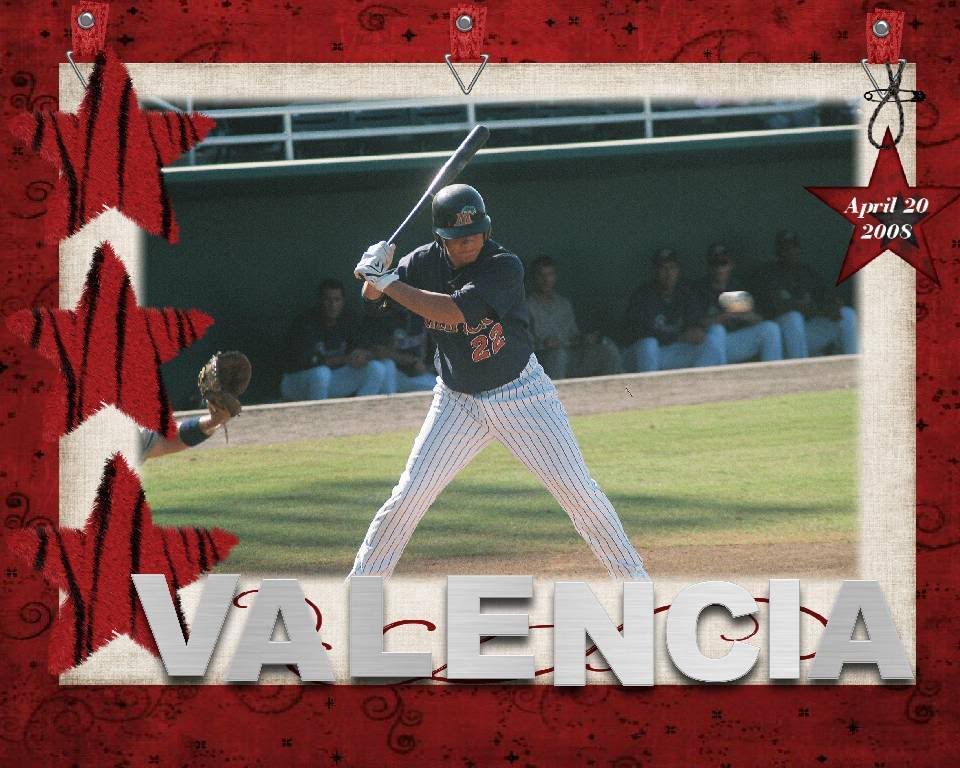
Joe Crede's shoulder received a shot (probably cortisone) yesterday to reduce the inflammation, and so we'll likely need to wait until Sunday to find out if he needs to go on the disabled list. If he does, there isn’t any question what the Twins should do. They should call up third base prospect Danny Valencia. Of course, that doesn’t mean they will.

God help us if they don’t. First, it means we’re going to be treated to a couple of grimace-inducing moves like recalling Matt Tolbert, handing shortstop to Nick Punto and platooning Brian Buscher and Brandon Harris at third base. There’s nothing to like about that last sentence.

And we'll also watch the Twins blogosphere self-combust in a flash of blue flame. Nobody wants that.

But God help Valencia if they do. He will be the latest in a new Twins tradition. In the Ron Gardenhire era we Twins fans have annually psyched ourselves up about a minor leaguer who is having a great year. And annually, we've anticipated similar success to spill over to the majors. And annually, we've been disappointed. The results have varied, but they've almost never exceeded our expectations.

That, by the way, should be expected. Any reasonable sabremetrician would tell you they can’t really predict a two-month performance for a seasoned major league player, let alone someone dealing with jumping to that level for the first time. That doesn’t mean minor league performance is not important. It just means that it is important for telling you about the long-term future of the player, not the near-term results.

So let's look back at the participants in our mid-season tradition. We'll see why we got excited, and whether they met our expectations that year. Then we'll just add a note about the path their career took after that.

2002 – Michael Cuddyer
The Hype: In 2002, the Twins had an incredibly stable lineup for eight of the nine lineup positions. There was Ortiz, Pierzynski, Mientkiewicz, Rivas, Koskie, Guzman, Jones, Hunter and ... the three-headed Kielty-Mohr-Buchanan-stein. Cuddyer was supposed to be the last piece of that puzzle. He was hitting .311 with 20 home runs in Rochester when the Twins traded away Brian Buchanan to make room for him.

Result: His impact in 2002 was good, not great. He played part time for a little over a month, made a trip back to Rochester for a couple of weeks, was called up again at the end of August, and played much more in September. He was the hottest right fielder going into October and so he started in right field for the playoffs, where he struggled defensively, particularly against the Angels. But expectations were that he was that final piece.

He was, but not until 2006, when most of those other guys were already gone.

2003 – Justin Morneau

Hype: Morneau was a top prospect who started the year in Double-A, but was promoted to AAA in late April when Todd Sears was injured. By early June he was hitting .308 with 13 home runs (in a little over a month) and was called up to the Twins, mostly to get time at DH. (Wanna guess who he replaced? Would you believe Chris Gomez?) Twins fans were hoping he would be the power bat the team was lacking.

Result: He struggled. Doug Mientkiewicz had the first base job, so Morneau was going to need to force his way into the lineup to play regularly, but it wasn’t close. He hit just .227 with three home runs before he was demoted at the end of July. He was recalled for September, when he played a lot more, but was left off of the postseason roster and finished the year with a .226/.287/.377 line.

He made a much bigger impact in 2004, but struggled in 2005 and the beginning of 2006 until he broke through, eventually winning the AL MVP in 2006.

2004 – Jason Kubel
Hype: Like Morneau, Kubel was a top prospect who started the year in Double-A, but was promoted in mid-May. BTW, he replaced Morneau, who had been promoted to the majors. Like Morneau, he put up obscene numbers (.343/.398/.560) in Rochester. And like Morneau, he was called up to the majors, this time in late-August so he would be eligible for the postseason. He was viewed as a late-season gamble to provide some punch in the playoffs.

Result: Decent. He didn’t play every day, but when he did, he hit well enough (.300 BA, 2 HR) to make the postseason roster. Later that fall, he tore up his knee in the Arizona Fall League, which delayed his career as a productive regular for several years.

2005 – Scott Baker
Hype: Baker was anticipated because he had raced through three level of the minors in 2004 and even positioned himself to help out the Twins bullpen in spring training of 2005. He started hot with Rochester and ended up posting a 3.01 ERA there for the year, in between several appearances with the Twins.

Result:
Good, but not enough to get the team over the hump. In May he was called up to help out in the bullpen for a week. In July he was called up for one start – and then called up for another a couple of weeks later. He took Joe Mays spot in the rotation at the end of August and finishing with a 3.35 ERA. It was not enough to get the Twins into the playoffs.

It was also enough to position him for the fifth starter job in 2006. And posting a 6.47 ERA over 16 starts was bad enough to keep him bouncing between the majors and AAA (where his ERA was just 2.47) that year. He reached the point we thought he would in late 2007 and has been a top of the rotation starter since, though he's struggled this year.

2006 – Matt Garza
Hype: Garza might have been the most hyped name on this list, and that’s saying something considering Morneau is on it. The Twins had been looking for starting pitching and in one baseball season Garza had rocketed from High-A ball all the way to the majors, posting a 1.99 ERA and 154 K in 135.2 IP. His first start had a rock concert atmosphere.

Result: Bad. He struggled with his command and anything resembling an offspeed pitch, looking alternately good and over matched in starts. Over 10 games (9 starts) he posted a 5.76 ERA.

He began the following year in AAA but was called up at the end of June after reportedly working on his offspeed pitches. He posted a 3.69 ERA in 16 starts before being traded to the Tampa Bay Rays.

2007 – Kevin Slowey
Hype: Slowey kept pace with Garza for most of 2006, but didn’t take the final step to the majors until June 1, 2007, when he replaced Ramon Ortiz in the rotation.

Result: Bad, then good, but not good enough. He struggled, being demoted in July with a 5.84 ERA. He was called up again in September and redeemed himself, with a 3.30 ERA and 29K in 28 innings. Of course, by the then Twins had fallen out of the pennant race.

He carried that September success into 2008, with a 12-11 record and a 3.99 ERA. He’s been less consistent this year, but has a major league career locked down.

2008 – Denard Span
Hype: I dislike ending with this one, because it is the weakest example of the hype machine. Any excitement caused by Span’s .340 BA and .434 OBP in Rochester was counter-balanced by the 678 OPS he posted there the year before. But there was at least a little excitement to see if this year hadn’t been a fluke.

Result: He's also different because he was great. I’d list him as the 3rd most valuable offensive player on the team last year, and WPA agrees. Technically, it didn't matter as the Twins came up one game short of a postseason berth.

So let's review that list....
- Morneau and Garza, the most hyped names on the list, struggled.
- Kubel and Cuddyer did well enough, but neither was a difference maker.
- Baker and Slowey pitched decently, not great, and the Twins missed the playoffs those years.
- Span probably had the biggest impact, the Twins just missed the playoffs, but he was also the least hyped.

Looking at Valencia, his path this year most resemble Morneau's callup year. Valencia hasn't put up the eye-popping minor league numbers that Morneau did at lower levels, but like Morneau, Valencia started the year at AA and really has mashed the ball in his short time at Rochester. Valencia has also been promoted quickly recently, as he was in High A ball just last June. That should be where the similarities end - Valencia isn't going to be another Morneau.

And strangely enough, for Twins fans hoping for a boost this year, they should hope he isn't. The hype machine hasn't served us well this decade.

Monday, July 20, 2009

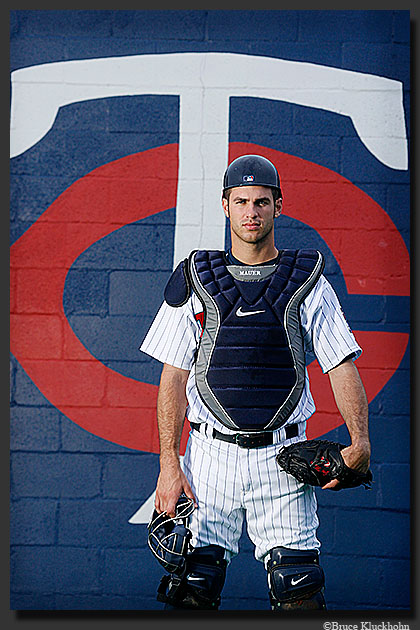
Joe Mauer will Absolutely, Positively, No-Freaking-Way NEVER Hit .400! (Ever.)

Mea culpa. I didn’t mean it. It’s impossible. It can’t be done. I'm a true disbeliever.

Since I wrote that we shouldn’t automatically dismiss a ballplayer hitting .400, Joe Mauer has gone 7-38, dropping his average from .389 to .358. That must stop. So, in an effort at the ultimate reverse jinx, let’s take a look at some additional coverage and find out how there is absolutely, positively, no-freakin-way that Joe Mauer will ever hit .400. (Ever.)

One interesting, but frustrating, story was "Checking the Numbers:MauerQuest" by Eric Seidman on BaseballProspectus.com on Friday. Unfortunately, you can only see the first part of it unless you’re a subscriber, so I’ll attempt to summarize the methodology:

1) Treat Joe Mauer’s remaining at-bats as essentially random events.
2) The chance of a hit happening during those events is based on Mauer’s "true talent level," which he determines to be that of a .318 hitter.
3) Estimate how many at-bats he’ll have the rest or the season, which he determines to be about 420 at-bats.
4) Use a cool Excel function (BINOMDIST for you fellow geeks out there) to determine the chance that enough hits happen to reach a .400 batting average at the end of the season.

There are a lot of assumptions there, and so the exercise ends up being useful in a look-how-I-can-model-the-un-model-able kinda way, meaning it’s for fun only. It might not be used that way, but I’m pretty sure that’s what it’s meant for. And he concludes that Mauer has a .0267% chance.

So what can you take away from it?
1. BINOMDIST. I love this function. I’m going to use it silly.
2. The method itself strikes me as mostly useless, because it becomes so dependent on a players "true talent level." I don’t know what that term really means. Even if we knew exactly what Mauer’s career average was ultimately going to be, how can we assume that was his talent level in the season when he turned 26? If he’s at a different plateau this season, it can make all the difference. Using all the same numbers Seidal uses, look at what happens when you assume that Mauer is really a .360 hitter or better this year:


That bottom line is Mauer’s true talent level in terms of batting average. The up-down axis is his chance of hitting .400. As the assumption of his true talent level increases, so do his chances of hitting .400, and it's exponential. For instance, if he’s really a .380 hitter this year, his chances are 7.8%

3. I wondered what this little exercise would look like if I evaluated Tony Gwynn’s chances of hitting .394 in 419 at-bats, like he did in 1994. I took his true talent level to be a .338 hitter, since that’s what he was over the course of his career.

The answer was .96%, or less than 1%. So Tony was pretty lucky that year, except for the whole "my-baseball-season-was-canceled-due-to-a-labor-strike-while-I’m-just-three-hits-shy-of-hitting-.400-and-kissing-destiny-full-on-the-mouth" thing. (Or maybe his true talent level in 1994 was considerably higher than his career average. I'm just saying.)

4. Seidman concludes his results paragraph with one of the greatest movie quotes of all time: "So you’re saying there’s a chance." Beautiful. We should probably all keep that in mind when referring to this .400 thing. Even if it’s possible, it’s unlikely. Of course, that’s what would make it so great.

That was kind of fun, but the post that blew me away was at a rarely posted Twins blog called Away Games, authored by someone nicknamed Chiasmus. I’m going to summarize it a little, but I hate to do so, because I would really rather you just click through. It’s comprehensive, using statistical methods and data that made my jaw drop, but the author manages to hide all that stuff and write the results in a simple, fun, self-deprecating style. This is exactly the sort of treasures that the internet is supposed to produce.

The author cites a study from 1986 by Stephen Jay Gould that argues that the reason it is harder to hit .400 is that baseball has improved to the point where batting averages are becoming less variable. It’s harder to have outliers of any kind, be it low or high. That’s why players don’t hit .400 any more.

Except that Chiasmus carries it a step further, continuing Gould’s study past 1986 into the steroid era. That’s where he finds some surprising results. First, that batting averages have gone up since then, which means it’s a little easier to hit .400. But he also finds out that batting averages also have become slightly more variable since then, meaning an outlier has an easier time stretching from the herd.

He then uses the method above on grander scale, determining the chances that MLB produces a .400 hitter in any given year. And that also has some surprising results, and I’m not going to share them, because I really want you to click over. Honestly, how many links do I need to give you people?

What do his findings mean for Mauer? It means he’s too young, should’ve come around about 10 years earlier, and that MLB has almost no chance of fielding a .400 hitter this year.

So there you have it. Mauer, and all of MLB is doomed. It’s impossible. It can’t be done.

(But feel free to go 3 for 4 tonight, Joe.)

Sunday, July 19, 2009

The Grudzielanek Twist

If you like dramatic twists, you had to love Sunday afternoon.

Seth Stohs broke the news on Sunday that the Twins had signed Mark Grudzielanek to a minor-league contract. And for the most part, I think Twins Territory stood around in stunned silence, formulating questions. Like, "Um, what was that middle part again?"

Well, that's why the Twins blogging community is always at the ready. First to break the news (Way to go Seth! I'm proud to say I knew you back when...). And second to break down the news. That's my job. So let's dive into some of the questions, starting with the most important....

Is this it? Is this the big move? Are we done?
On second thought, let's work on our dramatic pacing a bit and get to this question a little later. Instead let's start with...

Mark Grudzielanek? Is this another Bret Boone signing?
No, it's not. Grudzielanek has been very good, and I'd go as far as saying this is a complete steal. Or even a big middle finger to the rest of the GMs in major league baseball. If you're a fan of evaluating a guy objectively with some statistics, then you're likely a fan of Grudzielanek.

Up and down the line he has the traits that we've claimed the Twins were looking for. Let's count them: he's a right-handed(1) second baseman(2) who has primarily hit second in the order(3), hitting .299(4) last year with a 744 OPS(5). Over the last three years those numbers are consistent, as he's hit .300 with a 751 OPS.

To put that in perspective, those numbers are quite a bit better than Casilla gave last year. They're similar to what Delmon Young provided in 2008, except of course that Grudzielanek did it at second base.

He also did it while playing sound defense. One might not expect a 38-year-old to be exceptional at a position where you need quick feet, like second base. But the defensive metrics like UZR show Grudzielanek sported above average defense last year, and the year before, and every year since 2002. He's hasn't been a liability with the glove.

If you're looking for more subjective opinions, you could ask the Royals. After starting him for the last three years, they offered him arbitration, exposing themselves to a $4-5 million paycheck if he accepted. He didn't, stating at the time that he wanted to play for a team with a chance at playing in the World Series.

Ok, so is this it? Is this the big move? Are we done?
Easy does it. Dramatic pacing, remember?

Grumble. So if this guy was so good, how come he was available?
Injuries might have played into it. Grudzielanek only played in 86 games last year due to some back and ankle problems. He hasn't exactly been an ironman in his time in Kansas City, averaging about 110 games.

It's also worth noting that the market for second basemen this offseason was truly depressed. The top guy, Orlando Hudson, didn't sign until after spring training had started. He's been the bargain of the free agent season. A quality guy like Adam Kennedy had to settle for a minor league deal with the Devil Rays. He eventually had to catch on in mid-April with the Athletics, where he's being called their MVP.

It isn't inconceivable that Grudzielanek, with his injuries, was put in a position similar to Kennedy. Considering he had turned down a guaranteed $4-5 million deal, he might have hoped for another break. Or maybe he really was waiting for that last chance at a World Series. I don't know.

Here's what I do know. If Grudzielanek was playing in 2009 like he did in 2008, and the Twins traded for him, we would be a lot more excited about it.

Is this it? Is this the big move? Are we done?
It breaks my heart to say it, but yeah, this is probably The Big Move.

It probably shouldn't break my heart, because Grudzielanek compares pretty well to most of the other names we were considering. He's certainly better than Julio Lugo, the other freely available talent. I like him better than Jack Wilson. He's comparable to Kennedy and Cristian Guzman. I would only put him a shade below Felipe Lopez.

That leaves two guys who he is clearly worse than. Yunel Escobar of the Braves would almost certainly require a king's ransom, considering the Braves are publicly stating they would NOT give him up for Matt Holliday. In fact, since he was being dangled for a bit bat, he might not be available given that the Phils are racing away from the rest of the NL East.

The other guy, of course is Freddy Sanchez, who is a perfect fit for the Twins, even if his rather expensive contract vests next year. I don't believe the rumors reported by Sid Hartman that the Pirates were asking for Francisco Liriano in return, but Pirates GM Neil Huntington is no stranger to the art of leverage and public relations. He spent this week giving low-ball offers to Sanchez and Wilson, which simultaneously cleared the way for a trade while reminding rival GMs that he can keep these guys.

So the optimist looking for a deal might suggest that Grudzielanek at least provides leverage in this little game. A skeptic might wonder, given Grudzielanek's availability, why the Twins didn't make this move a couple of months ago. Or at least back in mid-June when they sent Casilla down for the second time. The timing of it looks an awful lot like Smith trying to get himself one more bargaining chip.

But I doubt it. Grudzielanek waited eight months to sign with a team that has a chance at the World Series. I'd be shocked if the Twins didn't make it clear to him that he would be their preferred starting second baseman. For better or for worse, this is the final twist the front office will be giving us. Time to sit back, and try to enjoy the rest of the show.

Update: I just heard Bill Smith talk about this on his show, and he's considerably less definitive about this trade than I thought he would be. It also sounds like the font expect Grudz to be available until mid-August. That gives Casilla one more chance, limits the impact of this deal and leaves the door wide open for a trade in the next week or so.

----------------------------

The Twins may or may not make another move to fill their needs at second base, but let's not forget the bullpen, or maybe you would like to see what our competitors are up to? You can get a ton of information about all of that, including previews of the Twins payroll situation in 2009 and possible other minor league call-ups in the TwinsCentric Trade Deadline Primer 2009 Edition. You can download it IMMEDIATELY and be neck-deep in this trading pseudo-season.

Tuesday, July 14, 2009

Whence the Optimism?

"Who cares about Derek Zoolander anyway? The man has only one look, for Christ's sake! Blue Steel? Ferrari? Le Tigra? They're the same face! Doesn't anybody notice this? I feel like I'm taking crazy pills!"
- Mugatu in Zoolander


Hold it – you mean I’M the optimistic one? This is going to take some getting used to.

The pessimism about the Twins making a significant trade before July 31st is everywhere. Joe Christensen kicked off the skepticism, even as he was detailing a trade target. Monday’s comment section reflected it. Then, as I went to lunch, La Velle E Neal and numerous callers on KFAN stated emphatically that the Twins would likely sit this one out too.

And I started to wonder – am I taking crazy pills? I’ve blogged about trade deadlines since 2002, so I was around in 2003 when they made that last significant trade. (And I trashed it, by the way. We all did. It seemed ridiculous at the time.) Which means I’ve covered all of the ones that are supposed to prove that the Twins will stand pat. So let’s review them. (If I can link to them, I will, but only the last three are still on the internet.)

2008 – Last year the primary target was a right-handed hitting third baseman and I wrote about that topic twice. The problem was that there wasn’t much available. Adrian Beltre turned out to be ridiculously expensive (and was terrible this year) and you can say the same thing about Garret Atkins and Kevin Kouzmanoff. The exception was Casey Blake, and of course he belonged to a division rival.

Conclusion: At the position of greatest need, there just wasn’t much. And we knew that. We just chose to ignore it.

2007 – This year hurt. We started talking early about trades because the team was struggling in a manner similar to this year’s. We talked about Ty Wiggninton, but in retrospect the Twins couldn’t afford to give up the middle reliever that the Astros did to eventually get him. Dmitri Young looked like an ideal fit, but Nationals GM Jim Bowden signed him to an extension instead.

Really, on the scale of dumbass contract extensions, this needs to be top five. Young had been floundering his way out of the league for years, both due to health and behavioral issues. Down to his last chance, he produced a monster year, making him the perfect trade candidate for a franchise looking to build. Instead, they signed him to a 2-year extension for $10 million, despite already having Nick Johnson signed through 2009 too.

The Twins have been victimized several times this decade by dealing with some incompetent organizations. In 2001, the Blue Jays agreed at the last second to the final trade piece that would’ve replaced Matt Lawton with Shannon Stewart, but ran out of time. Last year there was the Jarrod Washburn fiasco with the Mariners. And there was this mess with the Nationals. Of course, Young has had a total of 150 at-bats for the Nationals so far over the life of that extension. Nice to see Karma staying on top of things.


By the time the trade deadline showed up, we were debating whether or not the Twins should be buyers or sellers, and when they traded Luis Castillo, we assumed they were sellers. To this day I believe that the Castillo trade (a major gaffe, BTW) was done to free up payroll for another move that never materialized. Looking back, it’s clear the Twins were tapped out financially that year. They had signed Ramon Ortiz for $3.1 million late in the offseason and it pushed their payroll over $70 million for the first time. You’ll recall it was also the year they signed Ben Revere considerably below his slot value.

I’m also convinced this trade season is what convinced Terry Ryan he needed to move on. Like I said, this one hurt.

Conclusion: Financial flexibility and a couple of ill-fitting teams resulted in a stasis that couldn’t be overcome.


2006 – Again, the Twins were looking for right-handed power, and again it’s questionable about whether there was really any to be had. In the deadline recap I forgave the Twins for not trading for Alfonso Soriano because it was rumored they had offered Scott Baker and Jason Kubel and been turned down by – wait for it – Nationals GM Jim Bowden. Soriano played two more months for their last place team and left via free agency that offseason.

Apropos of nothing, the Nationals are in last place in the NL East again this year.

More embarrassing for me is that I ripped the Twins for not acquiring one of the two right-handed bats that were moved that offseason. One was Ryan Shealy, who is still kicking around with the Royals and has all of 17 major league home runs since then. That’s not good, but it’s better than the other guy, Craig Wilson. Wilson hit four home runs for the Yankees that year, and has hit one more in the majors since.

Conclusion: Again, there just wasn’t much out there in terms of high-end talent, and that which was available was controlled by a delusional and short-sighted general manager.

2005 – This one hurt more. We talked through a ton of options, like Soriano, Wigginton, Shea Hillenbrand, Lyle Overbay, Carlos Lee and Jorge Cantu. A week before the deadline, Ryan even said publicly that he thought they were going to make a move. Nothing happened, and I wrote very little about it because I had come down with a 102 degree fever and my whole body was swelling up. Alright, I walked into that one. Take your "I thought that happened immediately after college" fat joke now while you can. I notice that none of those players were actually traded during the deadline, and I'm pretty sure this is the year it ended up being eerily quiet at the deadline.

It's also worth noting that by the time the end of July rolled around, the Twins were playing pretty miserable baseball, or at least they were judging by my posts.

Conclusion: The Twins were again looking for a bit impact guy and that player ended up not being availabe to anyone.

2004 – In 2004 the Twins were doing well and they had received a boost from this Justin Morneau kid. So all the buzz at the deadline was about whether the Twins would be able to trade away Doug Mientkiewicz. Make that the moody Mientkiewicz, who had become so distraught over possibly being traded that he pulled himself out of the lineup late in July. That led to this little tirade...

Finally, Dougie
Doug Mientkiewicz's legitimate sensitivity and illegitimate martyr complex deserves its own column, but as far as trading him goes, it doesn't sound like the Twins are close. Doug reportedly can't believe nobody wants him. Uh, believe it Dougie.


Because Terry Ryan shouldn't be the only one trying to work a deal for Doug. Mientkiewicz's agent, who must be getting a good chunk of that $7 million contract that Mientkiewicz is getting, is likely also working the phones. If Mientkiewicz is a Twin tomorrow, rather than doubt the organization's commitment to him, he should start by looking in the mirror. He also might want to ponder if he might be a little more driven to concentrate through this mess if he wasn't guaranteed a $4 million payday next year.


If Doug wants to prove that he's a valuable major league first baseman again, he may have to do so the same way Justin Morneau just did - by waiting for his opportunities, playing his butt off, keeping his self-pitying trap shut, and not taking his major league playing time for granted.

Is that a tough lesson for a major league player and gold glove winner? Yes. But there are tougher options. Like walking away from $4 million guaranteed. Or being out of baseball by 2006.

Thanks for indulging me on that. I laughed out loud when I reread that 3rd paragraph. I swear the only time I really think my writing is any good is several years after I’ve written it. But I REALLY enjoy it then. Boy, was Mientkiewicz an ass during that whole episode.

The popular hope was that the Twins would get back a pitcher, with Kris Benson from the Pirates being mentioned most often. Actually, he was the second most mentioned name. His wife, Anna Benson, was mentioned more. As she should be.

Anyway, both were wishful thinking. The primary goal of trading Mientkiewicz was getting his $4 million contract off the books for 2006, so the Twins were willing to take whatever they could get. They ended up in a four-team trade that successfully ditched Mientkiewicz and got back a minor league prospect named Justin Jones. He ended up being injury prone, and the last I heard of him he had a knee injury in 2008 while pitching in AA for the Washington Nationals.

Conclusion: If we had any expectations for a significant trade, shame on us. It was Doug Freakin' Mientkiewicz.


So let’s take a look at those conclusions. In most cases, we ended up being disappointed because the Twins needed an impact player, and there just weren’t that many available. When dealing with scarcity, everything needs to go right for those few names that fit the bill. If you’re dealing with a difficult GM or you can’t swing it financially, or the market is just slow, you’re out of luck.

This year there is no scarcity of players. That’s the silver lining for Twins fans who have had a front row seat to watch the worst collection of second baseman in the major leagues. Even finding an average second baseman would provide a significant boost to this team. Just look at some of the candidates:

Adam Kennedy – The definition of an average second baseman, and his GM is Billy Beane.

Felipe Lopez – A gamblers pick, since he’s as likely to be terrible as tremendous for any two-month stretch. And the DBacks GM, Josh Byrnes has already started dealing.

Freddy Sanchez & Jack Wilson – Sanchez is close to the perfect fit for this team. His $8 million option next year, which others view as a deterrent, might even be a benefit in the minds of the Twins. Wilson won’t bring the the lumber, but he brings a glove this infield sorely needs. And the GM of the Pirates has also been actively swinging reasonable trades.

Julio Lugo – He’s average, but he gets on base. Plus, Red Sox GM Theo Epstein might be willing to let him go for a song. And the Twins can afford that contract over the next year and a half.

Cristian Guzman – There’s a lot of scary stuff here, but he’s hitting .300. And the Nationals have a new acting GM, Mike Rizzo, who seems to be reasonably sane. They’ve also completed a decent trade already.

This year there isn’t a shortage of options, there isn’t a shortage of money, and it appears there are some competent GMs on the other end. It shouldn’t even be particularly challenging. All the Twins need to do is make sure the competence extends to their half of the table to make this thing happen.

And that last sentence might be from where much of the pessimism comes. If so, shame on you. It's not like we're saddled with the Nationals here. If it's nuts to believe that a franchise that has this much success this decade can pull off a fairly simple trade, than I’ll continue to happily pop those crazy pills.

Sunday, July 12, 2009

Opening Bell

Louis Winthorpe III: Think big, think positive, never show any sign of weakness. Always go for the throat. Buy low, sell high. Fear? That's the other guy's problem. Nothing you have ever experienced will prepare you for the absolute carnage you are about to witness. Super Bowl, World Series - they don't know what pressure is. In this building, it's either kill or be killed. You make no friends in the pits and you take no prisoners. One minute you're up half a million in soybeans and the next, boom, your kids don't go to college and they've repossessed your Bentley. Are you with me?
Billy Ray Valentine: Yeah, we got to kill the motherf****** - we got to kill 'em!

- Dan Akroyd (when he was funny) and Eddie Murphy in Trading Places


You might hear the dread silence of three days without meaningful baseball. I hear an opening bell.

I suppose some would say the trade deadline “season” really begins around June 1st, but the All-Star break signifies when things get serious. For Twins fans that should be doubly true. Check that – triply true. Let’s count the positive signs for a deal getting done.

1. The Twins have at least one position of extreme need
2. There are plenty of trade candidates available
3. The Twins have financial flexibility, both this year and next.

Add them up, and I don’t think I’ve been this sure about the Twins making a trade since the Johan Santana death watch.

The Twins rank 30th in the league in OPS at second base, and they’ve done so while having a below average defense. Finding a mediocre middle infielder, both offensively and defensively, would provide a significant lift to this team’s performance and to Twins Territory’s morale.

Fortunately, there are several middle infielders who qualify available, and some of them are considerably better than mediocre. Joe Christensen has broached the subject of acquiring Freddy Sanchez, and there’s also his teammate Jack Wilson. And there are plenty of others, depending on what you’re looking for.

Looking to do no more than plug a hole? How about infamous Twins killer Adam Kennedy from the floundering Athletics? Those willing to gamble a bit might favor the upside of Felipe Lopez on the Diamondbacks. For those interested in a three-way deal, there’s the Braves Yunel Escobar. For those willing to take back a little salary, there’s Cristian Guzman and Julio Lugo.

Every one of those guys is a realistic trade target. If you want to dream bigger, how about Dan Uggla or Brian Roberts? (Emphasis in that last sentence should be on “dream”.) And of course we haven’t even talked about the various relievers that might improve the beleaguered bullpen.

So I suspect that’s going to be the focus of TwinsGeek.com for the next few weeks, or until the first big need is filled, whichever comes first. To kick it off, I’ve partnered with Seth Stohs, Parker Hagemann, and Nick Nelson to offer the Twinscentric 2009 Trade Deadline Primer. It is 65 pages and 30,000+ words breaking down the trade deadline from a Twins fans point of view. It includes:
• Breakdowns of the Twins organization, looking at strengths and needs, both now and in the future.
• Team Reviews on the other 29 teams, looking at whether they are buyers or sellers, and what they need and have.
• Profiles on over 100 players that the Twins could, or should, have interest.
• Essays on the Twins payroll situation in 2009 and 2010 and internal options they have.
I’m responsible for about one-quarter of the content and had in editing almost all of the rest. It’s available for download for $9.95 using this button.** Buy Now And if you aren’t satisfied with it, let us know and we’ll refund your money.

So while today represents a little vacation for major league baseball, it also represents an awfully fun season for the fans. The closing bell rings on July 31st. Given all the opportunities the Twins have to make a significant move this year, I’m hopeful they won’t end up like Mortimer and Randolph Duke.

President of Exchange: [Randolph Duke has just collapsed with shock] Mortimer, your brother is not well. We better call an ambulance.
Mortimer Duke: F*** him! Now, you listen to me! I want trading reopened right now. Get those brokers back in here! Turn those machines back on!
[shouts - it echoes pathetically throughout the trading hall]
Mortimer Duke: Turn those machines back on!


-----------------------------------------------------------------

** I anticipate some people will be disappointed that some of the bloggers who you’ve supported for years are offering a project but demanding payment for it. I understnad it, but I have no reservations whatsoever about doing this, and here’s why:

This is the eighth year I've operated this site, and during that time I’ve seen a lot of very good Twins blogging sites go away. Actually, I’ve seen so many go away I’m hesitant to mention names, because I am going to forget them. But off the top of my head, I miss Will Young’s extensive analysis of the organization. I miss Twins Junkie’s interviews. I miss TwinsTerritory.com’s community and the Dickie Thon Twins Board discussions. And I miss Bat Girl’s sass.

I miss them, but I don’t blame them for stopping. This is a labor of love, but it IS ABSOLUTELY A LABOR, and we all have other loves too. I walked away from this site in October of 2005 because my energy was giving out and I didn’t see a future. And it’s worth noting that even after I returned I post roughly half as much as I used to.

This project represents an attempt at finding the future I couldn’t find in October 2005, not just for myself, but for the entire Twins blogging community. I’m not saying I want people to buy this to support the bloggers whose content they read every day. But if you value their work enough to give them your attention every morning, perhaps you might like special content from them a few times a year. If you enjoy their writing, you’re almost guaranteed to enjoy this book.

And by the way, I also hope you’ll care enough to give us feedback on it. We have a email address that we can all access at TwinsCentric@gmail.com, and I would love any thoughts you have on the idea, the project, the book, or future endeavors.

Friday, July 10, 2009

Whew. Royals Acquire Yuni Betancourt.

I mentioned Wednesday night that several other bloggers and I will be releasing a new publication on Monday, and it will center around the trade deadline. As part of that, we had a section where we talked about players the Twins might acquire, and I was responsible for writing about Yuniesky Betancourt.

Unfortunately, the more I research about him, the more worried I got that the Twins might actually trade for him. Word came down this morning that the Mariners had pulled him out of a Tacoma game just before game time, and then I got really worried. Today we found out that it was a different AL Central team, the Royals, who traded two minor league pitchers for Betancourt.

So my writeup is ruined - and I couldn't be more pleased. Here's what I wrote up, in case you're wondering:


Yuniesky Betancourt | SS | Seattle Mariners
Betancourt doesn’t really justify anything more than a tweet except for one thing – he just feels like the kind of guy the Twins would get. He’s athletic, but underachieving, and the local media/blogosphere might burst into blue flame if they acquired him, but the Twins would say their scouts see something else. Kinda like the Kielty/Stewart trade. So let’s spend 100 words on him.

He’s the Mariners shortstop, and a 27-year-old (as far as we know) Cuban refugee who was promoted because of his slick glove and contact-hitting ways. The previous Mariners administration made him a centerpiece of their future with a guaranteed contract that pays him through 2011, but never pays him more than $4 million per year.

He signed that deal in 2007 and the decline started in 2008. He’s never been one to draw many walks (though he doesn’t strike out much either) and he hasn’t reached double-digit home runs. But that was supposed to be secondary to his defensive prowess.

That prowess has now been absent for a year-and-a-half and counting. Last year his Ultimate Zone Rating was -12.6, meaning he gave up almost 13 runs more than the average shortstop. This year, he’s at -8.3, which puts him on pace to be even worse.

So there’s absolutely no good reason to acquire Betancourt, and the Mariners would likely be glad to get rid of him themselves. Which is why I can’t shake that feeling….

Wednesday, July 08, 2009

Up, Among the Stars

Antoine: As for you sir, have you read "Don Quixote"?
Cyrano: I have, and found myself the hero.
Antoine: Be so good as to read once more the chapter of the windmills... Windmills, remember, if you fight with them...
Cyrano: My enemies change, then, with every wind?
Antoine: ...may swing round their huge arms and cast you down into the mire!
Cyrano: Or up, among the stars!


- Cyrano de Bergerac

These days I hear plenty of descendants of Antoine Comte de Guiche. They're on broadcasts, the radio and print. They're telling me that Joe Mauer isn't going to hit .400. It's not a reflection on Joe, mind you, but nobody is going to hit .400. Nobody can. In the modern game, it's impossible.

But increasingly, the reasons behind their statement strike me as kind of fuzzy. Mathematics are sometimes mentioned, suggesting that even one small slump dooms the effort. But those mathematics haven't changed since Ted Williams hit .406 in 1941.

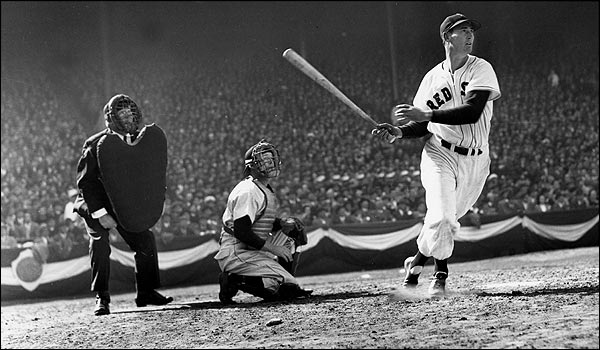
Of course, that’s the real reason people ardently believe hitting .400 can't be done. It’s been 68 years. That's what drives the other reasons that are offered, such as the improvement of field conditions, the increased role of bullpens, or the better fielding of players.

But that's not reality. Evidence suggest that players are far more likely to hit .400 in this modern era than they were for the last couple generations. Some have already come closer than you think. And for you Twins fans, the evidence further suggests that Mauer is a pretty good candidate to hit .400. If not this year, then in the future.

Since Williams, there are thirteen players who have come within 30 points of reaching the .400 mark. Here's the list:


Check out that "Year" column. In the decade that Williams hit .400, only Stan Musial came close in 1948. In the 50's, only Williams 1957 year makes the list. There weren't any in the 60s, which is why, when Sir Rodney Carew made his run in 1977 it was big enough to make the cover of Time. So that's one close attempt per decade or less.

But more recently, it's become more frequent. In the 80s, there were two players that came close. In the 90s, it happened four times. And in the aughts there have been four more (if you count Mauer).

It isn't becoming harder to hit for a high average. It's becoming easier, or at least more players are getting close.

Looking at that breakdown by decade, the trend makes perfect sense. When was pitching most dominant? The 60s, and since then various rule changes have been implemented which favor the hitters. It's become a hitter's game. We've been seeing more offense than ever before. Why wouldn't we expect higher batting averages too?

And players have been getting close. I knew that Carew needed just eight extra hits, but three players have come quite a bit closer than that. Both George Brett and Williams (in 1957) were within five hits of glory, which is less than one more hit per month. And Tony Gwynn was just three hits shy in 1994. Are we really so sure that Gwynn couldn't have picked up one more hit every other month?

Hitting .400 is eminently possible, and it is more doable now than it has been in the last 70 years. Mauer also looks to be a pretty good candidate to do it. The previous batting titles suggest he has the necessary raw ability, but if you look at the chart again, he has a couple of other things working for him.

Of the thirteen close calls, eleven came from left-handed hitters, which Mauer is, of course. He's also very young, tied with "Nomah" Garciaparra and Todd Helton on that list as the youngest. Players don't need to reach that milestone in their youth. If it doesn't happen this year, it doesn't mean he won't have a few more opportunities ahead of him.

Hitting .400 isn't jousting with windmills. Players had come very close, they've been getting closer, and Mauer is a prime candidate. That doesn't mean it's inevitable or even probable. Seventy years of unrequited effort demonstrate just how difficult it can be. But it also demonstrates what makes it worthy of our attention. And there's plenty of reasons to hope we'll soon see a player raise himself to that level.

Up, among the stars.


------------------------

Wow, three new developments here that I'm kind of excited about. Let's count them down...

#3 - After a week of waffling, it looks like I'm going to the Twins game this afternoon, and I'd be honored if you followed along with me on Twitter. My realtionship with that goofy little service is evolving, but I'm coming to the realization that it's a mighty fine venue for someone who doesn't get to write about 90% of the stuff he thinks about. I just need to discipline myself to actually stop and spit (twit?) it out.

#2 - I'm paying for a new utility that, at least for a short time, I'd encourage you to take advantage of. It's up there in the upper-right-hand corner. You can now sign up to receive an email of each new post that I put on this blog automatically, so you don't miss anything. That might be especially handy during the offseason, but I also thought it might be nice to have as we approach the trade deadline.

#1 - Speaking of the trade deadline, I'd really like to encourage you to stop by on Monday. You'll have a chance then to be one of the first ones to purchase and review a new e-book that I'm putting out with a few other talented Twins bloggers. We'll be finishing, editing and polishing it this weekend, and based on what I've seen so far, I'm pretty excited about it. I'm very lucky to have so many other talented, entertaining, analytical and independent writers cover my favorite team. There will obviously be lots more details on Monday. See you then!

Sunday, July 05, 2009

Tiger Recap

So the Twins come within a couple of bone-headed extra-innings plays of sweeping the Tigers at the Metrodome for the second time this year. And again I walk away wondering exactly how this Tigers team is leading the AL Central.

Which we'll talk about in a minute, but first, let's talk a little about the games.

Friday, the Twins:
1. started a guy (Slowey) who was put on the DL immediately afterwards,
2. watched their team leader (Morneau) ill-advisedly run like a berserker into third base in the fourteenth inning and
3. watched a another team leader (Cuddyer) have one of the most bone-headed plate appearances you'll see all year in the twelfth inning.

#2 has been talked about a lot, but #3 was far less forgivable. In the twelfth inning, Cuddyer strode to the plate with two outs, the bases loaded, and was facing Joel Zumaya who had thrown 342 pitches. OK, it was really just 50, but the point is that he was gassed, and when Zumaya gets that gassed he loses his control. Which he spent the last half of the inning demonstrating.

Patience was required, because the odds of Zumaya successfully throwing three balls into the strike zone (even the ridiculously large one that night) versus four outside of it was (at best) 50/50. And so Cuddyer correctly made sure Zumaya threw a strike before taking the bat off his shoulder. Which Zumaya barely did.

At which point Cuddyer seemingly panicked. The next two pitches were not close, with a high fastball and then another fastball that was at least a foot outside the plate, and Cuddy was hacking at them both. I get that Zumaya is humping the ball up there at triple-digits, but good golly. It looked like an at-bat by someone in the midst of some sort of physical shock.

Saturday - There was some more shaky baserunning in this game, this time by Mauer who didn't take third base in a ground ball to right field and nearly cost the Twins the game. But I really want to talk about Francisco Liriano.

Can we start a rooting section for this guy? In St. Louis last week we got some killer seats and literally pumped him full of happy thoughts for seven innings. Every inning it was "Great job Frankie!" or "Way to battle Frankie" or "You've got it today big fella!" I gotta say, I think it helped. And as we're watching the game yesterday, and as he's working into trouble and then giving up that home run, the person next to me, who doesn't watch baseball is saying "He struggles with his confidence, doesn't he?" Geez, you think?

The thing is, there is a whole state that is on this guy's side, and a state should be able to pump a guy up a bit. For whatever reason, that encouragement doesn't seem to be coming from the dugout. But that's what home-field advantage is for.

Sunday - There is no question that Nick Blackburn is the ace of this staff right now, and it's backed by more than numbers. It's backed by the fact that I feel more comfortable with him toeing the hill than any other pitcher. I don't give a damn how many people he isn't striking out. He's conditioned me now. I expect him to do a great job.

In the middle of today's start, I started wondering what the Twins do with him this offseason. Just based on results, he's a prime candidate to get a long term deal, ala Scott Baker. But the Baker contract hasn't gone so well. And it didn't go well the last time the Twins offered a long-term deal to a low-strikeout starting pitcher. That was Joe Mays.

So I love the guy, but the idea of giving him a Baker-like contract is an idea I'm going to need some time to get used to.

And we need to talk just a bit about Justin Morneau. I swear to gawd that we're overlooking this guy right now. In my mind he is still the most indispensable guy on this roster. I likely know the metrics and what they mean better than you do. I'm just saying - I think this team is worse without him than without Mauer. And that's not a knock on Mauer.
Detroit - So the Twins are 5-1 against the Tigers in the Metrodome and 1-1 on the road. And I gotta say, this Tigers team just doesn't scare me. These division races are usually decided in the 18 head-to-head matches teams play, and I can see the Twins ending up the season with a 12-6 record. And the Tigers aren't going to overcome that.

In fact, for the second time, I came away wondering just how this Tigers team leads the division. And I may have an answer.

Today, Brian Pietrzak of Examiner.com pointed out that the following this Yankees series, the Twins will be completely done with the Yankees, Red Sox and Devil Rays, and have just seven games left against the AL East.

The Tigers have a much harder road later, and had a much easier road so far. They start the second half with three games against at the Yankees, visit Fenway for four games the next month, and still have seven games versus the Rays and four against Toronto. The Twins have just seven games left against the AL East. The Tigers still have 21.

So I wonder if the difference here isn't strength of schedule. In any case, this Tigers team either needs to go on a big time run or play a lot better at home against the Twins. Or this division race is going to turn from a three-team race to a two-team race.

Tuesday, June 30, 2009

Not a Joke

Carson: Judge, I'm doing what you asked. Hobbs is a joke, a nobody from nowhere.
Judge: Yes, that’s just what concerns me, Mr. Carson. It's about time we found out
just who he is and where he's from.


from The Natural

Bobby Keppel is not a joke, and certainly not a nobody from nowhere. We know who he is, and where he’s from.

And yes, that's just what concerns me.

I’ll admit, I thought it was a little bit of a joke the first time I saw him mentioned in the dailies here. It was earlier this season, when the Twins were talking about who to call up (again) to try and fix the depleted bullpen. I expected to see the name Sean Henn (and ultimately, that’s who was called up) but the newspaper also mentioned Keppel.

My face made a scrunchy look. Who? A quick look at the statistics in Rochester confirmed that there was no way Keppel would be called up. At that point he had as many walks as strikeouts. I didn’t doubt the journalists had heard his name from some folks within the organization, but I figured it had been out of context. Because unlike Hobbs, these guys aren’t nobodies from nowhere. That’s especially true for the 27-year-old Keppel, who has been pitching professionally for 10 years.

And his track record is pretty clear. Keppel’s numbers are slightly below-average almost across the board, and I mean that in relation to other minor leaguers. 4.53 ERA. 5.2 K/9. 10.0 H/9. 1.41 WHIP. Those are his numbers in the minors. Keppel hasn’t been considered much of a prospect since 2005. He’s bounced through new organizations in 2006, 2007 and 2008. And now 2009.

The difference seems to be that in this organization, he converted to a middle reliever. It also probably didn’t hurt that he had a minor league contract that dictated he be called up by July 1st or he could become a free agent. The intersection of that contract, his minor league success, and a desperate need in the Twins bullpen got him his callup.

And he was used like a lot of fringe callups are – as a long relief guy in a low-pressure situation. His first appearance was when he relieved Kevin Slowey last Saturday in a game the Twins were already losing. He did well enough, getting through four innings without giving up a run, though the three walks he allowed aren’t usually the way the manager Ron Gardenhire's heart.

And then things changed. Suddenly, last night, he’s pitching when the Twins are holding a one-run lead in the sixth inning. That’s a little strange, but not unheard of because it’s still early in the game. Then he was asked to hold that lead for the seventh inning. That’s more curious. And then he starts the eighth?

That’s a lot more responsibility than Gardenhire usually imparts to a recent callup, and it means one of three things:

1) They see something in Keppel they really like
2) They don’t have a lot of faith in other members of the bullpen or
3) All of the above.

I’m hoping it’s #3, but #2 is in play. Lately those middle innings would’ve gone to RA Dickey, but he looked suddenly hittable Monday night. Jose Mijares and Matt Guerrier are working the eighth (though Mijares is on an awfully short leash), and Joe Nathan is obviously the ninth. That leaves Keppel and Henn, who has done everything in his power lately to ruin any confidence Gardy had.

So we can’t take tonight’s appearance as in indication that the Twins see something special. Gardenhire’s quotes after the game indicated as much, describing Keppel as a pitcher who has a sinker and is fine if he doesn’t overthrow the ball.

But he also indicated that is what the Twins have been looking for this season, and hoped that maybe they found it. Turns out, this year, a player like that has enormous value and you only need to look at this game's Win Probability scores to confirm it. Keppel’s 2.1 innings holding a one-run lead grade out as the most valuable pitching performance of the day. And anyone who watched that game would confirm it.

That's the glorious truth for Keppel: he doesn’t need to be Roy Hobbs to be valuable to this team this year. He just needs to be good enough to defy the odds. I’m rooting for him and hoping a different quote from The Natural comes to ming the rest of the year:

Pop: You’re going down. Roy: It took me a long time to get here. I won’t do it! (Pause.) I can’t. I came her to play ball.

--------------------------

I know, I know. I owe you stuff on the road trip. I'll try and get that up soon. Just needed to talk some baseball again.

Sunday, June 28, 2009

They Built It. We Came.

On our way to St. Louis this weekeend we detoured to the Field of
Dreams Movie Site otside of Dyersville, IA. I can't recommend it
highly enough. Admission is free, and the entire place is so
UNcommercialized that you can't quite believe it. It's like, um, well,
building a crazy ballpark in the middle of a cornfield. Here are some
pictures.

My view
before I choked on that damn hot dog.

Youre going to lose the farm Ray!

In June the corn is only 3 ft high. How do the ballplayers come out of it? Do they wait until the all-star break? Do they crawl out?

View from LF.

After having a catch. Make sure to bring a ball and glove. Playing on the field is encouraged.


Wednesday, June 24, 2009

On the way to KC and STL

Well, thank gawd I don't need to write about that game....

If I did, I'd probably talk about the same thing as I suspect everyone else, namely leaving Blackburn in to pitch the eighth inning. It was absolutely defensible, and with long-term goals in mind it was probably the right call.

It was also something that Gardy would not have done two years ago. And that's what I would like to explore. But I'm not gonna.


Instead, let's talk about the weekend. The Voice of Reason and I will be traveling this weekend and following the Twins, and if anyone would like to meet up, please let me know. Our tentative schedule:

Fri - Field of Dreams and Clinton, Iowa to watch the Snappers
Sat - Arrive in St. Louis Sat afternoon and play with other Twins fans.
Sun - Go to the game
Mon - Drive to KC, tailgate with Nick and go to the game
Tues - Negro League Baseball Museum and head home.

If you're going to be playing with other Twins fans, drop me a line either using the email link above or replying to my Twitter account, which I encourage you to follow this weekend.

Tuesday, June 23, 2009

Dissecting Liriano

As I write this, Francisco Liriano is in line for his third win of the year. But this shiny W isn't going to help anyone feel any better, because this game was every bit as maddening as any of his starts. Maybe more so.

The superfans will point out that Liriano only gave up three runs, and can correctly posit that "he made the pitches he needed to make." That's fair enough. But Shaq makes the free throws he needs to make, and that doesn't make him a great free throw shooter. And Liriano, right now, is not a great pitcher.

And, to be fair, it isn't clear that he has been since the surgery. That's the conclusion I can't help but draw after laboring to figure out what the difference is between Liriano this year and Liriano last year. The rest of this story will expand what I found, but I can save you about 400 words of reading effort by just cutting to the chase: I don't know.

Prior to yesterday's start, he had about the same number of innings he had last year. He also had about the same number of strikeouts and the same number of walks. It's spooky, really. He had given up 10% more hits, but what's really hurt him is he's given up so many more home runs.

So is he having trouble keeping the ball down in the zone? Having trouble inducing ground balls? Not any more than usual. Again, the ground ball/fly ball ratio from last year is almost identical.

Using MyInsideEdge.com, one can pull more granular data, but it doesn't provide a lot more insight. Bert spoke last night about how Liriano is having trouble locating his fastball, and that's undoubtedly true, but he had the same problem last year, and it's dropped something like 3% from last year to this year.

And in a number of metrics, he's better. He's quite a bit better at locating his off-speed pitches than he was last year. He's actually better at throwing strikes earlier in the count. He even gets higher grades for his efficiency, which is really hard to believe.

The only really big difference that I can latch onto is the quality of teams he's faced in the two years. Last year when Liriano returned to the majors I initially noted how many times he faced some bad teams, but looking back, that's almost all he faced.

Of his eleven August and September starts, ten of them were against teams that would end up finishing under .500. This year, he was the Opening Day starter, and thus lined up several times early this season against other Opening Day starters.

Subjectively, the only other thing I can offer, is that this year when things go bad, they seem to stay bad longer. Tonight's game was a good example. In the fourth inning he got two quick outs and then lost the strike zone. It was not gonna be found, or at least not with his fastball. I have almost no ability to really follow a pitchers mechanics, but you could see that his body on every throw was nothing like it had been the pitch before. Maybe when he loses it this year, it stays lost longer, and that leads to more runs.

Or maybe I just have no idea. Check that - obviously I have no idea. I'm open to your thoughts below.

Gomez' Gonads

This was written for the Minnesota Twins Radio Network's Extra Innings, and was broadcast last Sunday after the Twins game.

First impressions can count for a lot. Want proof? Answer this: Is Carlos Gomez a base-stealing threat?

You probably said yes, and so it might surprise you to find out that he has just six stolen bases this year, which is just two more than that speedster Michael Cuddyer. [Editors note: He now has seven.] Of course, we remember our first impression from last year, when he had six stolen bases by April 14th. So what’s happened?

Well, the opposing team is more careful, and unfortunately, so is Gomez, who has become exceptionally cautious about running on the first few pitches. But that’s often all a basestealer gets. Take Tuesday night. Gomez is on first, trying to get an insurance run when there are zero outs.

Pittsburgh tries to pick him off. Then he doesn’t run on the first pitch. Pitt throws to first again. He doesn’t run on the second pitch. Or the third. Or the fourth. After which Pitt throws to first twice. And he doesn’t go on the fifth pitch.

OK, by now two batters have been up and there are two outs. He’s gotta go now, right?

Nope. Stays on the sixth and seventh pitches. Another throw to first. Stays on the eighth, and finally steals second base on the ninth pitch. On a pitchout. That’s right, after being cautious on the first eight pitches, he ran EXACTLY when you shouldn’t have – and STILL stole the base.

And there’s a reason for that – it’s because he’s a guy with 60 stolen base speed - who is on pace for about 15 stolen bases this year. Teams are paying more attention to him – we get it. But it’s time for Go-Go to rediscover his gonads, and reaffirm our first impression.

Sunday, June 21, 2009

Totally Off Topic - Something Fierce


Sorry Twins fans, but this is for my friends.

In the late 80s and very early 90s there was a great local power pop band named Something Fierce that we followed religiously, dancing some weeknights at the 400 Bar until we were all salty messes. They had a fairly sudden ending, when one of the two main song writers (Jeff Carpenter) was in a car accident that he's never fully recovered from.

Anyway, they somewhat reunited this weekend at my college's reunion weekend, and short of a Twins World Series victory, that night will probably be the highlight of 2009 for me. I danced so hard that my 42-year-old hamstrings started cramping up in my sleep this morning. I wouldn't change a thing.

Anyway, this is a clip of their last song "(I Miss You) Something Fierce". I'm afraid it's only the first verse, because I really wanted to get back to dancing. For those of you who remember them, I thought you might like to know that they can still really do a heck of a show (with Jeff present and watching fro the side). For those of you who don't, you can find more about them here and here.

I should also mention that they've selling a compilation of virtually everything they've every recorded, even if it wasn't sold before. You can get that here. I will be.