Saturday, November 07, 2009

Letting Go of Go-Go

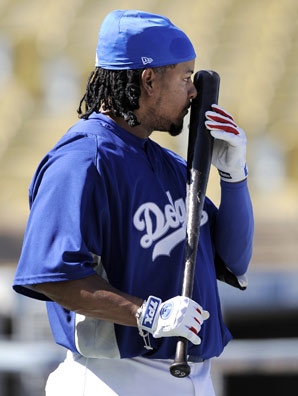
See that picture on the right? That's how I think I'll always remember Carlos Gomez's tenure with the Twins. I loved the joy he played with, and was extremely optimistic about his potential. I constantly grumbled that the Twins were going to ruin the kid by not sending him to Rochester to play every day. The joy and athleticism he shows in that picture captures everything good about Gomez for me.

And I'm saying this because I've just reread the story that you're about to read and it sounds like I'm anti-Gomez. I'm not. I liked him.

But he wasn't any good.


---------------------

We bloggers and stats guys have enough to overcome. So how about we quit actively trying to look like morons?

In the joyous wake of the trade which sent Carlos Gomez to the Brewers for JJ Hardy, several otherwise sane and intelligent writers tried to point out that Gomez was undervalued because of his defense. Maybe that's true, and maybe it's not, but when it's carried it to the point where it's stated that Gomez had any present-value at all to a baseball team, it's officially gone too far.

Gomez is a very good, maybe even elite, center field defender. If you're looking for a statistic to try and measure it, Ultimate Zone Rating isn't a bad one, and his UZR states that he saves about 15 runs over an average center fielder every 150 games in his career.

But you can also measure offensive futility using stats, and OPS is a nice short-hand (and intuitive) way to do so. Here are the center fielders in the majors with 300 or more at-bats last year, sorted by OPS. See if you can find Gomez on the list. (Hint, scroll down):

PLAYER TEAM OPS
Carlos Beltran NYM 0.915
Torii Hunter LAA 0.873
Matt Kemp LAD 0.842
Angel Pagan NYM 0.837
Andrew McCutchen PIT 0.836
Marlon Byrd TEX 0.808
Denard Span MIN 0.807
Shane Victorino PHI 0.803
Kosuke Fukudome CHC 0.796
Mike Cameron MIL 0.795
Adam Jones BAL 0.792
Cody Ross FLA 0.790
Grady Sizemore CLE 0.788
Nate McLouth ATL/PIT 0.788
Rajai Davis OAK 0.784
Curtis Granderson DET 0.780
Jacoby Ellsbury BOS 0.770
Dexter Fowler COL 0.770
Franklin Gutierrez SEA 0.764
Willie Harris WAS 0.757
Nyjer Morgan WAS/PIT 0.757
Melky Cabrera NYY 0.752
Josh Hamilton TEX 0.741
Michael Bourn HOU 0.738
Aaron Rowand SFO 0.738
Colby Rasmus STL 0.714
Vernon Wells TOR 0.711
Chris Young ARI 0.711
Gary Matthews Jr. LAA 0.697
Tony Gwynn SDG 0.693
Alex Rios CHW/TOR 0.691
B.J. Upton TAM 0.686
Rick Ankiel STL 0.672
Mitch Maier KAN 0.665
Carlos Gomez MIN 0.623
Willy Taveras CIN 0.559

Gomez wasn't just bad at that plate. He was awful. Eye-watering. Breathtaking. His badness approached "evil".

And how much did his defense make up? Not much. A bump in OPS of 4 to 5 points is generally worth a single run over 500 or so at-bats. So let's add a column which points out just how many runs better or worse each of these guys was over Gomez:

PLAYER TEAM OPS Runs
Carlos Beltran NYM 0.915 +65
Torii Hunter LAA 0.873 +56
Matt Kemp LAD 0.842 +49
Angel Pagan NYM 0.837 +48
Andrew McCutchen PIT 0.836 +47
Marlon Byrd TEX 0.808 +41
Denard Span MIN 0.807 +41
Shane Victorino PHI 0.803 +40
Kosuke Fukudome CHC 0.796 +38
Mike Cameron MIL 0.795 +38
Adam Jones BAL 0.792 +38
Cody Ross FLA 0.790 +37
Grady Sizemore CLE 0.788 +37
Nate McLouth ATL/PIT 0.788 +37
Rajai Davis OAK 0.784 +36
Curtis Granderson DET 0.780 +35
Jacoby Ellsbury BOS 0.770 +33
Dexter Fowler COL 0.770 +33
Franklin Gutierrez SEA 0.764 +31
Willie Harris WAS 0.757 +30
Nyjer Morgan WAS/PIT 0.757 +30
Melky Cabrera NYY 0.752 +29
Josh Hamilton TEX 0.741 +26
Michael Bourn HOU 0.738 +26
Aaron Rowand SFO 0.738 +26
Colby Rasmus STL 0.714 +20
Vernon Wells TOR 0.711 +20
Chris Young ARI 0.711 +20
Gary Matthews Jr. LAA 0.697 +16
Tony Gwynn SDG 0.693 +16
Alex Rios CHW/TOR 0.691 +15
B.J. Upton TAM 0.686 +14
Rick Ankiel STL 0.672 +11
Mitch Maier KAN 0.665 +9
Carlos Gomez MIN 0.623 +0
Willy Taveras CIN 0.559 -14

So those 15 runs that he makes up defensively still leave him towards the bottom of the list. He was nowhere near average. He was bad. As in, not good. Beyond shaky. Poor. Inferior. Deficient. Lacking. Flawed. Substandard. Occasionally dreadful. Frequently appalling. Approaching abysmal.

To be fair, when a lot of people praised Gomez's value, their point wasn't really that Gomez was good. It was really:

1) "Hey, we've got these great defensive metrics that I want to show you!" I'm glad we have these defensive metrics. They're a step in the right direction. But a position player's defensive value is almost always dwarfed by the value of their offensive performance. Just because we can measure it now doesn't make it more important than it was a couple of years ago. Just clearer.

2) "Delmon Young is terrible." Which has absolutely been true. I'd love nothing more than to see the Twins bring in a veteran backup that can show Young how to conduct himself on and (maybe more imporantly) off the field. And, even better, threaten to take Young's job if he doesn't straighten out.

But that's far different than saying Carlos Gomez had any present-day value whatsoever. He was never part of the solution. He was always part of the problem. To argue anything else makes us look stupid.

Thursday, November 05, 2009

Silver Linings

The gray cloud of not acquiring Akinori Iwamura has all kind of silver linings which I’d love to dive into today.

Geek Chorus: Actually, you would have loved to dive into them yesterday, but you were too lazy to finish the column.

Yes. Yes, I was. And that was the Geek Chorus, whose job it is to keep me honest. So honestly, while I'm disappointed to not get Iwamura, there are plenty of positive signs to come out that little episode. Like:

Silver Lining #1: The Twins are interested in upgrading at second base.

Geek Chorus: Uh, doi?

"Doi?" You're going with "Doi?" Nicely done. Very retro.

For most of the nation, this is a "Doi." But those folks don’t root for the Twins, who could trot out at least two reasons to not upgrade:

1) Nick Punto played competently there down the stretch and
2) Alexi Casilla is out of options

The Twins might still mention either or both of those reasons later this offseason, just as Bill Smith did in his interview with TwinsCentric for the Offseason GM Handbook two weeks ago. But neither stopped the Twins from trying to acquire a competent replacement who was going to cost them just short of $5 million next year.

Geek Chorus: Provided it didn’t cost them a B-level prospect – god forbid.

Yeah, the hoarding mentality remains annoying, but there are a slew of free agent second basemen who don’t cost them a B-level prospect, too. Which brings us to…

Silver Lining #2: As good a fit as Iwamura was to plug the vacancy at second base, there are at least a half dozen better fits who will be available this offseason.

When we ranked the free agent second basemen in terms of desirability, Iwamura ranked 6th in guaranteed money, behind Freddy Sanchez, Felipe Lopez, Orlando Hudson, Placido Polanco, and Adam Kennedy. And that list doesn’t include Chone Figgins and Mark Derosa, because they were in the list of third baseman. And doesn’t include potential trade targets like Dan Uggla.

Geek Chorus: Ooh. Dan Uggla. Dan Uggla. The most beautiful sound I ever heard. Dan Uggla. All the most beautiful sounds in the world in two single words - Dan Uggla, Dan Uggla, Dan Uggla, Dan Uggla! I just....

We'll interrupt the Bernstein musical in progress because it's creeping me out a little bit. But the Geek Chorus has a point. I may be guilty of a Polanco Crush, but that's only because Uggla is the girl who is way too far out of the Twins' league to be crushing on. He is Caroline Mulford to Polanco's Molly Ringwald.

Geek Chorus: Now who is the creepy one?

We'll move on.

Silver Lining #3: The Twins recognize that Brian Buscher is not the answer.

Geek Chorus: Unless the question is "Who can strike out more often than Delmon Young?"

Yeah, how about that? Last year at this time Buscher was being touted as two-thirds of the answer at third base because of how he hit lefties. But last year, he not only posted a .235 batting average and a 676 OPS, but he struck out 35 times in 136 at-bats, which was the worst ratio on the team.

Geek Chorus: Careful. This is where one of your more anal-retentive readers points out to you that at-bats are not synonymous with plate appearances.

Super. And this is where I point out that when you're splitting hairs so your boy comes out slightly ahead of Young and Carlos Gomez in flailing futility, you've already conceded the point.

Buscher needs to find a nice non-competitive team that can give him some time playing consistently against right-handers. Maybe there is still time for him to find his way out of the wilderness and into the promised land.

Geek Chorus: Let my people go. (Oh. I guess we did.)

Silver Lining #4: There is a decent chance the Twins think Mike Redmond is coming back as a player.

Why, of all the moves the Twins could have made to the 40-man roster, did the Twins drop Buscher, their main option as a bench bat last year? It's not like there weren't other candidates. Deibinson Romero is a 23-year-old third baseman who is still struggling at High A ball. Trevor Plouffe is a 23-year-old shortstop at AAA who has struggled offensively at every step in his major league career. Is 28-year-old Justin Huber more likely to have a productive role next year than Buscher?

Well, Smith mentioned last month that there is another left-handed bat available:

"Buscher was essentially a left-handed pinch hitter if we needed it. We had pretty good balance. [Jose] Morales was another guy. When he was up for September, he was a switch-hitter, but he’s a better left-handed hitter."

Geek Chorus: So Morales replaces Buscher on the bench, and you think that means Redmond must be coming back as backup catcher? That's a stretch. It might mean just as easily that Redmond is NOT coming back. Can the roster support both Redmond and Morales?

Let's see - five bench spots belong to Brendan Harris, Gomez or Young, Casilla or Tolbert, the backup catcher and...yeah, I think there's room for one more. I'm going with it.

Geek Chorus: Well, I'm withholding my endorsement.

Maybe I should modify #4 to read that it looks like Morales is in the Twins' plans next year. That, by itself, isn't especially good news. Morales' minor league history isn't especially promising. But he had a hot start, cooled considerably, and could end up thrust into a role which he's not ready for...

Geek Chorus: Much like Brian Buscher.

Precisely.

Thanks for stopping by, and make sure to stop by TwinsCentric.com where our first book is now available. We'll see you on Monday.

Wednesday, November 04, 2009

We Have a Book!

We have books.

Real, live, turn-the-page, display-it-in-your-collection-of-baseball-stuff books. That's it, over on the right. It's TwinsCentric's first REAL book, and I can pretty much guarantee it won't be the last, because meeting tomorrow night to plan our first Minnesota Twins Annual.

But that's tomorrow and today is today, and you can get our first printing of our first book today by clicking here, or following the link from TwinsCentric.com. Thanks so much for you support and feedback. We really are having a lot of fun writing these.

And I'm having a lot of fun writing a story about the silver linings of Tuesday's Akinori Iwamura fiasco, but it's not ready for publication. Stop by tomorrow and we'll go over them all, including what it might mean for Red Dog's future with the Twins.

Provided I finish writing it. And after I buy about a dozen of these books.

Tuesday, November 03, 2009

Buscher and Rage and Nothing

You'll see this later, but I can't wait much longer to spit it out: DAMN! Damn, damn, DAMN!!!!

One of the early signs that this blog was going to turn from technical experiment to tragic little obsession took place on January 31, 2002. On that date, the Twins had signed relief pitcher David Lee to a contract - and there was no mention of it in the local papers.

I whipped myself into a self-righteous rage. That was a significant signing, or at the very least a signing with some delicious implications. How could their be no coverage? So I sat down and wrote 400 words comparing Terry Ryan to a Pyrolobus fumarii and this blog (with a few notable breaks) has been dedicated to exploring Twins minutia ever since.

Which bring us to yesterday's minutia, and the infinite implications it represents:

Minnesota Twins outright Brian Buscher to AAA-Rochester.

Implication #1: DAMN! Dammity-damn-damn, dammit!! It looks like the Twins just missed trading for Akinori Iwamura. And it was close enough that they made a roster move to clear space for him.

I guess we're skipping straight to dessert, or what looked an awful lot like dessert, until it was snatched away by Pirates GM Neal Huntington.

The compelling aspect about the Buscher roster move was the timing. The Twins have plenty of time to make their 40-man roster decisions, and the most obvious reason to clear a spot now is to open a space for a new player in a trade. So what kind of players are traded within days of the end of the World Series?

A specific kind of player is usually traded at that time. It's a player who has an option that a team can pick up, but whose option the team doesn't WANT to pick up, because they don't need that player.

(For instance, the Chicago White Sox has a $12 million option on Jermaine Dye for 2010 that they're unlikely to exercise. But that doesn't mean that nobody else would be willing to pay $12 million to Dye for 2010. So rather than just let him walk as a free agent, you can bet that White Sox GM Kenny Williams was on the phone this week asking other GMS if they wanted to trade for Dye.)

That kind of player was traded today when Iwamura was traded to the Pittsburgh Pirates today. We wrote up Iwamura in the TwinsCentric Offseason GM Handbook. We said:

Akinori Iwamura*:
Tampa Bay Rays
Age: 30 (DOB: 2/9/79) | 2009 Salary: $3.25M
2009 Stats: .290/.355/.390, 1 HR, 22 RBI
The Rays have a $4.25 club option for Iwamura, but it’s quite feasible that they could buy that out for $250K given that they already have a strong starting infield unit with Ben Zobrist, Jason Bartlett and Evan Longoria. If Iwamura hits free agency, he’d be someone the Twins would need to take a long hard look at. He was limited to only 54 games in 2009 by injury, which might make him an even better bargain.
Estimated Contract: 2 years, $8M

We were right that he was going to be available, but we didn't anticipate the Rays would trade that option rather than just not exercise it.

Before I heard that Buscher had been outrighted, I had heard from both local and national sources that the Twins were in final talks over Iwamura. Now, I hear stuff like this all the time, but the Buscher roster moves raises those rumors to another level.

I'll stop short of saying there is NO reason to make that roster move at this time if the Twins were not expecting to acquire a player, because there could be something personal going on with Buscher that we don't know about. But the timing of it is exceptionally strange. Usually the timing for this kind of move points to a second move.

So - damn. Iwamura has a career OBP of .354 and plays league average defense at second base, which are two thing the Twins didn't do in 2009. He's been a leadoff hitter for most of his MLB career, which would've played nice at #2 in the order, though he does bat left-handed.

So he's not an exceptional player, but he's a clear upgrade over what the Twins trotted out at second base last year. Losing him isn't going to cripple the offseason plans, and there are plenty of other, more positive implications to this move. But it looks like the Twins missed out on someone they wanted, and someone who would have made lots of sense.

Which brings us back to that entry from 2002. David Lee never played in a game with the Twins that year. He was sent to AAA a couple weeks before the Twins broke camp. All of that outrage and fine literary effort was ultimately for nothing. Like, it seems, this latest one.

Sunday, November 01, 2009

It sounds like a couple of teams held onto their potential free agents this weekend, and that's both good news and bad news for our Twins. We'll start with the (kinda) bad news...

Freddy Sanchez signs a 2-year, $12 million contract with the San Franciso Giants.

First, lets see what the TwinsCentric Offseason GM Handbook had to say about Sanchez...

Freddy Sanchez*
San Francisco Giants
Age: 31 (DOB: 12/21/77) | 2009 Salary: $6.1M
2009 Stats: .293/.326/.416, 7 HR, 41 RBI
A .300 career hitter, Sanchez would be a nice acquisition for the Twins. The Giants say they won’t activate his 2010 option, but are interested in signing a multi-year deal with him before he hits the free agent market.
Estimated Contract: 3 years, $21M

You'll remember there was a fair amount of interest around here in Sanchez prior to the trade deadline, or prior to him fighting through knee problems prior to the deadline. He ended up getting traded to the Giants, did them almost no good because of said knee injuries. So the Giants didn't activate their option and did get him to sign a multi-year deal instead. Nice job by them.

But there's plenty of silver-lining surrounding this cloud. First, Sanchez signed for less than we had predicted, which is a good sign for the market. Second, even though Sanchez isn't on the supply-side any more, the Giants aren't on the demand-side any more either. Whether or not they signed Sanchez, they were going to sign somebody, so it doesn't change the overall complexion of a plentiful second baseman market.

The next news was about the third baseman market:

Geoff Blum signs a 1-year contract for 1.5 million with the Houston Astros.

Significant? Probably not. Or at least hopefully not. Blum was the at the bottom of the list of free agent third basemen in the Handbook:

Geoff Blum
Houston Astros

Age
: 30 (DOB: 4/26/73) | 2009 Salary: $1.1M
2009 Stats
: .247/.314/.367, 10 HR, 49 RBI
Blum would not be a big-name signing. Most would probably not know that Blum has played in 109 or more games each of the past 10 seasons. Although he has played nearly every position on the diamond, he has been the Astros’ primary third baseman the past two years. However, his career OPS is .700, and it has not been higher than .705 since 2002.

Estimated Contract: 1 years, $1M


I'm putting this in the category of "good news" just because Blum strikes me as exactly the kind of guy the Twins might have settled for at the last minute in a Tony-Batitst-ICK kinda way. He's bad enough that I would consider Brendan Harris a better overall fit as an every day third baseman. And that's a fragment of a sentence that makes me feel unclean.

----------------------

I hope to have some very exciting news regarding the hard copy of the TwinsCentric Offseason GM Handbook by the middle of this week. Thanks everyone, for your patience.

I'll also be at the Taste of the NFL tonight. If anyone has any advice about the event, I'd love to hear it. And I'd love to talk a little Twins with you if you happen to be there too.

Wednesday, October 28, 2009

On Contests, Nick Punto and Oil Wrestling

I'm betting that title got your attention, huh? Let's count them down in order....

1. Over at TwinsCentric.com we started a contest to try and predict the Twins Opening Day roster. You just click over from the main page, fill out the roster the way you think it will look on Opening Day, and win a prize if yours is the closest. So pull out your crystal ball and go at it.

2. I filled out mine and almost immediately wanted to change it. I basically decided that the Twins would re-sign four of their free agents and that would pretty much be the end of the offseason. And that still might be right.

But I wonder how soon Joe Crede and his agent Scott Boras are going to be looking to sign a deal. Probably not soon. And so if the Twins re-sign Orlando Cabrera and then take a gander at all those free agent second basemen, I wonder if they don't sign one of them and move Nick Punto to third base. It's defensible, and the more I think about it, the more I suspect that might happen.

3. Speaking of Punto, I happened to compare his on-base percentage to those shortstops in MLB who had at least 500 at-bats. His .337 OBP last year ranks 11th of 20, sandwiched between Miguel Tejada and Rafael Furcal. I still say he doesn't make a bad shortstop, especially if his defense returns to where it was before 2009.

4. And finally, I've been blogging this since 2002. I've spent plenty of hours wondering where it would lead. And now I know that all of it was a complete waste of time. Because yesterday I got this email from Judd Spicer, who writes for GameDay and is a 'sports blotter' on the City Pages site. And is apparently the most brilliant blogger of all time:

For immediate release--

This Friday, October 30th, City Pages sportswriter Judd Spicer will be participating in an evening of women's oil wrestling, battling for the universal pride of those who cover sports for a living. Spicer's aim is to "dispel the notion that sportswriters are tubby, hot-dog-eating, booze-hounds that write about sport instead of participating in the field of battle."

His opponent in the exhibition match: The tenacious Amanda Hansen, former contestant on ABC's "Big Brother" and current finalist for 93x's "Ultimate Xgirl" competition. To learn more about Amanda and her Xgirl quest, please visit and vote for her here. (SFW)

The Event: An Evening of Women's Oil Wrestling, sponsored in part by "Seconds Out Boxing Promotions" (Facebook Page)

Start Time:Friday, October 30, 2009 at 8:00 p.m.
Location:Robert Bar in Mounds View
Street:2400 County Road H2
Tickets: $15 for General Admission
Special Guest Judge: "Golden" Caleb Truax
Get your pre sale tickets at www.vitalculture.com

Spicer vs. Hansen - Never Question The Power of the Pen

Writer, schmiter. Spicer is a blogger, and I gotta say, I'm ashamed my brainstorming never included oil wrestling with a fetching lass.
Or, at least not that I'm going to admit.

Tuesday, October 27, 2009

The Polanco Crush

One of the more interesting things about writing the TwinsCentric Offseason GM Handbook was the internal debates that raged. The obvious ones are about Twins players. For instance, Nick Nelson and I have never seen eye-to-eye on whether Carlos Gomez or Delmon Young should be the Twins starting outfielder. I believe Young should play simply because the Twins have a substantial investment in both players and Gomez can play in Rochester. Nick believes Gomez should play because Nick is terribly, almost tragically, wrong.

A smaller debate flared up about the value of Placido Polanco during our meetings, mostly because I have a man-crush on Polanco, and have ever since he was with the Phillies. To me, he's a top-notch defender and a terrific #2 hitter. Polanco's career batting average is .303 and his ability to avoid strikeouts borders on legendary. In my offseason blueprint, I wrote:

"The market for second basemen is so thick you can take your pick. I’m budgeting up to $7 million for Placido Polanco, Freddy Sanchez, Mark DeRosa, Orlando Hudson or Felipe Lopez. Heck, I’ll even jump on Akinori Iwamura if his option isn’t picked up. I’m not that concerned about which one, and I’m not hesitant to offer a multi-year deal."

I wrote that I didn't care which one we got, but if you look at my final grid, the name that's in the slot for second base is "Polanco." And the Twins stealing him from their main division rival would only add to the impact. Mmm - sticking it to the Tigers. I recognize that warm feeling inside is a little ugly. It's still pleasant.

My feelings waned a little bit the final week of the season. Watching the Tigers, the 34-year-old Polanco looked old and tired. His defense, which has always been praised, looked limited. (Though I should mention, his UZR metric is +12.1, which is very, very good.) And while he looks like Chase Utley compared to what the Twins trotted out there last year, his OPS has fallen from 846 to 767 to 727 over the last three years. Of the available free agent second basemen (and there are a lot of good ones) he had one of the worst years.

There's also some question about whether Polanco will be available. The Tigers have a 24-year-old prospect named Scott Sizemore who hit over .300 this year in AA and AAA. He just broke his ankle in the Arizona Fall League, but that shouldn't affect his status for next year. So a possible replacement is in place.

Which means the Tigers have a decision to make. Although Polanco is a free agent, they essentially have a $6-7 million option on him for next year. That's because Polanco will be a Type A free agent, which means that if the Tigers offer him arbitration and he doesn't accept it, he'll cost a signing team a first or second round draft pick. Lots of younger second basemen last year with better years found out how tough it is to sign with a team with that artificial price tag hanging around their neck. If Polanco is offered arbitration, he would likely need to accept it.

The Tigers surely know this, and need to decide if their bloated payroll can handle another $6-7 million for Polanco. Detroit spent over $120 million last year while playing in the most economically depressed city in major league baseball. And they're going to have some raises to give, like to pitchers Justin Verlander and Edwin Jackson. To be honest, I don't know how they could afford their team last year, and I don't know how they can afford it next year, so I'm not about to rule anything out.

We'll know on December 1st if the Tigers are offering Polanco arbitration. I have until then to try and talk some reason into myself. 34-year-old second basemen whose OPS has dropped 120 points over the last two years are not a good investement. They're certainly not a good investment if you need to offer a multi-year contract. I know this, just like I know that it isn't 2007 anymore.

But I still need to get over this Polanco crush.

Sunday, October 25, 2009

The Twins Internal Meetings

So you think the 137-page TwinsCentric Offseason GM Handbook has a lot of info? Try again. According to Minnesota Twins General Manager Bill Smith, it’s a fraction of the info the Twins generate in their annual internal October meetings to prepare for the offseason.

“We review all of the players in our organization from the Major Leagues down to the Dominican Summer League,” said Smith in an interview last week with TwinsCentric for the Handbook. “Each one of the players gets discussed, some more than others. Some are great prospects that don’t need a lot of discussion because it’s pretty clear what path they’re on; where they played this year and where they’re going next year. And others are organizational players that also for different reasons may or may not need a lot of discussion, but we talk about every player in the organization.”

Smith agreed to an interview with TwinsCentric for an appendix to the Offseason GM Handbook, which is currently available at TwinsCentric.com. In a 30-minute, 14-page transcribed interview, he revealed several details about offseason planning and the Twins future, including:
  • It looks like there won't be a Santana-esque rumor mill this offseason surrounding Joe Mauer. Smith is "very comfortable" going into spring training without Mauer signed to a long-term extension, provided he feels Mauer would like to stay long-term. Nick Nelson talks more about this at www.NicksTwinsBlog.com.
  • The international signings of Miguel Sano, Max Kepler and Jorge Polanco are the result of a 10-year initiative to be more competitive in the international player markets, and that Twins fans should expect the Twins to continue to be aggressive in the international market. Seth Stohs dives into that at SethSpeaks.net.
(Just an administrative point for those of you who have already purchased the pdf of the Handbook: we are sending out the new version with the appendix attached on Monday morning. And for those of you who have received the free one-third book, we’re sending you a new version too, with a subset of the interview included. That’s also the version available at TwinsCentric.com right now as a FREE download.)

The work doesn't stop once Smith and his team review their own players. "We talk about our free agents – our minor league free agents, our major league free agents," Smith continued. "We go over all of the major league free agents and attach some kind of a role grade to them. And we discuss every major league organization, where we see them, who might be good trade partners, what they need and what we think they need, what they may have available. So it’s a very, very good meeting."

The meeting occurred last week in Fort Myers. But the Twins don't put their information in a handbook. Instead ends up on enormous multi-colored boards in Smith's office. The long wall of his office is a series of big boards, with the names of each MLB team going across the top. Underneath each are names of those teams top major league and minor league players on little plaques that can be moved around.

"We use these boards every day of the year," Smith explained. "They’re color-coded with birth dates and by position and it really gives you an opportunity to look at a team and see strengths and weaknesses. We update transactions on these boards multiple times every day when somebody sees a trade or an outright assignment or an option or something. We try and keep them up to date."

But not all the players on the boards are under teams. Smith pointed to yet another wall. "We’ve got our free agent board behind you on the wall. Those are all what we call 20-D free agents, who are players that were on major-league rosters this year who have elected free agency." Within a couple of weeks, when players file for free agency, that board will change significantly. "That small board will transform into a huge board once all the major-league guys start coming up," Smith confirmed.

But the purpose of the internal meeting isn't to just gather and organize all that information. Its purpose is to gather opinions and gain alignment. Smith explains, "It’s a communication tool that gets everybody pretty much on the same page. We gather all the opinions. And a lot of the opinions are different. That’s why we do it. And then we move forward."

And "forward" means...

“Frankly, I hate to be this way, but I’m not going to tell you. I’m not going to tell you what our plan is," Smith answers politely.

But fortunately, after that statement, there are 4400 more words in the interview for us to dissect.

And infinitely more than that if you read between the lines.

Thursday, October 22, 2009

Phoning It In: Denard's Defense

Sorry gang, but I'm cooked. The night was spent standing on frigid Fort Snelling fields watching The Boy™'s soccer playoffs. Then a late dinner, an Always Sunny In Philadelphia episode featuring the Phillies "Phranatic" kicking the crap out of Charlie, and I'm pretty much cooked at 9:30.

So I was relieved to see that Parker Hageman from Over The Baggy stopped by yesterday's comments section and brought some insight to why Denard Span's defense might be rated poorly by UZR. In short, the baggy in right field doesn't allow him (or Micheal Cuddyer) to catch balls in the Metrodome that would be likely be caught in other parks. He points out that an alternate system ranks Span's defense much higher.

There's lots more to explore here, but tonight, that's going to be good enough. We'll come back to UZR later this offseason. If you're looking for more debate about it's merits and demerits, yesterday's commentators brought up plenty of good points.

Thanks for stopping by. See you Monday.

Wednesday, October 21, 2009

There's a Stat for That: UZR

There is a question that TwinsCentric didn’t answer, or even raise. We’ll raise it today. Maybe we’ll answer it tomorrow.

One thing we tried to do within the TwinsCentric Offseason GM Handbook is pay increased attention to defense. For instance, I mentioned it in the first half of this review of Orlando Cabrera:

Last year at this time, Orlando Cabrera had plenty of reason to be hopeful about his impending free agency. He was a .300 hitter, a veteran shortstop, and had been a key component to a number of playoff teams over the latter half of the decade. He’d been so good that he easily found himself listed as a ‘Type A’ player by Elias in their year-end rankings.

That last fact turned ugly in a hurry. The White Sox offered Cabrera arbitration when neither side wanted him to return there. Since Cabrera turned down the arbitration and was an ‘A’ player, any team signing him would need to forfeit a first-round draft pick to the White Sox. And with that additional (and artificial) cost, the market for Cabrera dried up like a Sham-wow.

He finally signed with the Athletics in March, but he could only procure a one-year deal for $4 million, essentially signing a “make-good” contract after he had already made good. But give him and his agent credit for having learned their lesson. They reportedly made sure the new contract specified that whichever team has him can’t offer him arbitration if he’s a Type A free agent again.

It looks like he’ll be just that. Alas, the Twins won’t be offering him arbitration, so he might get a better deal despite having a worse year. His batting average and OPS fell to .284 and 705 respectively, but his defense was a bigger concern. The 34-year-old isn’t getting to groundballs the way he used to, and defensive metrics like a UZR of -14.9 confirm that.

(And yes, you can download that, along with 1/3 of the Handbook, absolutely free at TwinsCentric.com. Thanks for asking!)

You’ll notice in that last paragraph that we use UZR or Ultimate Zone Rating. It’s cited a few times in the Handbook, and we referenced it behind the scenes multiple times. It’s become a standard defensive metric, but I worry a little that it’s popularity stems mostly from being readily available at FanGraphs.com.

So I was excited to stumble across this interview with the developer of UZR, Mitchel Lichtman at BaseballDailyDigest.com, conducted by Joel Hamrahi. (Who, apropos of nothing, calls the Handbook “every baseball fan’s dream.” But I digress.) So let’s see how this thing works.

UZR starts with a map of the field that divides it into 22 slices and then divides those up into distances of 30-35 feet. (Just so you can picture it, I threw together the dreadful little drawing on the left.) For each of those spots they know from lots of major league data what percentage of the time a ball is turned into outs.

But it doesn’t stop there. Each of those probabilities are broken down into more granular probabilities based on further conditions. Those other conditions are important, so he specifies them. They are:

- Type, which I think he means as type of hit, but the values are hard, medium, and soft
- handedness of the batter, because it influences positioning and he claims it influences the speed, which I don’t quite understand
- game situation, meaning the baserunners and outs, because is also influences positioning
- ground ball/fly ball ratio of the pitcher, which again he says influences the speed

So, basically you have a huge table that has location and the rest of these conditions as columns, and for every possible combination of those, it has the percentage of time a ball is turned into an out by each fielder.

Based on those percentages, a fielder gets or loses varying amounts of credit for their performance. For instance, if Jermaine Dye catches a ball that 90% of right fielders catch, he gets credit for 10% of an out. If he misses a ball that 60% of right fielders catch, he loses 60% of an out.

Then UZR turns those plays into runs using a very high level metric. It counts an out as .28 runs, an infield hit as .5 runs and an outfield hit as .6 runs. Since every ball is one or the other, I’m assuming that a play by an infielder credits or subrtracts .78 runs, and an outfielders play counts as .88 runs. So I think that if we go back to our outfielder who got credit for 10% of a catch, he gains .088 runs for that catch.

Lichtman goes into more detail, and I think a few of them are important. First, he rightly points out that in his system “fielder positioning is inherent in the results.” He only tracks flyballs to outfielders and groundballs to infielders, so an outfielder who misplays ground balls isn’t penalized. He also adjusts the final numbers based on the outfielders throws. He adjusts for park factors. And finally, an outfielder is never penalized if a gap hit is caught by another outfielder, but is if it is a hit.

That final point is an important one to me, because all this research was driven by a simple question – why is Denard Span listed as such a poor defender by UZR? That’s a topic we didn’t tackle, or even raise, in the Handbook. I hope to jump into some possible explanations tomorrow.

Monday, October 19, 2009

Geeking Out: The #2 Batter

As the Voice of Reason™ and I are kicking back and watching her Phils tonight, I notice #2 Shane Victorino's stats: .292/.358/.445. And I thought - now there is a guy Parker would like.

Because in the TwinsCentric Offseason GM Handbook, Parker wrote a great essay on the importance of the Twins finding a solid #2 hitter, called Never Break the Chain. It starts like this:

In 1986, Bill James constructed a poignant analysis on lineup composition and revealed that the total runs scored and second spot in the batting order had the strongest correlation among any player in the lineup — more than leadoff, third or cleanup. Mr. James noted in his 1986 Baseball Abstract that “many managers tend to waste the second spot in the order by putting somebody there who isn’t one of the better hitters on the team...Too many managers will say ‘bat control’ as if these words were a magic wand, and place some .260 hitter with a secondary average of .150 batting second…”

Someday I want to compose a poignant analysis. Anyway, Parker's essay then covers the Twins woes at the second spot in the order and options they might have this offseason. To get a better sense of the essay, you can download the free 1/3 book at TwinsCentric.com

I wondered what trait of the second batter was most important? On-base percentage makes sense, but so does batting average. Or maybe it's a patience-power mix, like OPS? So I ran a quick correlation between runs scored by teams and the stats their #2 hitter put up. The higher the number, the higher the correlation. Here are the results:

OBP - 0.526
OPS - 0.523
BA - 0.469
SLG - 0.446

It looks like on-base percentage or OPS are a little more important than batting average. That's not exactly ground-breaking, but it's good to know. Because I had also copied all the other stats for #2 hitters, I ran correlations on them too. Here they are:

R - 0.680
H - 0.532
RBI - 0.525
TB - 0.508
AB - 0.451
HR - 0.255
2B - 0.247
GP - 0.158
3B - -0.037

Heh. Shocking. Runs is the most important. So a team that scores a lot tends to have a #2 hitter that racks up a lot of runs. Whoulda thunk?

Still, it's nice to clarify a little what we're looking for from the #2 hitter. As we might suspect, we want them to set the table.

If anyone has any other correlations that they would like to see, make sure to enter them into the comments section. Thanks.

Sunday, October 18, 2009

J. J. Hardy

Supply and demand is a bear. Or at least I suspect it it in this case.

You're going to hear his name a lot. In fact, you probably already have. Every offseason there is one name that rises above the others as a trade target. It's a little silly to speculate who that's going to be this offseason, because the Twins are gathering and planning their offseason priorities. this week. But the early leader is Hardy.

On the left is his writeup in the TwinsCentric Offseason GM Handbook. I didn't write it (I think Nick Nelson did) but I like it because it gives a thumbnail sketch of the important points. Namely:

1) Hardy is young and supposedly very good both offensively and defensively
2) He's available because the Brewers have a decent replacement and because he had a bad year in 2009
3) The Brewers would probably require pitching in return.

By the say, if you would like a dozen or so more thumbnail sketches of trade targets, stop by at check out the TwinsCentric Offseason GM Handbook. You can download 1/3 of it for free! Even Bill Bavasi would recognize that as a great deal.

It's a good overview, but we have a little more room here, so let's break it down a bit.

He is (or at least was) very good both offensively and defensively. Defensively he has graded above average every year he was in the majors, and his minor league reviews mention that it's his defense that will compensate for his bat if he's to have a major league career. Even last year, when he struggled with back problems, his defense suffered a little, but was still above average.

Offensively he was worth drooling over in 2007 and 2008, averaging a .280 batting average with 25 home runs and an OPS around 800. Just to put that OPS in context, Marco Scutaro, who will probably be the highest paid shortstop in this year's free agent market, posted an OPS of 788.

If that was the full story, then it's obvious he's exactly what the Twins need. Of course, if that was the full story, he wouldn't be available. And if he was, he certainly wouldn't be affordable.

Last year was a nightmare for Hardy, medically, athletically and ultimately financially. He had a fantastic spring training, but struggled for most of April before revealing he was having back problems. It turns out those back problems are something that he had been dealing with for years. In fact, it's often overlooked that he had some real injury issues early in his career, missing most of 2004 and 2006 with ankle and shoulder problems.

He surged early in May, and his back problems reappeared in late May. He struggled the rest of the year, posting a 229 batting average and a 659 OPS, about 50 points lower than Orlando Cabrera. The season ended especially disastrously (and possibly litigiously) when he was sent down to AAA in August. That 3-week stint in Nashville is going to put off his free agency a full year, so he'll be a free agent after 2011.

The Brewers are looking for pitching in return, but there was a lot of debate about how much pitching. Others think and offer of Glen Perkins and a high prospect might get the deal done. After all, he struggled last year, he's due at least $4 million this year, and he'll be a free agent after 2011.

I expect it would take more, and it would take more of exactly what the Twins don't have - veteran pitching. The Brewers don't want "kind of" pitchers. They are built to win now, and they want veteran pitchers. The ideal fit for the Brewers would be Nick Blackburn, and given the starting pitching depth (or lack thereof) the Twins have, I can't imagine that happening. Nor would I advocate it.

The problem is that even with all his issues, Hardy is still young, solid defensively, affordable and capable of being a stud offensively. There are a LOT of teams interested in someone like that at shortstop. The Red Sox have been rumored to be interested. He would be a great fit on the Cardinals. The Jays would have a lot of interest if they don't re-sign Scutaro. The Tigers might if they lose Placido Polanco. Ditto Astros and Miguel Tejada. You can count on the Padres, Reds, Cubs and Orioles possible also being interested.

The name is great, and worth talking about. He's appropriately placed near the top of the list of trade targets. But that's also what makes it so hard to get him. Supply and demand is a bear.

Thursday, October 15, 2009

Pitching Around Manny

You could walk Manny here, but the last thing you want to do is put the winning run on base....

As I watched last night's game, with the Phillies repeatedly facing Manny Ramirez in the worst possible positions, I had to wonder - why aren't they pitching to him the way the Yankees pitched to Joe Mauer? That is - basically avoid him. Be happy with walking him. And the answer repeatedly was:

the last thing you want to do is put the winning run on base....

I hear that. Matt Kemp is no slouch. But I wondered, perhaps inanely, just what was the best plan from a purely mathematical standpoint. At what point, when holding a one-run lead, does adding another baserunner change the "expected runs" for an inning from under one run to over one run?

And since I hadn't published anything yesterday, and didn't have any better ideas, I thought I'd punish you folks with the results.

So here's what we're gonna do. We're gonna start with Palmer and Thorn's Run Expectancy Matrix. (Easy does it. It's math, but don't freak out. I'll explain it, I promise. Just stick with me through the next paragraph.) Then we'll see at what point adding a runner increases the expected runs from less than one to more than one. And we'll see if it jives with the common knowledge that you don't want to put the winning run on base.

So first, what is Palmer and Thorn's Run Expectancy Matrix? It's simple. It's a neat grid that shows, given a certain number of outs and people on base, the average number of runs that should score that inning, based on 75 years of major league games. It was published in The Hidden Game of Baseball by Pete Palmer and John Thorn. It looks like this:

OUTSNone1st2nd3rd1st & 2nd1st & 3rd2nd & 3rdFull
0 Outs0.4540.7831.0681.2771.381.6391.9462.254
1 Out0.2490.4780.6990.8970.8881.0881.3711.546
2 Outs0.0950.2090.3480.3820.4570.4940.6610.798


How does it work? Let's do an example. See that number 1.068 in the first row? That means that in innings that had a runner on 2nd base (the column) and zero outs (the row) the team (over 70 years of studying baseball) averaged scoring 1.068 runs that inning.

Now, it's important to understand that this matrx doesn't know who is pitching or who is batting next. It's essentially nothing more than a baseline. But if you understand that, you can use this little chart for all kinds of stuff. And I want to know at what point walking a player puts the expected runs over the value of 1. Here's what is say:

With 0 outs - You don't want to walk a batter when you only have a guy on first base. Doing so increases the expected runs from .783 to 1.38. In any other situation, you're already expecting to give up over one run. So you're OK, provide you don't force an existing runner to the next base. That seems to follow common baseball wisdom.

With 1 out - You don't want to walk a runner if there is someone on third base. (But it's OK if there is a runner on 1st or 2nd base, strangely enough.) You also don't want to walk a runner to load the bases if there are only runners on first and second. This is NOT baseball wisdom, and points out how silly this exercise might be, in my opinion.

With 2 out
- You walk the batter and you don't much care what else the situation is, provided you don't walk in a run. The expected runs never get over one run, unless you're silly enough to walk a run in and have exactly the same situation with the next batter.

So the lesson is that the prevailing wisdom isn't totally correct.
- If there are no outs, walk the guy provided you're not moving another into scoring position.
- If there is one out, don't walk a guy to put runners on the corners. That seems totally counter-intuitive, since it also sets up the double-play. But there it is.
- If there are two outs, walk the guy. Tempting fate isn't a bad option. Especially if the next batter is Jason Kubel.

(I keeeeed. I keeeeeed, Jason. I make funny.)

Have a good weekend folks. See you Monday.

Tuesday, October 13, 2009

There's a Stat for That: Adjusted Runs Prevented

It's hard to argue for or against relievers based on statistics. Relievers can give up other pitcher's runs without their own ERA taking a hit. Hits, walks and strikeouts don't necessarily depict how successful a player was. And of course saves are borderline silly.

What would really be valuable would be a stat that somehow gave credit for stranding inherited runners, but cost a reliever when he got the team into a jam.

Turns out, there's a stat for that. It's called Adjusted Runs Prevented, or ARP.

I've become hesitant to introduce any new stats, because this is when the vast majority of eyes glaze over. I'm going to try it anyway with ARP, because it's just so darn simple. It's also ultimately very, very powerful when talking about relievers. But first, the simple:

ARP = expected runs when a reliever enters a game - expected runs when he left the game.

So say a reliever comes in with runners on the corners and no outs. From studying tens of thousands of previous MLB innings, we know, on average, how many runs will score that inning. It's about 1.9. So if the reliever strands those runners, he gets +1.9 ARP. If he gets out of the inning with just one run scoring, he gets +.9. If two runs score, he gave up more runs then the average, so his ARP is -.1.

Or say a reliever comes in to pitch the ninth inning. The average runs scored in an inning are .56. So if he pitches a perfect ninth, he gets +.56 ARP. And if he gives up a 2-run home run to Alex Rodriguez (for example) his ARP would be -1.44.

If you have some more questions about ARP, leave them in the comments section. We can do some more complicated examples there if you like.

Anyway, ARP is exactly what it is named; it is how many runs a reliever prevented. And those runs aren't random - they're the average runs from decades of major league games. Finally, there is no goofy extra credit for pitching late innings - really valuable middle relievers or setup men often lead the league in ARP. It is an EXCELLENT statistic for showing which relievers have had the best year. It's a MVP stat for relievers.

So who were the top relievers this year? Of the 729 relievers tracked by Baseball Prospectus, here's the top five:
Andrew Bailey (OAK) +29
Michael Wurtz (OAK) +28.3

Joe Nathan (MIN) +28

Matt Guerrier (MIN) +26.8

Mariano Rivera (NYY) +25.8


That third name might surprise some Twins fans. Turns out Joe Nathan had a hell of a year. Remember, he lost ARP runs in those games where he collapsed, but overall he was extremely effective. You can't find three guys in the majors that were more effective than him.

What's more, this was not a one-year thing. Nathan ranked #7 in overall ARP last year. By the way, there was only one other guy who was in the top 10 both years. It's Mariano Rivera.

But it's also not just a two-year thing. Because in 2007 Nathan was #8. Rivera finished 21st that year. And it keeps going...
In 2006, Nathan was #6 and Rivera was #8
In 2005, Nathan was #15 and Rivera was #2.
In 2004, Nathan was #8 and Rivera was #6.

As you go through this list, year by year, there are two names that are on the list over and over - Nathan and Rivera. Those two, and ONLY those two, have been the model of consistency, effectiveness and health since Nathan joined the Twins in 2004.

Now, this doesn't mean that Nathan can't be traded. For the right package of players, just about nobody on the Twins should be untouchable.

But to say that Nathan is slipping, or nearly finished, is almost indefensible. His handful of failures have been more memorable because of when they happened and who they happened against, but objectively they barely dent the successes he had.

However, there is something that is even more indefensible, and that is to say that he can be easily replaced. Or even replaced at all:
- Matt Guerrier? Great this year. But his ARP last year was negative.
- Jose Mijares? His ARP was 12.8, less than half of Nathan's.
- Pat Neshek? Um, you might want to look at Francisco Liriano this year before you commit to someone coming off of Tommy John surgery?
- And the most popular - someone else? After all, Nathan wasn't anything special when we got him...

Wrong again. Nathan was already on that list of ARP leaders back when he was throwing middle relief for the Giants, ranking 24th out of 676 relievers in 2003. He was just two slots below Francisco Rodriguez that year, and that was when KRod was exploding onto the scene.

The doubters can bitch about the stat, but they're going to need bring something tangible to the table besides a couple of bad nights. The dreamers can can talk about a trade, but they're going to need to bring some realistic player packages. And both of them are going to need to bring a replacement for someone who is arguably the second best relief pitcher of this decade.

And that includes 2009.

------------------------

Late addition: For those of you saying we should trade Nathan for "the right package", I really would like to hear what you consider the right package to be in the comments section. Give me teams and names that you think are realistic and would improve the team. Thanks!

Monday, October 12, 2009

Twins Payroll 2010

To me, today is really the first day of the offseason. Yesterday, the day after the last game of the season, is traditionally a day of mourning. But it's also the day that the beat writers talk to the manager. And so today they give us their thoughts on what the Twins will be doing this offseason.

But to be candid, I mostly ignore what I read. I have for years, ever since I read in several sources that Cristian Guzman would re-sign with the Twins. A short look at the payroll situation would tell anyone that cared to look that it was never going to happen. But nobody cared to look. They cared to talk to the manager. And he liked Guzman.

That's one of the reasons I've often run a payroll breakdown for the Twins in the upcoming season around this time. The Yankees series should have driven the point home to anyone that cares to pay attention - payroll is critically important. More important than most want to admit.

How important? Well, consider how you evaluate how a team might do in the upcoming season. First, you evaluate how they did in the previous season. Then you take a look at the players they added or subtracted, or that player you think will improve or decline. So you start with a baseline (the team's previous record) and add or subtract based on their moves.

But it turns out that you've chosen the wrong baseline. If, rather than pay attention to the team's record, you paid attention to their payroll, you would have a better baseline. Statistically, it is a better indicator than a team's record as to how they will do. That's how important it is.

(And to answer the question of the sabremetrically inclined gentleman in the back who is eagerly raising his hand ... No, I haven't compared the correlation coefficient to the run differential. But I can tell you it's in the ballpark. We'll try to get to that sometime this offseason.)

Anyway, payroll counts, whether you want to believe it or not. It has, in the past, been a severe limiting factor for the Twins. That's why I wrote up a four-page analysis of the Twins payroll situation in 2010, 2011 and 2012 for the TwinsCentric Offseason GM Handbook. I and three other hard-working bloggers would sure appreciate it if you would click over and buy it to support us.

But I'm going to copy a bunch of it into today's entry, free of charge, for a simple reason - because it's ALREADY available free of charge. You can request a 61-page sample that is basically 1/3 of the whole book, absolutely free, just by clicking here. And it includes most of what is below.

Why are we doing that? I can't speak for Seth, Nick or Parker, but I'm doing it because I'm tired of the offseason stories being driven by irrelevancies, like whether or not the manager likes Guzman, or happened to whisper some kind words to Alexi Casilla. The latter isn't going to determine whether the Twins go out and sign a second baseman. It's far more relevant whether there are any decent, affordable second basemen on the market this year. And it turns out there are.

So below you'll find the payroll situation for the Twins in 2010, and you'll find a lot of financial wiggle room. At the very bottom I'll also talk briefly about something that ISN'T in the Handbook, but probably should have been.


-----------------------------


Here’s the part of your job you least look forward to: payroll.

Payroll is a limitation for all major league teams, but for the last couple of decades, the Twins have been limited to it more than most. There has been plenty of speculation that could or should change with the opening of Target Field in 2010, but the Twins haven’t announced the level of their commitment to salaries just yet.

That doesn’t mean we can’t give you a guess, especially given that we know how much has been spent the rest of this decade. The chart on the right is the club’s Opening Day salaries as computed by USA Today. We should note that it does NOT include signing bonuses, so that number for 2008 should actually be closer to $66 million due to $8.75 million in signing bonuses paid to Justin Morneau and Michael Cuddyer.

Still, you’ll notice that the Twins payroll has basically leveled off since the announcement of the new taxpayer-subsidized ballpark. And while MLB (and the rest of the world) has faced a recession during that time, we haven’t seen similar stagnation in other teams’ payrolls. Overall, major league payroll climbed 7% across the board over those two years. If the Twins payroll climbed a similar amount, it would be closer to $77 million this year, $12 million higher than it actually was.

So, given that level, we’ll add a 5% increase for 2010 and another $15 million to $20 million bump from the new stadium. Add all that up and you have 95 to $100 million to spend.

Well, not to spend, exactly. Most of that is already spoken for by previous commitments. You have some guaranteed salaries with existing players, and there are more players that you’re going to want to keep while you still control their salaries. On your left, you can see how things are set up, and the salaries of some other Twins farmhands below.

Some assumptions were made to simplify things, so let’s spell them out in case you want to make some changes.

LF/4th OF – Carlos Gomez and Delmon Young will both be eligible for their first year of arbitration, meaning they’re relative bargains, so they’re on the roster for now. I put Young in LF since he’s been there most of Sept, but feel free to move them around.

IF – Nick Punto’s salary is guaranteed, Alexi Casilla is out of options, and Brendan Harris will be eligible for arbitration and end up with a salary somewhere around $1 million. It’s possible you don’t offer him arbitration, but that also seems like a reasonable price for a utility infielder that provides offensive flexibility. Of course, with two infield bench spots, one of the three probably needs to be starting at a middle infield spot. I chose Punto. You’ll need to get rid of one of them to move him to the bench.

SP - In the rotation, Scott Baker, Nick Blackburn and Kevin Slowey seem like locks to return, and Kevin Duensing has likely earned his spot. I could’ve also put Francisco Liriano in there, but I put him in the bullpen so you had a rotation spot for a veteran if you would like. It also moved Glen Perkins off the roster completely, so he’s on the following table, with other bench names that you can use if you like.


--------------------

The story goes on to talk about the 2011 and 2012 commitments, but I want to get to a different point. One question I've received since I wrote this is how confident I am in the $15-20 million bump in payroll from the new field. The truth is that is was an off-the-cuff estimate, with almost no realy analysis behind it. So let's add that now....

A few months ago, we looked at a document from the Metropolitan Sports Commission which suggested the Twins cleared approximately $6 million in concessions and $40 million in ticket revenues in 2007 when their attendance was 2.2 million. Just straightlining that to a 3 million attendance figure adds another $16 million in revenue. If we add another 10% to that number (a reasonable expectation over the last three years) it adds another $7 million. That's a $23 million bump in revenue.

I think we can safely assume that with suites, etc., that number could go a LOT higher. But even if it doesn't, and even if payroll runs at just over 50% or overall revenue, we're talking about a $12 million bump.

Now, I should mention, I don't know enough about the other side of the ledger. I don't know how much the Twins are paying to lease the new ballpark, or how that compares to their lease of the Metrodome. Of course, I also don't know how much their receiving for the various sponsorships it's developed, like the "Target Fields" moniker or the recent deal with Treasure Island.

But a $10-$15 million bump doesn't seem unreasonable. If anything, I'd expect it to be higher.

Sunday, October 11, 2009

The Hurting

What hurts most is that this series could've been won. Instead, it was lost.

All of the lopsided differences, all the salaries, all the statistics, all the intangibles - all of it could have meant nothing. This could have been a reminder of how little we know, of the wonder that can be contained in a single game, of how inequalities can be overcome.

When I see a matchup like this last series, I think of an interview I conducted with Terry Ryan five or so years ago. I was quantifying some players and at some point, he felt the need to point out "The game is a GAME." He wasn't trying to emphasize that it was unimportant. He was pointing out that there are a million different ways to win a game. Some play it one way, and some play it a different way.

The Twins tried to play this series by leaning heavily on their pitching and stringing together hits. They did so because they just didn't have enough power to do it any other way. Joe Mauer was being pitched around, Justin Morneau was out (as was Joe Crede), and Jason Kubel might as well have been blindfolded.

They also, by the way, didn't have the speed, or at least don't know how to use it. Denard Span and Nick Punto were both decent threats, and Orlando Cabrera showed he can still guile his way around the bases a bit, but that's where it ends. One could argue that Carlos Gomez should've been in the lineup more, but anyone stating that needs to be sentenced to actually watching Gomez.

Gomez, of course, was responsible for a couple of miscues over the weekend, as were several other Twins. Any number of things could have gone a little differently - umpire calls, baserunning blunders, laughable at-bats and (maybe above all) reliever implosions. If any number of them goes some other way, everything is different.

That's the problem with playing the way the Twins were forced to play this series - there is so little margin for error. Those rallies and innings that you're trying to chain together are only as strong as the weakest link. And yet, two of the three games were there for the taking, like an umpire sitting ten feet from a fair ball. They were RIGHT THERE. Sometimes several times.

That's what hurts the most. Not that the Twins were a better team. I think by almost any objective measure, they weren't. But they still could have won this damn thing. Instead, they lost it.

Offseason
I've got a whole list of things to talk about this offseason. For those Phils fans out there who are hoping this site will once again become the Phils Geek site, I think you'll be disappointed, though The Voice of Reason™ and I will certainly be watching those games. But I just anticipate too much Twins stuff to talk about this offseason.

Don't believe me? Well, you can start with 137 pages of offseason analysis, if you like. That's how long the new TwinsCentric Offseason GM Handbook is, and you can download it now at TwinsCentric.com. I'll talk more about it tomorrow when we officially release it and dive into the offseason, but if you can't wait to turn the page (and who could possibly blame you?) click on over there and check it out.