Thursday, February 10, 2011

Diamond Awards

The Diamond Awards were held last night, which is a banquet where the Twins present awards from the previous season. It is also a fundraiser for the University of Minnesota Medical Foundation, specifically research surrounding muscular dystrophy, multiple sclerosis, Parkinson’s disease, and ALS. If you would like to see more about last night’s festivities, you can check out their website.

The Voice of Reason™ and I had a great time, but we’re also seriously exhausted. Middle age stinks. So here are just a few quick notes.

- Kyle Gibson seems like about the most humble, coachable guy in the world. When asked by Dick Bremer what he needed to do to go from AAA to the Majors this year, he admitted that he had no idea, but he was really hoping the coaching staff would let him know, and he would work on it. Good plan, that.

- When Joe Benson came on stage, TVOR’s eyes popped out of her sockets like a cartoon character. “Oh, MY. (pause.) HE’S handsome.”

All right. Note to self. Don’t introduce wife to Joe Benson.

- Jesse Crain was on hand to accept an award for outstanding community service. Yes, the same guy who had no real pressure to be there because he has signed with the White Sox. I can’t say enough about how much class he showed, and it was clear just how much he was going to miss the Twins. It was touching, plain and simple.

- Seriously, these are some terrible, terrible diseases. I’ve seen first hand just how devastating they can be to a family. Give a little thought to supporting neuroscience research at the U of M. You can find out more about what they’re doing here.

- The introductions to many of the award recipients were often done by baseball writers. The best? It was Jim Souhan, who was head and shoulders above the rest. Absolutely full of one-liners. If I ever need to have someone host a roast, it’s him (provided it’s not my roast).

- Michael Cuddyer won a couple of awards, which The Voice of Reason was excited about, because he is her favorite Twin. Which prompted this response:

TG: So, is it safe to say that Cuddyer can’t leave the team until Joe Benson arrives?
TVOR: No, it’s not the same thing. It’s “cute & dimples” versus “Oh, my GOD!”

Glad we got that clarified.

- It appears the nickname that Gardy is going to go with for Tsuyoshi Nishioka is “Nishy.” I had thought maybe Yoshi, so I would be disappointed, but this allows me to spell it “Nietzsche.”
(Honestly Bat Girl, it’s like Gardy is baiting you to come back.)

- Gardy really seemed legitimately upset to see so many of his players leave, mostly because he felt so close to them. He went out of his way to make us understand that he feels like they are his kids, and he really missed them.

- If Bill Smith was trying to make Twins Territory even more nervous about a return by Justin Morneau, he did a heck of a job. He went out of his way to point out that their goal was to have Morneau ready to return by April 1st. He even guarded us against expecting him to come back when players report to spring training. So I think it’s pretty safe to say he’s not yet 100%.

- Danny Valencia: “I couldn’t envision my rookie year going any better than it did.”
We feel the same way, Danny. Now get ready for a roller-coaster of a sophomore year.

- Which Twins player had the best one-liners of the night? You won’t guess. Go ahead. List your top five. List your top 10.

Answer: Delmon Young. I might be more encouraged by that than I was about him losing 30 lbs.

- Good lord but Jim Thome is a big ball of positive energy.

- The only award recipient who didn’t attend was Carl Pavano, who instead filmed an incredibly awkward video from Florida. I wonder how that absence would have been received by Twins fans if it was Young. Or how it would have been received by Yankees fans if it was Pavano.

- Pat Borzi of MinnPost.com introduced Joe Mauer by reminding us that he could have been signed by the Yankees this past offseason.

- Michael Cuddyer, in accepting his leadership award, gave a shout out to his wife and all baseball men’s wives for all that they do, their versatility and leadership. At which point TVOR told me that she was counting me as a baseball man and was happy that Cuddy had noticed all she did. And do you know what I said?

“I couldn’t agree more.”

Incidentally, I'm coming up on my 17th anniversary.

- Bert got his lifetime achievement award, and afterwards the Twins announced that they were retiring his number, #28, as a send off to his Hall of Fame induction ceremony.

- And finally, before the ceremony ended, Rod Carew basically walked up to the podium unannounced, and asked that we all think about sending Harmon Killebrew our best wishes. I agree with Sir Rodney. You can leave him your thoughts and comments here.

Wednesday, January 26, 2011

Crystal Ball

What Does Twins 2012 Payroll Look Like?

I’ve been asked several times in the last few weeks what the Twins payroll situation looks like for 2012, a year into the future. Unfortunately, that speculation is a combination of back-of-the-napkin figuring and crystal ball gazing that could be viewed as irresponsible on a major newspaper site.

Good thing I’m a blogger.

So, let’s assume some things:
  1. Both Franscisco Liriano and Delmon Young continue to perform at a high enough level such that the Twins offer them arbitration.
  2. Justin Morneau doesn’t need to be replaced (and his contract doesn’t need to be paid by insurance).
  3. Alexi Casilla and Tsuyoshi Nishioka play well enough that the Twins want them to be the starting infielders next year.
  4. The Twins don’t add any higher-priced veteran relievers for next year, and find enough arms in their system to stock the bullpen.
  5. Kevin Slowey starts this year and does well enough that he’s offered arbitration again next year.
If all that is true, the (very approximate) salaries of 2012's team is over there on the right.

Which leads to a couple of observations:
  1. My best guess on payroll next year is around $130M. If you want to argue about it, that’s what the comments are for. But the jump this year was from $96M to $113M, and $130M seems about right to me.
  2. If that’s true, the Twins have 3 big roles to fill (RF, DH, Closer) and $33M to fill them. That’s a much better situation than they had this offseason.
  3. If one of the starters is traded and Brian Duensing (or Kyle Gibson) takes his place, that’s even more money available.
  4. You’ll notice I didn’t pen in either Capps or Nathan as a closer. I’m quite sure that if either is successful this year, they’ll cost about $10M. So if you want to put one in there, just do a little adding and subtracting yourself.
  5. Finally, there’s a lot of big “ifs.” For instance, if Casilla ends up being relegated back to utility infielder, then the Twins might save a couple of million dollars on his salary, but now they have four positions to fill on $33M. That’s not nearly so enticing.
If you would like to talk more payroll or other Twins stuff, I’ll be at two different events over the next two nights, so flag me down. Tonight I’ll be at the Diamond Awards, and Friday night I’ll be at the Hot Stove League banquet with (I think) a few other TwinsCentric guys. I got the following note from the organizer of the Hot Stove Banquet yesterday:

“Juan Berenguer has been added to the line-up for Ballpark Tours 3rd Annual Last Hot Stove League Banquet & Charity Auction scheduled for this Friday Jan 28th at Carpenter’s Hall 710 Olive Street in St. Paul.

Senor Smoke will join Jim Kaat at the podium as our keynoters. In addition, local author Pete Schilling will chat about the art of heckling & a couple of media usual suspects (not sure who yet) will take part in our Q & A.

The focus of the event is to raise money for the Dunning Little League baseball program & this anti-dome crowd will be able to bid on an auction item sure to ‘bring down the roof!!!!’ The Ballpark Tours gang has raised over $50,000 for the fields at Dunning over the years.”

This is easily the best week and weekend of the long offseason. If you’re a Twins fan, make sure you make the most of it.

Wednesday, January 19, 2011

A Contract Worth Waiting For

So how soon after he signed this 2-year/$16.5 million deal did Carl Pavano fire his agent, Tom O'Connell? Was it a full minute? Or did he throw the crumpled contract in his face as soon as it was signed? None of this has been reported yet, but it had to happen, right?

Don’t get me wrong, I think Pavano is excited to be back. He sure sound genuinely excited, and there have been several reports saying he expressed his desire privately to stay with the Twins from the very beginning. He’s not in a bad place, and clearly likes the situation. I’m happy for him.

But there’s a reason he didn’t sign this same deal back in September or October. It’s because Pavano, who was viewed as possibly the second best free agent starting pitcher on the market, just signed a deal that was worth somewhere between half and three-quarter of his market value.

(That last sentence is not debatable. For instance, Ted Lilly signed for $33M guaranteed over three years. Jorge De La Rosas signed for two years and $21.5M. Hiroki Kuroda gained $12M for one year. Pavano was in their class, if not above.)

Pavano can blame a good chunk of that lost money on the collective bargaining agreement. That’s what allowed the Twins to offer Pavano, a Type A free agent, arbitration. Since he turned it down, it was going to cost every other MLB team a high draft pick to sign him. That severely restricted his potential suitors.

But the Twins had to take a risk to put that loadstone around Pavano’s neck, and his agent didn’t make them pay. By offering Pavano arbitration, they essentially offered him a 1-year/$11 million contract, because that’s how much he would’ve made in arbitration. When Pavano turned that down two months ago, the Twins breathed a sign of relief as it was pulled off the table.

So instead, a month later, he and his agent were without that offer as leverage, and seemingly without any other serious suitors. Thus, the Twins new offer was for twice as long, but at only 1.5 times the price. The Twins essentially got a “buy one year, get the second at 50% off” deal with this signing.

I’m sure Pavano and his agent will put a happy face on the deal, and nobody is going to be unhappy with a guaranteed $16.5M in his pocket. But there is no question – none – that if they had to do it again, they would have accepted that arbitration offer in November. The extra $5.5M now in hand is nowhere near the money that was available in that bush.

(This signing also further strains the credibility of those who might claim that the Twins paid $7M to Capps just so they didn’t need to sign a multi-year deal. By that logic, the Twins would’ve been happier signing Pavano to the same 1-year/$11M contract they essentially offered him in arbitration. We can safely assume that wasn’t on the table.)

The Twins played this exactly right, and deserved the luck that they got. What’s more, the pitching staff suddenly has an abundance of riches - unless this deal leads to some payroll cutting in which they trade away one of their other starting pitchers. It’s not impossible. There have been rumors going back to the winter meetings that the Twins might shop a starter to other teams if they acquire Pavano. Furthermore, the Twins not only have six pitchers for 2011 – they have the same six pitchers under their control for 2012, too. (And don’t forget Kyle Gibson waiting in AAA.)

If the Twins can’t afford it, we’ll likely hear of another trade. But if they can – and the bargain they just got helps - it’s a nice problem to have. Plus, if a move isn’t made this winter, it’ll be a fun topic to talk about as the trade deadline approaches.

Sunday, January 09, 2011

My Favorite Things

Let's Think of Spring and Our Favorite Things

For those of you not in Minnesota, we’re in one of THOSE winters. Since Thanksgiving, I think we’ve reached freezing twice. We’ve been bombarded by record-setting snowfalls. And we’re in the midst of a cold spell (read: not even close to freezing) that is a couple of weeks old with no relief in sight on the 10-day forecast. The word that comes to my mind most often is “oppressive.”

So one starts looking to the future, no matter how far ahead it might be. The only silver lining to this winter is that when spring finally comes (and it’s going to come late, no doubt), there is going to be a shared euphoria that absolutely intoxicating. This state is going to explode like the blooms on the trees.

That’s where my head is tonight – with spring and grass and sun and the marvelous downtown area where I plan to spend a LOT of time this summer. In short, it’s with some of my favorite things that I’m starting to associate with a Twins baseball game.

Food
Let’s start with food, because I’m hungry. And because it’s cold, I’m going to start with…

Comfort Food - Glueks
Check that - let's make that "Comfort Everything." The space is fairly comfortable, seeing as it's practically a Minneapolis institution. The Gluek’s building has been around since 1903 and was completely restored after a fire in 1989. I've also found the crowds pre and post game to be very reasonable considering its prime location.

But what I really get excited about is the food. Their mac n cheese is made with German spaetzle instead of noodles, giving an extra kick of density and satisfaction. The Voice of Reason™ swears by their open-faced turkey sandwich which is also the blue plate special on Wednesdays. Lately, I've been most enamored with The Berliner, an open-faced sandwich of their pot roast. Welcome home.

Burger - Ike’s
I'm sure I'll catch hell about this because burger people each have their favorites, but I'll take Ike's version over everything else around Target Field. It’s the right size, has just the right level of greasiness and comes with a cart of condiments that lets you experiment a bit.

Meat Fest - Fogo de Chao
This brazilian steakhouse is two blocks from Target Field and will serve you enough fresh grilled meat to choke a starving lion. They just keep coming to your table with 14 different types of skewers and give you whatever you're hungry for. It's expensive, but it's a heck of a lot cheaper than heaven.

General - Loon Café
Any list like this needs to obligatorily mention the The Loon's chile - but I'll be honest and say I just don't get it. It is also VERY crowded before and after the game, and any other time that a bar should be crowded. But The Loon does just about everything well - great sandwiches across the board, good service, fun crowd and even the specialty shot - The Grape Ape. I have a good friend to whom this place has basically become a second home. And "second" is in debate.

Sandwich - Murray’s
I've opined about Murray's Steak Sandwich before at length, but it's worth bringing up again, so here's the deal.

Go into the bar - not the restaurant - sit down, order yourself a beer and help yourself to the addictive (and complimentary) garlic toast. Then, order the steak sandwich. Personally, I like it on white bread instead of the panini and also want to make sure it includes the bacon.

This isn't a Philly steak sandwich. It's bite-sized chunks of Murray’s steak, and it is unbelievable. It is like eating one of their steaks, but somehow even better. Is it the cheese? The bacon? The way the steak juice soaks into the bread? Or is it that every bite includes the char-ry texture outside and the tender meat inside? Don't know and don't care. All I know is I miss it like a sibling.

Buffalo Wings - Runyon’s
The buffalo wing craze hit in the late 80s, and Runyon's has been famous for theirs ever since. They don't try to put any fancy twist on the recipe; this is just the ultimate wing, exactly what you want it to be, only better.

Beer
You might be wondering why beer has its own category? But only if you haven’t met me.

Local, Big Beers - Gluek's
They have several taps, but the three you'll want to pay attention to are the three Gluek's brands - a blond, a redhead and a brunette. I like the darkest of them, but it isn't a heavy beer, just a very dark lager style beer called (I think) a dunkel. That's good, because I tend towards the large version of it, served in a liter mug.

Brew Pub - Rock Bottom
It's a national chain of brew pubs, but a good one. They rotate a selection of about a half dozen self-made beers, but risk instead trying one of the couple of casks beers they constantly rotate. Their food is also solid fairly solid, and if you're looking for a fairly light but tasty appetizer, give the soft pretzel a pull.

Beer Selection - MacKenzie's
The further you get from Target Field, the smaller the crowd at the bar, so there is a huge difference between being 2 and 5 blocks away. MacKenzie's is the latter, which is nice because you don't need to fight your way to the couple of dozen taps they have behind the bar. These guys CARE about the beers they serve and aren't afraid to go off the edge of the map to find something they like. As such, you'll find at least a half dozen you've never had before, and when you come back in a month, you'll find another half dozen. That sounds like a pretty good night to me. Two, actually.

Breakfast
Who wants to blow an entire day around the ballpark? Ooh, ooh, me! I do! I DO! So start with a little breakfast before the afternoon game at one of these places.

Cinnamon Roll – Ike’s
The weekend all-you-can-eat brunch at Ike's is fast becoming legendary. The primary feature is the starter - a cinnamon roll to share that is literally the size of Charlie Brown's head. There's plenty more, eggs to order and a family-style plate of everything else you would ever want, but if you're not careful with the "appetizer," it'll all be superfluous.

Ooh, and if you want to shake off last night's festivities, you might want to pony up for the Bloody Mary. I don't drink them, but my wife gets as excited about one as she did about Cliff Lee rejecting the Yankees.

Adventurous - Hell's Kitchen
Hidden about a six-block walk from Target Field is Hell's Kitchen, known for its eclectic food and even more eclectic interior decorating. So when I'm feeling a little less Minnesota Mild, I like to try out the Maple-Glazed Bison Sausage, Huevos Rancheros or the Buttermilk/Cornmeal Pancakes.

Irish Breakfast/Hangover Fixer - The Local
They have a breakfast menu, but who has that kind of patience? Opt for the buffet, and dish yourself an enormous pile of the creamy hash browns. But be careful - they are good enough that you will crave them for months afterwards. You've been warned.

Diner Breakfast - The Band Box
The downside is that this pint-sized diner is way over by the Metrodome, but if you're looking for a true "joint," this is your place. It's been around forever, isn't much more than a counter and some chairs, and is the most affordable place on the list. The breakfast sandwiches are good, but seriously consider the pancakes, which are the size and thickness of a big 'ol diner plate.

Postgame Outside Escapes
The outside game is over, but the last place you want to go is inside. I like to stay outside at one of these options.

Being Fabulous – 7’s Roof
The appeal? Basically, it's that you're on a roof. To be honest, it's not a particularly beautiful view, but it's a roof, it's outside and it's summer in Minnesota. That's enough for bliss.

Not that the bar isn’t beautiful. Lovely people wearing lovelier clothes sitting on plushy couches. Frankly, I'm alway surprised that they'll let me come up there.

Being Young & Stupid – Sneaky Pete’s
Speaking of places that probably shouldn’t let me in, I’m entirely too old to go to Sneaky Pete’s. It is full of very young, very attractive people acting young and attractive. But they will let me in, which is great because it is easily the best people watching place in the Warehouse District. And that’s saying something.

The outside portion is in the back, and it includes both a patio and a deck. Neither overlooks much, but you’ll have trouble turning away from the drama that plays out there at the bar and dance floor anyway.

Ambiance – Smalley’s Alley
I'm not sure why this place calls to me so much. It isn't the beer selection, which is dominated by every kind of light beer imaginable. It isn't the crowd, which is shoulder-to-shoulder substantial before and after a game. And it isn't the food, since they changed the mouth-watering seasoned sour cream.

I'm left with: it's an alley. I just love having a beer in an outside city alley. It feels like you're in a much bigger city, possibly in a different era, next to Wrigley or Fenway or even old Shibe Park. Am I alone in this? I can't be, given just how crazy crowded it is every game night, right? Or do people really just like having five kinds of light beer available that much? (Gawd, I hope not.)

There, I feel better now. Bring on the snow and the cold. I can hold on for another couple of months. But if I missed anything, make sure to let me know in the comments below.

-----------------------------

Another baseball tradition is returning after a year hiatus. The Annual Hot Stove Banquet is back and will be Friday January 28th at 6:00 PM at Carpenter’s Hall at 710 Olive St. in St. Paul. It’ll be hosted by Brad Zellar with special guest Jim Kaat.

I’ve been to this event several times and it really is a wonderful, comfortable and casual get-together of hardcore baseball fans. Tickets are $30 in advance (send a check payable to BPT to 1141 Portland Ave, St. Paul, MN 55104) or $35 at the door. The Voice of Reason and I will be there to talk baseball to anyone else willing to brave the elements.

Thursday, January 06, 2011

On Bert, Zealotry and Jack

Sometimes The Debate Isn't Just About The Player

I don’t get into MVP, Cy Young and Hall of Fame debates too often, and there is a reason for that: too often the debate isn’t really about the player. Instead, it’s a disguised debate between evangelists about their philosophies. And the prize becomes recognition of a paradigm (a view of the world), rather than recognition of a player.

That was especially true about the election yesterday of Bert Blyleven to the Hall of Fame. When Blyleven was first on the ballot, back in 1998, he only received 17.5% of the vote, and it went DOWN on his second try in 1999, when he received the 15th most votes. That’s not necessarily a death sentence, but consider the names at #10-#14: Jim Kaat, Dale Murphy, Tommy John, Dave Parker, Minnie Minoso. None of those guys are likely to make it to the Hall of Fame very soon.

So what changed? Why was Bert different? The cynics slyly ask how Blyleven became a much more deserving pitcher without throwing another pitch? The upbeat way to view Bert’s turnaround is that the process bought the voters some time. And during that time, voters and the public gradually recognized in Bert’s body of work what they didn’t recognize when he was pitching – that he was very, very good for a very, very, VERY long time.

That’s part of the answer, but there’s a more contentious subtext to this election that drove a lot of the passion over it.

Mostly what has changed over the fourteen years of Bert’s candidacy is our philosophy about baseball and some of its statistics. And in this case, the one that found itself on the front line of the battle was the “Win” statistic for pitchers.

A “Win” is basically awarded to a pitcher who is on the mound when his team takes the lead for good. It was a statistic that was considerably more valuable a long time ago, when relievers weren’t such a big part of the game. (It also compensated when pitchers more regularly faced extreme conditions that could significantly impact the ability of the teams to score. For instance, in a crazy high scoring environment - like the old Athletic Park in Minneapolis - a pitcher might give up a lot of runs, but so would the opposing pitcher. A Win was a way of balancing that out.) Like any statistic, it has its limitations, but it still serves as sort of a shorthand gauge of whether a pitcher is generally effective enough to pitch late into games.

Blyleven was perceived by those who have embraced newer pitching as having been wronged by the Win statistic. He had a career 3.30 ERA and was an absolute work horse on the mound – exactly the kind of guy who should have racked up a ton of Wins. But he didn’t, in part because he was often on teams that didn’t score a lot of runs.

Because he didn’t have many wins, he wasn’t perceived as being particularly valuable. That led to not getting a lot of Cy Young voting attention, finishing in the top 10 just four times (including three times in the top 5). Because he didn’t have those credentials, he was in danger of being overlooked for the Hall of Fame.

But along with enlightenment comes a touch of ugliness. Inherent in that attitude is that the sportswriters of the 80s, the first arbiters of history, got it wrong. First, there is a righteousness to those who believe that the evolving understanding of baseball has reached its zenith, instead of a phase that could be proved just as flawed 15 years from now. And second, for a group that has often been mocked and blocked by the Old Guard of writers, this comeuppance is especially appealing. It’s easy to get lathered up and write a scathing “We’re right, they’re wrong” story using Blyleven as the instrument of destruction.

That’s true on the other side, too. The Old Guard responds saying that “internet zealots” are driving the candidacy, and that isn’t so far from wrong. But it removes the focus from the real question: did we under appreciate Blyleven during his career? The battle becomes much larger than that - and much more personal.

The battle doesn’t end with Blyleven. In fact, the next battle might involve a name equally dear to Twins fans: Jack Morris. But roles may be reversed because in many ways Morris is the exact opposite of Blylelven.

Morris WAS appreciated during his career by the Old Guard, finishing his 18-year career with seven top 10 finishes in Cy Young voting and five finishes in the Top 5. That’s one less in each category than Nolan Ryan, a no-doubt Hall of Fame inductee, and Ryan needed a 27-year career to reach that mark.

However, Morris’ career ERA is 3.90 which is considerably higher than that of Ryan (3.19) and Blyleven (3.31). It’s also likely that much of Morris’ recognition was a result of having so many Wins: from 1979 through 1992 he averaged almost 17 wins per year. And that’s partly because he was on very good and strong offensive teams. Finally, Morris wasn’t particularly good at striking people out, another darling stat.

So now it’s the Old Guard’s turn to attack. In particular the question is whether runs is a flawed way to measure Morris. Morris has always admitted he pitched to the score, and we know that pitchers are coached to do so. That certainly explains why his ERA, innings pitched and win totals were so high but his K rate was so low. Perhaps he was as good as he needed to be. A little thing called “Game 7 of the 1991 World Series” might support that.

That’s the sort of argument that could generate a reaction that dwarves anything we saw with Blyleven. When you start messing with runs allowed and runs scored, you’re messing with the lifeblood of most of the advanced metrics. Runs link to wins and losses via Bill James “Pythagorean” Theorem. Then they link to Runs Created, which is the bridge from team performance to individual players performance. That leads to more stats, like WAR and VORP and umpteen others. When you question whether runs accurately evaluate a player’s performance, you call into question the basis of about 80% of new statistics.

The Old Guard doesn’t need to recognize this. They just need to say “Don’t try to tell us Morris wasn’t great. We were there. He was great. And if your new statistics can’t tell you that, maybe the problem is the new statistics.”

Which, of course, is what the debate was really about all the time.

Thursday, December 30, 2010

Dangerous Game

Let’s cover a little Major League news, and then we’ll get down to what matters – the Twins. But first, let’s talk about a game show.

The Game Show
Have you seen “Deal or No Deal?” It’s a game show where there are something like 20 locked cases, each containing a dollar amount from $1 to $1,000,000. Those amounts are all listed on a big board. You pick one case, but you can’t open it. Instead you slowly open the other cases to see the amount of money you DIDN’T win.

That’s the "show" part.

The "game" is that a banker is watching you open these other cases and trying to buy away the case you picked. So, say you get down to the last five cases and know that yours holds one of these five remaining amounts: $1, $5, $10, $100,000 and $1,000,000. The banker offers you a deal of $170,000 for your case. Do you take it, or do you open another case? Deal or no deal?

There are always wrong decisions, but it becomes downright painful when they are strung together. For instance, say you turn down the deal above, open a different case – and it’s the $1,000,000 case. Now yours is just one of four cases, and the amounts are either $1, $5, $10 or $100,000. The banker only offers about $20,000 for your case.

Host Howie Mandel tries to put a positive spin on it – “you could still win $100,000” – but that’s a disaster, right? Five minutes ago your case was worth $150,000 more than it is now. You’ll never recoup that money. But it becomes a real car crash if you turn down that deal and the next case you open is $100,000. Now the banker is generously offering you $5 as the camera zooms in on your spouse who is lying on the floor of the studio audience like a wet noodle.

Doesn’t that sound like fun? No? Well, think about that when you gripe about all these MLB free agents and their representatives, because the experience is similar.

Major League News
In the free agency market, sometimes the offer from the banker is generous early. That’s how players like Jayson Werth or Cliff Lee find their deals. But when that doesn’t happen, the agent and Deal contestants often share a trait – they keep rejecting deals, hoping their luck will change.

If you watch “Deal” often, you can see this behavior all the time. As the breaks go against a contestant, they become more and more desperate to turn things around. It’s a natural reaction. They want to get back to where they “were.” They feel like they lost money and make suspect decisions to try and get back there.

There are four free agents who are in similar situations to those contestants. Yesterday it was reported that one of them, third baseman Adrian Beltre, had lost a suitor in the Oakland Athletics. That is one less case with decent money in it. It isn’t the first he lost.

Beltre was reported to have offers from the A’s and Red Sox that he turned down. The A’s are now going to spend money elsewhere. The Red Sox seem to be out of the market now that they have traded for Adrian Gonzalez (moving Kevin Youkilis to third base).

Beltre was also reported to have had an offer from the Angels that they have since withdrawn. The Angels seem like the only really good option for Beltre, but their offer guaranteed about $20 million less than he and agent Scott Boras expected.

Odds are this will play out fine for both Beltre and the Angels. They seem like a natural fit for each other and Beltre’s “no deal” stance is clearly a negotiating ploy. But the Halos have the freedom to look at another option, like trading for an inferior player while they spend their money on something else. Then that case would be gone for Beltre, too.

So then what happens?

Dangerous Game
For what happens next, Beltre just needs to dial up one of Boras’ other clients: Jarrod Washburn.

Washburn said “no deal” last year to the Twins, reportedly turning down a contract offer early in the offseason. He thought he would get a better deal. After all, he had been excellent for most of 2009, posting a 2.73 ERA with Seattle before a knee injury inflated the mark by a run after a trade to Detroit.

But the offers he received never came close enough to his expectations. And eventually, the cases dried up. He didn’t play in the majors or minors in 2010. Last we heard in November, he was interested in a “comeback” in 2011. But his comeback wouldn’t be from injury or poor play, just from turning down deals.

Washburn wasn’t the only cautionary tale. There was also Jermaine Dye, who reportedly received several offers even late into spring training. He also didn’t think they were commensurate with the 27 home runs and 81 RBI he was responsible for in 2009. He also wants to return though he “won’t do a minor league deal.”

There is no guarantee that either player will get another shot, which is remarkable considering the stats they put up in their last years in the majors. Their sin? Waiting too long to make a deal. Trying to get back to where they “were.”

The Twins
That’s an opportunity that a savvy organization might find value. Both players are great fits for the Twins. For pennies on the dollar the Twins could sign their sixth starter - a southpaw whose fly ball tendencies won’t hurt him in Target Field. They could add their power bench bat, who would be right-handed and able hobble around in a tiny right field in a pinch. Combined, the two players would likely cost about what the Twins paid Nick Punto last year.

That isn’t a half bad idea. But it’s not the point of this story. Because that’s not the only way this game show affects the Twins. Before the Twins sign anyone, they seem intent on waiting for Carl Pavano to find his deal.

Pavano is one of the four free agents I mentioned above, and the game has not gone well for him either. Initially expecting to sign a 3-year $30+ million deal, his cases with the big money have been disappearing. First his "Type A" price tag scared away plenty of teams. Then the Brewers pulled out when they signed Zach Greinke. The Rangers have apparently acquired Brandon Webb. The Nationals have less money to spend after their contract for Werth and seem determined to stick with a one-year deal for The ‘Stache.

Suddenly, it isn’t clear that anyone is willing to give Pavano the years or the money that he desires, let alone the draft pick they need to give to the Twins. He seems to have one case left – the Twins.

Or does he? The Twins have spent the last few years trying to infuse talent into their minor leagues with international signings and trades. Do they really want to give up two high draft picks? Not to mention spend $7-10M that could be spent on other needs? How sure are we that what we’re hearing about the Twins interest from the front office instead of the coaching staff? Or Pavano's agent?

And if the Twins do take away their case? Then Pavano really has a problem. Because he’s saddled with something that even Dye and Washburn weren’t – that high draft pick the signing team needs to give up. Is a team that is marginally interested in him – say Pittsburgh is willing to offer 2 years and $14 million – going to be willing to give up their second round pick for the privilege of paying him that? If not, any deal needs to go through the Twins.

Conclusion
There is a lot of concern out there about the Twins inactivity. The concern isn’t about their pace as much as it is a fear that the Twins just won’t do much.

The hard truth is that they probably won't. I can publish the payroll crunching next week, but it looks like the Twins are going to top out around $110-$115 million in payroll. As you’ve seen here several times, that didn’t allow for much offseason maneuvering. And now it would leave them with only $3-$8M left they can spend.

And so they are also pressing the “no deal” button, waiting for the right case full of talent to appear. It’s a strategy that seems to have worked so far. But like Beltre, Pavano, Washburn, Dye and the unemployed plumber from last night’s game show, they need to be careful not to wait too long.

Thursday, December 23, 2010

Pavano's Market

With Cliff Lee signing and Zach Greinke traded, many sports writers are predicting that Carl Pavano is finally the most desirable starting pitching on the market this offseason. But the market isn’t so sure.

Certainly the pitcher that is getting the most interest is Brandon Webb. Webb has been mentioned locally as an alternate option if Pavano signs with another team, but the truth might be that he is even more desirable to most teams. He has tremendous upside, having been a Cy Young winner in 2006. He’s also four years younger than Pavano. He’s coming off an injury, but that hasn’t scared away teams in the past. Last year the A’s signed a pitcher in a similar position, Ben Sheets, to a 1-year $10 million deal.

But Webb isn’t the only pitcher that might rank higher. When Lee signed with the Phillies, many thought the Rangers would suddenly be interested in Pavano. But not only has that not yet happened, it meant another pitcher was added to the market. The Phillies have made it known that starting pitcher Joe Blanton is available, probably because the Phillies need to cut some payroll to pay Lee.

Blanton is unlike Pavano in that he is a flyball pitcher whereas Pavano was more groundball-oriented this last year. Critics will wince at Blanton’s 4.82 ERA in 2010, but for his career, he has a 4.30 ERA, compared to Pavano’s 4.34. Blanton has consistently “eaten innings.” Most importantly, he’s five years younger than Pavano and locked into a contract that will pay him $8.5 million over each of the next two years. That’s less than Pavano is seeking.

Of course, a team would need to trade for Blanton – but a team would essentially need to trade for the free agent Pavano, too. That’s because any team that signs Pavano is forfeiting a very high draft pick, comparable to the Twins first round picks the last few years. Those have been turned into Kyle Gibson, Alex Wimmers and Aaron Hicks - significant prospects within months of being chosen. Giving up a 1st round pick is similar to giving up a top prospect, which is something the Phillies likely won’t be able to demand for Blanton. So trading for Blanton might actually be cheaper than just signing Pavano.

If that surprises you, you’re probably not alone – I think Pavano and agent Tom O’Connell might be surprised too. They had the opportunity to accept arbitration from the Twins and make $11 to $13 million from the Twins for next year, but that ship has sailed. Instead, they’re watching an $8.5M pitcher who teams need to trade for AND who had a bad year last year leapfrog Pavano. That’s doesn’t exactly inspire confidence in one’s position.

Of course, it all could change. All it takes is one team to lose their head, as the Nationals have already shown us once this offseason. That’s why Pavano – and the Twins – continue to wait. But so far, waiting has helped the Twins far more than Pavano. And it appears Pavano will want to wait at least a bit longer.

Thursday, December 16, 2010

Rushing Pavano

It’s tempting to wait for something you want. The question is how much waiting costs you.

In this case, that something is Carl Pavano. Pavano is certainly worth waiting for. He was the second best starting pitcher on the team, the team’s horse, and proved to be a super-powered Luigi, outdueling the likes of Roy Halladay and Johan Santana.

It also looks like he might be more affordable than we might have thought. Originally, he looked like he would earn at least a 3-year, $30M deal. But the market for his services became a lot thinner once the Twins offered him arbitration and he turned it down. Faced with needing to give up a high draft pick to sign Pavano, the field has reportedly narrowed to:
- Milwaukee (who says they won’t offer more than a 2-year contract),
- Washington (who says they won’t offer a multi-year deal),
- Texas (who everyone assumes would be interested if they lost out on Cliff Lee, but hasn’t pursued Pavano yet) and
- your Minnesota Twins.

It seems increasingly likely that the Twins could re-sign him for just 2 years and $20 million. Or even $2/18 with a 3rd year team option that they can buy out for $2M? Either contract would be a bargain given his performance last year. And with an xFIP (a stat that is a better predictor of ERA than ERA) of 4.02, why shouldn’t he remain effective?

Geek Chorus: It’s not like the mustache from which he clearly derives his superpowers is going anywhere soon.

On the other hand, we found out yesterday what waiting for his price to come down can cost when Jesse Crain signed with the White Sox. It isn’t a surprise that Crain left – the Twins never looked like they were interested in paying the top-flight money Crain received. But it is also clear that the Twins are working within a fairly limited budget, and they aren’t spending that money until they have resolved the Pavano situation.

Geek Chorus: So what was ths cost exactly? Or is this more about what Crain "represents?"

The latter, and losing him and Matt Guerrier signals that the reliever free agent market is heating up. The Twins must address other needs. Their bullpen is almost completely empty. Their bench lacks any kind of real replacement and their starting lineup is filled with players that missed significant time last year. Nick covered this yesterday, and if there is one thing we’ve learned about the AL Central in this last decade, it is that the deeper team usually survives to go to the postseason.

I don’t have real strong feelings one way or the other on Pavano, even at a bargain price, but the timing is important. The high-end relievers are starting to sign, and that’s a market that the Twins can’t miss out on. There is an unbelievable amount of talent out there this year for relievers – a lot of it supplied by the Twins. It is a buyer’s market, and could allow the Twins to establish a strong bullpen for the next couple of years - if they don't miss out on it.

If Pavano really wants to come back to the Twins, and the Twins really want to have back Pavano, it’s time to supply him an offer with an expiration date. By the end of the weekend, we’ll start spending the money that we are offering you.

Personally, I might walk away now. Pavano is great, but he’s not the left-handed ace or right-handed power that should be the top two priorities this offseason, so I can’t justify spending limited money on him. This team signaled how strapped for cash they were when they traded away a pretty decent shortstop for two intriguing but marginal prospects. It will cost at least another $9M to sign Pavano, and that is $9 million that can’t be spent on filing several other needs.

In fact, it sounds increasingly like the Twins would need to trade away one of their younger cheaper starters to find room for Pavano’s salary in the budget. There is a reason why Kevin Slowey has been the subject of trade rumors lately, and it’s not just because the Twins would have six reasonable starting pitchers. They’re never been afraid of that in the past. It's because they would want to get the $3M he could make in arbitration off the books.

I also worry about giving a multi-year contract to a guy who was injured for so much of his career. It wasn’t just New York. This year was only the third time he had ever achieved 200 innings. And while in New York an orthopedic specialist diagnosed him with a hip dysfunction that led to one leg being longer than the other, which they thought was the root cause of all his back/elbow/shoulder problems. He's been reasonably healthy the last two years, but Twins fans who watched his exceptional year might not understand just how rare that was.

But I’ll say this: it’s a close call. If the Twins sign Pavano at a reasonable deal, and he performs anywhere near to what he did last year, the worse case scenario is that he’s a tradable asset next offseason. Best case? He keeps on rolling and finally lives up to the hype that surrounded him in his youth, when he was both a premier free agent signing and the guy who was traded for Pedro Martinez.

And so, neither is a bad option. What is critical is that the decision be made fairly quickly, so that if the money isn't spend on Pavano, it's spend while there are still other options available.

Sunday, December 12, 2010

The Casilla Boogeyman

A couple of months ago it was all so clear. Alexi Casilla would be a starting middle infielder for the Minnesota Twins in 2011. It had been predestined since August, when it became clear that Orlando Hudson was likely to walk away from the Twins as a free agent.

Casilla, after recovering from an elbow injury, had a decent year in 2010, hitting .276, getting on base 33 % of the time and even showing a little more power than we’ve see before. He’s also only 26 years old, and best of all is fairly cheap as this is his first year of arbitration. He looked like a decent replacement -- decent enough that all four of the TwinsCentric guys blueprints chose him to be starting at second base on Opening Day.

But since the trade of JJ Hardy, that all seems to have changed. Casilla has become the default target, a boogeyman that Twins fans should fear. He’s inconsistent. His defense at shortstop is suspect. He’s a question mark. He doesn’t get on base enough or have enough power.

What I can’t figure out is: where were these concerns a month ago? After all, he was slated for 500 at-bats at that time. He was going to be playing a middle infield position. He was the same guy that we were ready to hand a job to.

So, pop quiz, hot shot: Why are we suddenly so concerned about handing him a job now? Let’s make it a multiple choice question…

A) His offense isn’t good enough.
Casilla’s career numbers are under whelming.

(MS-Word is telling me that under whelming is two words. Really? Is overwhelming? No, that works fine as one word. Which raises the question: what is just plain whelming?

whelm: tr. v. 1.To cover with water; submerge. 2. To overwhelm.)

Ok, so Casilla’s offensive career numbers don’t exactly whelm anyone. In his major league career, he’s hit just .249 and got on base at a .306 clip, which are the two things we’re going to care the most about from our middle infielder offensively. What’s more, he’s had some time to show us what he’s capable of, with 958 AB.

The good news? He was better than that last year. He has been quite a bit better than that in his minor league career, hitting .297 with and OBP of .370. And he seems to have a pretty solid idea what the strike zone is, as he walked 13 times last year compared to 17 strikeouts. That ratio is pretty consistent to what he showed in the minors.

He’s also fast, which is the oft-cited reason for having him on the roster. In what is essentially a little less than two season’s worth of at-bats, he has 35 stolen bases. Even better, he only has been caught just four times, a phenomenal percentage.

But the really big question is – if we were ready to hand him the job at second base, is it his offense that we’re really worried about now that he might be playing shortstop? After all, second base is a far more demanding position offensively than shortstop. If he could hold his own there, why not across the infield? In fact, wouldn’t that be a way to maximize his value to the organization?

B) His defense isn’t good enough.

When Casilla basically lost his job at second base in 2009, one of the reasons was his defensive mistakes. He wasn’t very consistent, and he seemed to make more than his share of mental mistakes. Ultimate Zone Rating confirmed his struggles with a ranking of 7.2 runs worse than average that year.

Of course, statisticians would be quick to point out that is a fairly small sample size. The year before, when he played a lot more innings, he was essentially average. Last year, with far fewer innings, he was also essentially average. In his career, over about 1.5 years of fielding at 2B, UZR estimates he has cost the team about 12 runs.

I think that makes people very concerned about him moving to shortstop, because shortstop is a more demanding defensive position. It is not, however, just a tougher version of the same position. It isn’t unusual for players to be better at shortstop than at second base. For instance, Nick Punto played roughly the same amount at 2B and SS while with the Twins. According to UZR, he was about 13 runs per season better at SS.

Twins fans might have been seeing a little of this in Casilla. Last year he played more innings at shortstop than at second base. To my eye, he was competent there, mixing in some Alexi-gaffes with the occasional really nice play. Ultimate Zone Rating agrees, by the way. It says he saved four runs over an average shortstop last year in very limited time. Anyone familiar with UZR would warn that this is a very small sample size, and UZR needs a much larger sample to give much of an evaluation. But there certainly isn’t any evidence there that he can’t handle the job.

Of course, if it doesn’t work out, it’s not like the Twins hands are tied. You might recall that the other guy likely to start in the middle infield, Tsuyoshi Nishioka, has a little experience at shortstop. He was switched over there by a former major league manager, Bobby Valentine. He won two gold gloves there, so I think you would grant me that it’s possible he could work out there.

C) Now we have two question marks in the middle infield.

Sure we do – but who is the bigger question mark exactly? The Twins are about as familiar as they can be seeing as they traded for him while he was still in A-ball. And while I’m sure they’ve done their due diligence in scouting Nishioka, he’s the one that has been playing overseas, against a level of competition that the Twins aren’t completely familiar with.

Casilla isn’t going to need to adjust to a completely different culture and a slightly different game. Casilla isn’t going to be the one struggling to communicate with his teammates and coaches. For that matter, Casilla is officially on the team. Casilla is the (by far) more affordable player. So why are we sure Casilla is the guy that will struggle? Or that he might be the odd man out when a rumor about trading for Brendan Ryan makes the rounds?

D) We had something taken away from us.

This is, I think, the correct answer. Since we received word that the Twins had won exclusive negotiating rights to Tsuyoshi Nishioka, Twins fans mistakenly assumed that Casilla was back in a utility role. The Twins had a flashy new toy from Japan to play with so Casilla would be at the same position he played last year of utility infielder.

Of course, we know now that was never really the case. Nishioka was always a replacement option for Hardy, no matter whether he swapped positions or not. The Twins decided Hardy wasn’t worth what he would make in arbitration (which is likely closer to $7M than $6M), whether that was because of his injuries, speed, or whatever. When it became apparent that he WAS worth that money to other teams, they were able to offer him arbitration and trade him.

But it doesn’t FEEL like that to us. In our minds, Casilla just got a promotion and we focus on the things he doesn’t have that Hardy did. Casilla doesn’t have Hardy’s offensive upside. He doesn’t have Hardy’s consistent defense. He is more of a question mark than Hardy. We concentrate on these things because they were just taken away from us, not because Casilla is being asked to do anything more than we expected from him a month ago. We might justify it with analysis, but I think the motivation is more primal the analytical: we just want our toy back.

Or maybe a primal urge was what drove us to give Alexi a starting job in the first place two months ago – I don’t know. I also don’t know that Casilla is going to thrive as a starting shortstop or second baseman in the major leagues. But I think it’s time to find out. His patience, his speed, his age and his price are an encouraging combination. So quit trying to convince me that he is the boogeyman.


--------------------------------------

The Diamond Awards

OK, so I have that big ticket item to give your favorite Twins fan – even if that person is yourself. It’s a unique opportunity, something they’ll probably remember forever, and it all benefits a good cause.

On Thursday, January 27th, the night before TwinsFest, the 2011 Diamond Awards takes place. This is the banquet that the Twins organization throws where they hand out team awards like Most Valuable Player, etc. It’s hosted by Dick Bremer and Bert Blyleven, features a lineup of Twins greats, and is even televised. Think of it as the Emmys, except in Minnesota and about baseball. Doesn’t that sound like a great baseball date?

And while TwinsFest will be at the Metrodome, the Diamond Awards will be at Target Field. (Don’t ask me where. I don’t have any idea how they’ll be doing that, but I have to imagine it’s a great chance to go behind the scenes there a little.

The cost is $150/ticket (and you can purchase them here), but $100 of it is tax-deductible and it benefits the University of Minnesota Medical Foundation, supporting research in ataxia, muscular dystrophy, multiple sclerosis, Parkinson’s disease, and ALS. And you can buy them now, before the tax year ends.

So let’s count the ways this rocks: you get to dress up for a great date night (1) that includes hanging out with Twins greats (2) at Target Field (3) during the most baseball-starved part of the season (4). Plus, it supports worthy research (5) and can be written off before this tax year ends (6).

Oh, and I’ll be there, too. (Which probably lowers it back that down to 5.5). So bring it up at dinner tonight and I’ll see you there.

For more info, check out their website.

Thursday, December 09, 2010

All About The Money

In case there was any question: it’s still All About The Money.

It looks like the Twins are trading JJ Hardy and Brendan Harris for two minor league pitchers, one of whom is in A-ball and one of whom has been hurt a lot over the last four years. The primary benefit is that it saves the Twins about $9M in money this year. And here’s the punchline:

I like this deal.

I suspect I’m in the minority. I know I was on Twitter yesterday, when the rumored deal didn’t include Harris. But it’s unlikely that Harris was added to the deal by the Orioles; he was probably added by the Twins so they could get his $1.75M contract off the books.

Because, it’s still All About The Money.

The Twins still have a budget to meet, and this trade makes it increasingly likely that the budget went up 10-15% instead of 25-30%. This is why we question whether we should be overpaying for Matt Capps. Or whether or not we should sign a 35-year-old to a 3-year deal for $10M per year to be our sixth starting pitcher. They’re all nice luxuries to have, but they’re luxuries that cost money, and that money needs to come from somewhere.

Last night, the Twins confirmed that they could do without one of those luxuries. They Twins committed to making Alexi Casilla a starting middle infielder when they let Orlando Hudson go. In fact, I think they really committed to that sometime back in August.

And by the way, there were almost no complaints about this from the Twins faithful, which is one of the interesting subtexts about this trade. For all the people suddenly worrying about Casilla’s consistency as a starter because of the Hardy trade – where was that complaint two months ago? Because that’s how long he’s been a starter.

The Twins also committed to Tsuyoshi Nishioka when they bid $5M just to negotiate with him. That commitment isn’t formal yet – Nishioka hasn’t signed – but the organizational commitment is there. And that commitment is going to cost the Twins about $5M/year all told.

That meant the Twins had three starting infielders under and two positions to play them. That’s a nice problem to have, but it’s a luxury, and it’s a luxury that was costing the Twins about $9M ($7M for Hardy, $1.75M for Harris).

The trade isn’t about the players. The trade is (repeat after me) All About The Money and what that money can buy. The trade is about Hardy and Harris for Nishioka, two minor league pitchers and $3.5M to spend on another couple of relievers.

That’s the first thing I like about the deal. There’s more, but it comes at a price. And that price is losing Hardy.

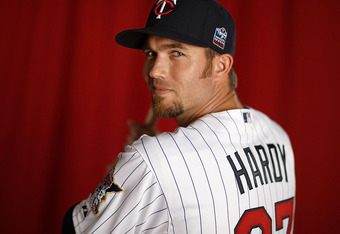
JJ Hardy
Last year, as winter turned to spring, I graded the Twins offseason moves. There was only one A+:

Trading for JJ Hardy (Grade A+)
If Hardy goes belly up - and he's certainly gone belly up a couple of times in his career - then I'm dead wrong. But the Hardy move was almost the perfect way to start the offseason. The free agent market was stacked with second basemen and third basemen, but there was almost nothing at shortstop. Acquiring Hardy didn't just boost the lineup. More importantly, it gave the Twins the ability to sit back and let free agent prices come down. They did, and that's what made the Hudson and Thome signings possible.

Perhaps it was because the Hardy trade happened so early, or because it cost Twins fans the lovable Gremlin Carlos Gomez. But it seems like it was almost overlooked. It easily the most difficult of the offseason moves and I'll argue that it provided a solid basis for everything else the Twins did.

Hardy didn’t go belly up, though I think it’s fair to say he also didn’t meet expectations.
· His OPS was 714. If he would have had enough at-bats to qualify, that would’ve ranked 8th among major league shortstops. But, of course, he was hurt and ended up 125 plate appearances short of that qualification. So offensively…
· He “created” about 43 runs offensively. Among all shortstops, that was 29th in the majors.
· He compensated somewhat with his defense by saving an additional 8 runs over an average shortstop during the season. That ranked 5th in the majors. If you added those 8 runs to his runs created, the 51 runs would’ve boosted him to 23rd on the shortstop “runs created” list.

There are also a few other things that play into Hardy’s value:
· He’s young. He’s only 28 years old.
· He’s right-handed, something the Twins lineup needs.
· He’s not fast, and never will be, having stolen a total six bases in his entire career.
· He finished strong last year, with an OPS of 805 after the all-star break.

Finally, he battled ongoing injuries for the second straight year. I don’t want to apply inexact labels such as “injury prone” to players, so let’s be precise: in his professional career, going back to his first full professional year, he has averaged 104 games played. That’s exactly what he played last year with the Twins and their minor league teams. Over the last four years he’s had two unhealthy years preceded by two healthy years.

Add all that together and you get this: Hardy has not been a particularly good shortstop for the last two years, but there are indications he could be better than that in the future. Maybe not as good as he was in 2008 (89 runs created) or 2007 (85 runs created) but a lot better than the Brewers or Twins have seen this year.

That’s usually enough for the Twins to hang onto a guy. (See Rivas, Luis) The problem is that Hardy is going to get paid about $7M thanks to the arbitration process. That’s a bargain for 2007-8 Hardy. It’s expensive for 2009-10 Hardy. So his value is dependent on who you think 2011 Hardy is.

It is a myth that Hardy is exceptionally cheap for his salary. Hardy fans want to point out that Juan Uribe just signed for $7M/year, and he’s 31, hit .248, and resembles a fire hydrant. But Uribe also accounted for 20 extra runs of offense over what Hardy did last year, posted an OPS 36 points higher than Hardy, and had a positive impact defensively last year too (albeit at second base).

Hardy is a solid major league shortstop being paid a salary commensurate with a solid major league shortstop. He’s not a terrific bargain. Trading him away is not my favorite way of balancing the budget, but it’s not going to get an “F” in the next offseason grades.

The Minor League Pitchers
Even if the deal is mostly about the money, I also like the players the Twins got back in this trade. Or rather, the type of players the Twins got back in this trade. They are exactly what Twins fans have been pining for: intriguing arms.

The guy you’re most likely to see next year is James Hoey. The bad news is that he underwent shoulder surgery a couple of years back and has yet to have made it back to the major leagues. Shoulder surgery is often a death sentence for pitchers, as they never really get their power back.

However, it doesn’t look like that’s going to be a problem for Hoey. Last year between AA and AAA, he struck out 70 in 52.2 IP. That’s a stunningly high rate. On the other hand, he’s also walked a ton of batters, and that looks like it’s been a problem most of his career. I’m absolutely licking my chops to see what Rick Anderson and the Twins organization can do with this guy (and hoping the answer isn’t “bury him like Anthony Slama”).

The second name is Brett Jacobson, an who was the Orioles 4th round pick a couple of years ago. He also has the big strikeout numbers (67 in 71 IP) without the walks. People are concerned that he’s 24 years old and only in A-ball, but age isn’t as big of a concern for evaluating pitchers as hitters, and that’s especially true for relievers. We’ll know more about him when he hits AA ball next year, but he looks like the kind of arm the Twins have had success with.

So that’s why I like the deal: I like the money and what it’s going to be spent on. I like the players they got back. And while I don’t like parting with Hardy, I don’t think he was a particularly big bargain.

Wednesday, December 01, 2010

Four Teams That Want JJ Hardy

(or so I would guess)

Twins Geek: Time for some Hot Stove Chatter. Yesterday, Jon Paul Morosi of …

Geek Chorus: Well, what is he “of” exactly? I always hear “of FOX Sports”, but his post is on a blog at YardBarker.com. Is YardBarker.com owned by Fox Sports? On their home page, they say “with FoxSports.com on MSN.” What the hell does that mean? Are we just adding random prepositions to businesses now?

And on YardBarker.com’s front page they have a big button that says “SPORTS BLOGGERS! JOIN OUT NETWORK!” So could you be Twins Geek of FoxSports.com? Or better yet, Twins Geek of TwinsCentric via StarTribune.com through YardBarker.com with FoxSports.com on MSN? Just by clicking THAT EXCITING BUTTON?

Wow. You are this close to being titled by a half dozen media empires. I’m so excited for you.

Thanks. Anyhoo, yesterday, Jon Paul Morosi of FoxSports.com reported that the Pittsuburgh Pirates “have interest in Tampa Bay’s Jason Bartlett and Minnesota’s JJ Hardy.” He also said both are available via trade.

Geek Chorus: And odds are they are at super low, LOW discount prices today, since the Twins need to decide whether to non-tender Hardy today (provided you’re reading this on Thursday). You can talk all you want about the new stadium, the Twins are still a business, and a fairly conservatively run business at that. Pohlad businesses like to stay within their budgets. This should not be a shocking revelation. We have rougly 463 years of data to support this.

But the last thing the Twins want is to get into a limbo contest (“how low can you go?”) against the Rays when dealing with the Pirates.

Geek Chorus: Agreed. My gawd, they’re the Pirates. Have some pride.

Right. So let’s take a quick look at who some possible trading partners might be for Mr. Hardy’s services.

#4. San Diego Padres – The only problem with the Padres is they’re cheap. They also have a 24-year-old named Everth Cabrera who they sure would like to not suck, but unfortunately last year, he did. They were desperate enough at the trade deadline to trade for Miguel Tejada and his walker and set them up at shortstop. And the Padres supposedly talked to Tejada this offseason, too, so they must like older expensive guys.

Geek Chorus: That’s crazy. Can you imagine anyone thinking Tejada could still play shortstop? Ludicrous.

#3 Pittsburgh Pirates – I’m a little surprised that the Pirates would consider Hardy’s contract, so I don’t expect much of a return if a trade goes down. After all, last year they traded for Akinori Iwamura’s $4.5M option, and all the Pirates gave up was middle reliever Jesse Chavez, who has been traded twice since and posted a 5.89 ERA last year. So forget about getting Joel Hanrahan or even Evan Meek. You might get Chris Resop or ex-Tigers castoff Wil Ledezma.

Geek Chorus: I’ll say this about Pirates GM Neal Huntington - he sure seems to know how to acquire and test a bunch of young arms on the cheap. And maybe turn them into some real players.

#2 Baltimore Orioles – The Orioles had Cesar Izturis at short, who I think started the year with a ton of praise. You can guess how that went. Actually you probably can’t – it was that bad. Beyond normal words kinda bad.

Geek Chorus: Some might say his batting was “Buterrible.”

Touche.

Usually, one wouldn’t expect the Orioles, a team clearly trying to build through youth, to pick up a veteran player on a one-year deal. But the Orioles are showing they have some money to spend this offseason, including making a “significant offer” to Paul Konerko. If they’re in on Konerko, why wouldn’t they be in on Hardy?

Geek Chorus: I’m trying to think of a better sound then the wailing and gnashing of teeth from White Sox fans if Konerko signed with the Orioles. Maybe the sound bites of Kenny Williams subtly (but publicly) questioning Konerko’s desire? Or Ozzie Guillen tweeting in Spanish about how much Williams is paying Mark Teahan? Or AJ Pierzynski cackling as he takes the money they could’ve spent on a real player? My gawd, it’s a symphony of angst. Please, lord, make this happen. I don’t ask for much.

#1 Houston Astros – This organization if for sale, seems to have no idea of the value of a dollar and their shortstop last year was something named “Manzella.”

Geek Chrous: Which is EXACTLY the name I would create to mock a slightly-built, terrible hitting middle infielder. Man-ZELLA!

Well, he’s 6’ 2”, but he did have the distinct honor of having a lower OPS than Drew Butera last year.

The Astros also seem to evaluate player value nearly randomly. I’m not going to lie – this idea makes me giddy. This would have the potential to be a Liriano/Nathan/Bonser for AJ kind of heist. Please lord, make this happen. I don’t ask for much.

Sunday, November 28, 2010

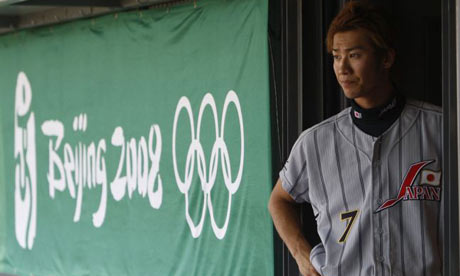
What To Expect From Tsuyoshi Nichioka?

Nick was kind enough to put in a little overtime this weekend, covering that the Twins have secured exclusive negotiating rights with Japanese middle infielder Tsuyoshi Nishioka with a $5.5M bid. It's important to know that this doesn't mean that Nishioka is going to be a Twins next year. The Twins still need to sign Nishioka, and almost half of the Japanese players who are posted end up not signing with the team that signed them. So far, that includes the most recent posting, pitcher Hisashi Iwakuma, who seems to be at an impasse with the Oakland A's.

So what will it take to sign Nishioka? So far, there haven't been any public salary demands, but history might give us some hint. I can only find one Japanese player who was won with a posting fee around $5M and who signed with a major league team. He also happens to have been a middle infielder that jumped to the majors when he was fairly young. And, maybe not coincidentally, the Twins nearly acquired him last year.

That player is Akinori Iwamura, who lasted four years in the majors, but is probably at the end of his MLB career. From 2007 through 2009, Iwamura played primarily third base and second base for the Tampa Bay Rays before he was traded to the Pirates last year. The Twins thought they had acquired him, going so far as to open up a 40-man roster spot and notify players that were included in the trade. But the Rays ended up choosing the Pirates, the Twins ended up trading for JJ Hardy, and Iwamura and his injured knee had a terrible season in Pittsburgh and Oakland.

However, for the first three years of that contract, Iwamura was a solid contributor, if unspectacular. He hit .281, but got on base at a .354 clip, above the league average. Defensive metrics showed him being average at second base, and a little above average at third base. He was left-handed, he cut down on his strikeouts compared to Japan, and provided a little speed, averaging about 10 stolen bases over those three years. In short, he was a enviable #2 hitter.

With the imminent departure of Orlando Hudson, that's something the Twins could really use, so I wondered how Nishioka compared to Iwamura. And almost across the board, it's good news.

First, Nishioka is younger. Iwamura was 28 when he played in his first year in the majors, while Nishioka will only be 26. That also means the Twins have the rare opportunity to add a Japanese player who is entering the prime years of his career.

Nishioka also looks like he's a better contact hitter than Iwamura was. Iwamura was always good at working a walk, but he also struck out 300 times in his last two years in the Japan Pacific League (JPL). Nishioka hasn't been quite as proficient at drawing walks, but he's also struck out less than half as much. That sounds like a pretty good trait for a #2 hitter.

Nishioka is also quite a bit more aggressive on the bases. Iwamura consistently swiped about 10 SB per year, both in the JPL and with the Rays. Nishioka has averaged 25 stolen bases over the last five years. Again, that looks like a good guy to have at the top of the order.

(Right about now, some sabremetric 101 graduate is planning on pointing out to me that Nishioka's 67% stolen base percentage last year isn't really a benefit to a team. Maybe it isn't on a per run basis over the regular season. But in the playoffs, I want that weapon in my holster versus specific teams. And I'm even more excited now that Victor Martinez just joined the division.)

At least anecdotally, Nishioka seems to be better defensively. Nishioka has won two gold gloves in the JPL, one of which was at shortstop. As far as I can tell, Iwamura never had that kind of reputation.

Finally, Nishioka's skill set seems to translate better to the major leagues. Iwamura was revered in the JPL in part because he was a home run hitter (which also explains his high strikeout rate). In the majors, he hit all of 14 big flys over those three years. Nishioka's skill set is based more on speed and small ball, similar to Ichiro.

But back to the original reason I looked up Iwamura - how much did he sign for? He signed a 3-year deal for $7.7M, which ended up costing the team about $4M per year if you include the posting fee. That sounds reasonable, especially because it include a fourth year team option.

Opinions differ on what would happen if the Twins sign Nishioka. Many believe his defensive skills play better at second base, and so the Twins might retain Hardy. And that's a fine idea, if the team has money for both.

I don't think they do, so I predict it will mean Hardy ends up being traded. The Nishioka signing would allow them to replace Hardy with more speed, replace Hudson at #2 in the order AND save them some money. Then either Nishioka or Alexi Casilla would end up playing shortstop.

Which is one of two concerns I have about this development. Will manager Ron Gardenhire be able to entrust shortstop to either Casilla or Nishioka? In the past, Gardenhire has seemingly placed as much importance on attitude as ability at that position. I can't believe he would ever trust Casilla there, and I wonder how much he could trust a Japanese player, especially if he doesn’t have a great command of english. (I haven't been able to find out well Nishioka speaks english.) Would Gardy be able to help himself, especially if Nick Punto or Matt Tolbert are languishing on the bench?

The other big concern about Nishioka is his health. He's battled injuries his entire JPL career, including a serious knee injury. In fact, that's why his JPL manager Bobby Valentine moved him to shortstop: to protect his lower body.

But if the Twins do end up investing about $4M per year for three years, that's an acceptable risk to take. (For that matter, at just 26 years old, I wouldn't be shocked to agree to a four-year or even a five-year deal.) Nishioka looks like a great fit for the Twins in both the short and long-term. And like last year's trade for Hardy, it gives them quite a bit of flexibility over the rest of the offseason.

Thursday, November 25, 2010

Twins Thanks

It’s too damn cold to participate in running the Turkey 5K this morning, which means I find myself with an hour or so to kill before starting the festive holiday gluttoning. So let’s start a new holiday tradition – 10 things I’m thankful for as a Twins fan in 2010.

Honorable Mention:

The Dominican Republic

Without the DR, there wouldn’t be a DR Winter League. And without the DR Winter League, we wouldn’t have been able to watch Francisco Liriano regain his velocity, slider and confidence. When I was raving last March about Liriano’s upcoming year, I was told by a writer I respect that “January is Liriano’s best month.” It wasn’t this year, and I couldn’t be more excited about his future.

Geek Chorus: And so is Brian Cashman. Because unless the Twins get a long-term deal with him done this offseason, he’ll be a free agent after 2012. Hello, pinstripes!

The Bartender at MacKenzie’s

For putting out our beer on ice as we watched the ninth inning of the A’s/White Sox game. The Sox lost, the “Champagne of Beers” was popped, and the Twins won their sixth division title in the last nine years.

Geek Chorus: And he’s thankful to the Twins, for forcing 90% of their fans out of the ballpark before they wised up.

10. Delmon Young’s Stomach Flu

He showed up to spring training in shape and we wondered if we were watching a new Delmon, with newfound discipline. Then he admitted it was mostly the result of being sick. Whatever – he still ended up having a fantastic 2/3 of the year, which is 2/3 more than he had showed previously. So have at that undercooked turkey today Delmon - I’d like to see you in shape again next February.

Geek Chorus: The only way that happens is if you think “round” is “in.”

9. Twins Coverage

Nine years ago, when I started blogging, it was mostly fueled by disappointment in the lack of baseball coverage in this town. I didn’t start writing because I wanted to write about Twins baseball. I started because I wanted to read about Twins baseball, and there weren’t a lot of other options.

Not any more. Now Twins fans are gulping from a firehose of information, even in the offseason. The dailies have really stepped up their game, the national press loves to cover the Twins, and the bloggers – male, female, whimsical and statistical – are creating five times more quality content than I have time to read.

Trust me – I’ve researched who is doing good work blogging for other major league teams. There isn’t any other fan base that has even one-third the number of quality bloggers that Twins fans have.

Geek Chorus: So you’re thankful for – you? Savvy. You may want to revisit what this Thanksgiving thing is all about. Or just give in completely and start talking the third person. You’re practically there.

8. Twitter

For turning every Twins game into the most prolific discussion board ever, while also fitting into my pocket. Twitter is the next frontier for blogs, and Twins fans have a good start on creating the best community of any major league team. Join us, won’t you? You start this weekend by following John, Seth, Parker and Nick.

Geek Chorus: And I’m sure your friends and family who sit, face-to-face, with you at games, are thankful for you being totally engrossed in your fantasy virtual world, too. Instead, you could be telling them about Alexi Casilla’s OPS. Hmm. Maybe they really ARE thankful.

7. Brad Childress and Tim Brewster

To Childress, for distracting the heat away from the ridiculous talk about getting rid of Ron Gardenhire. And to Brewster, for reminding us what can happen when you make a change to get to the next level.

Geek Chorus: Oh, the Gopher switched levels, all right….

6. The Pornstache

For giving us Pavano’s best year since his prime. For it’s cheesy goodness. And for inspiring the Super Mario theme to play before home starts that my kids could listen for.

Geek Chorus: And for the outstanding performance over Roy Halladay to take the series in Philadelphia while you were staying with your in-laws.

Right. That, too.

5. The Third Base Line Fence at Target Field

But mostly for the Twins players that come over to that third base line fence while they’re warming up and sign autographs for the kids. This year, it was mostly rookies or recent Rochester call-ups and that is absolutely fine with me. I cannot tell you what the means to parents. Thank you guys.

Geek Chorus: Even if it means your son becomes a devoted fan of Matt Tolbert? Are you sure that’s worth it?

4. Twins Fans

I’ve lamented for years that Minneapolis is a football town, and not a baseball town. Football still ranks first, but this summer we were a baseball town. I’m sure of it. Look at the comments sections here. Look at the pregame and postgame crowds downtown. Look at the TwinsCentric Offseson GM Handbook sales. Look at the rage and disappointment following this year’s postseason. Ten years ago this would have been unimaginable. Thank you all so much for caring about baseball.

Geek Chorus: Now, if we could just get the football crowd to stop The Wave.

3. Jim Thome

I loved him. He brought electricity to the plate, leadership to the clubhouse, historical gravity to the ballpark, and full-hearted goodwill to the fan base.

Geek Chorus: And a 1 for 10 to the postseason.

2. Target Field

It’s outdoors. I know I’m supposed to gush about little details, etc, but I’ve seen all the other outdoor parks, and honestly, I don’t think it’s a lot better than most of them. But it’s outdoors. And after being trapped in that god-forsaken teflon-coated mausoleum for twenty-five years, that’s enough.

Geek Chorus: Now, if they can just get some decent food that I don’t need to wait three innings for.

1. The Oughts

The decade started with a run by a Tom Kelly coached team that gave us all hope – and then a tremendous collapse and the threat of contraction. But it is hard to imagine that any fan base could hope for more than the Twins provided short of winning a championship. As a low-revenue team, they were competive not just for a couple of years, but for a decade. They provided Gold Gloves, batting titles, Cy Youngs and MVPs. They extended their season for seven of their nine years. The coverage of the team exploded to satisfy even the hungriest fan. They built a fan base that packed their new outdoor park and dominated the media. And they have shown almost no sign of slowing down for the next decade. World Championship or no, we probably just lived through the best decade to be a Twins fan. And I’m thankful for it.

Geek Chorus: So am I. And I really treasure each of the six playoff wins. Bring on the next decade.

Wednesday, November 17, 2010

The Capps Punchline

“#Twins GM Bill Smith said it’s “not at all” a question if they’ll tender Matt Capps a contract and bring him back, meaning they will. #Nats”
- tweeted by Nationals beat reporter Adam Kilgore

It’s 139 characters; 120 of which make me want to put my hand in a blender, followed by 19 that make me laugh out loud. Let’s hear the punchline again:

“meaning they will.”

Ha! Get it? The clarification is needed, because the first 80% of the tweet ISN’T clear. That which Bill Smith says is “not at all” a question could be interpreted just the opposite. In fact, it SHOULD be interpreted just the opposite. There is NO WAY on gawd’s green earth the Twins should be offering Matt Capps arbitration. It should be obvious to anyone who studies the issue for a single hour what a tremendous waste of limited resources that is. Offering arbitration to Capps calls into question the sanity of the entire front office.

So let’s study this:

1. Capps is a good reliever.
Know why I’m making this point #1? Because I don’t hate Capps. I like Capps. So please, I’m begging you, don’t put a comment below that says “You just hate Matt Capps.” He’s been durable, he’s been closing for 3.5 years so far, and he was fifth in the majors this year in saves.

2. Capps is going to make $7-8M if the Twins offer him arbitration.
And for all of those reasons above, Capps is going to make a lot of money in arbitration. In fact, he might make more than $8M, depending on how aggressive his agent wants to be. But if he plays it safe and asks for $7.2M or so, there is no way he loses that arbitration case. Let’s explain why.

The value of a player in arbitration is determined by looking at comparable players, and the two main factors for determining a comparable player are:
1) Performance – How the player has compared statistically to other similar players over the last two years.
2) Tenure – This one might surprise you, but it’s a big deal, too. Capps, who has 5 years of service time, won’t be compared to Mariano Rivera (14 years of service time) or Oakland’s Andrew Bailey (1 year). He’ll be compared to players who have similar service time.

It turns out that last offseason, there were two closers with five years of service who Capps might be compared to, but neither of whom has anywhere near the 69 saves that Capps had the last two years.
  1. The first is Chad Qualls, who isn’t a great comp in any way other than service time. For instance, when he signed that deal, he had only closed for one year (he had 33 saves in 2009). He got $4.5M to melt down for the Diamondbacks this year.
  2. The second is Huston Street, who had been closing for a few years, and had 53 saves over the two previous years. He signed a 3-year deal that paid him about $7.2-$7.5M per year. He looks like the closest comp to Capps.
Unfortunately, for the Twins, the news gets worse from there. Because there were a lot of other signings last January of players between four and six years of service time that reinforce that $7M number – or even worse. They’re all reasonable for an arbitrator to look at when deciding how much Capps should be paid in his sixth year. Here they are with their service time and how many saves they had over the two previous years.
  • Jonathon Broxton (4 years, 50 saves) – signed a 2-year deal that will pay him $7M in his sixth year.
  • Bobby Jenks (4 years, 59 saves) – agreed to make $7.5M in his fifth year.
  • Jonathon Papelbon (4 years, 79 saves) – agreed to made $9.35M in his fifth year.
  • Heath Bell (4 years, 42 saves) – only made $4.5M, but that was in his fifth year and he had only closed for one year.
  • Kevin Gregg (6 years, 52 saves) – agreed as a free agent to $2.75M deal.
  • Jose Valverde (6 years, 69 saves) – agreed as a free agent to $7M per year for two years from Tigers – and also cost them a first round draft pick.
The Twins can hope that the arbitrator thinks Capps is closer to Gregg and Qualls than to Street, Valverde, Broxton, Jenks and Papelbon, but I wouldn’t count on it.

3. There are at least eight - check that, seven - better free agent relievers available for less money than Capps.
It’s down to seven because one signed yesterday. The Tigers inked Joaquin Benoit to three-year deal for $5.5M per year. He’s the first significant free agent middle reliever signed, and it looks like they overpaid to get him. He’ll probably serve as a setup man this year and a closer after Valverde’s contract ends. Let’s look at Capps and Benoit’s stats and you tell me which one is better:

Player A: 73 IP, 2.47 ERA, 1.260 WHIP, 7.27 K/9IP
Player B: 60.3 IP, 1.34 ERA, .680 WHIP, 11.1 K/9IP

Player B is better at striking players out, limiting hits, limiting walks, and not giving up runs. He’s also going to be two million dollars cheaper next year, because that’s Benoit. Capps on the other hand pitched a few more innings – and tallied 42 saves.

Not every reliever can be a closer – I get that. But did anything about Capps’ performance last year make you think “Ooh, he has ice in his veins?” Capps is a good reliever, but there are a lot of great relievers who are free agents this year, and Benoit is going to be one of the most expensive.

In short, if the Twins offer $7.5M to Capps, they are choosing him over two relievers, both of whom are better than him. In a year in which almost the entire bullpen is filing for free agency, that’s close to unforgivable.

4. Trading away Wilson Ramos should not have any bearing on this decision.
The fact that the Twins gave up catching prospect Wilson Ramos for Capps should have nothing to do with this decision. The fact that the Twins justified trading Ramos for Capps because Capps was arbitration-eligible should have nothing to do with this decision. Ramos is gone. He no longer matters to this team. If that’s part of the decision-making process, someone needs to remind the front office to look forward, not back. If that’s part of the decision-making process, someone needs to ask if the front office is more focused on making the team better or covering their collective ass.

Instead, the question is whether the Twins are better off spending $7.5M on Capps or on other players. After a little study, I’ll agree with Smith that it is “not at all” a question.

I just disagree with the punchline.

Tuesday, November 16, 2010

Make The Bad Thoughts Go Away...

...or just kill me.

(Looks like I have a topic for Thursday.)

Tuesday, November 09, 2010

Twins Sign Pitcher Eric Hacker

According to a tweet by ESPN’s Jerry Crasnick, the Twins have signed pitcher Eric Hacker to a major league deal.

The key in that last sentence is the word “major,” which indicates they expect him to make the roster. The 27-year-old right-hander is probably best described by the word “journeyman.” He has less than a year of major league experience, so he isn’t a traditional free agent. He was just released by the Giants, who he signed a minor league deal with last year. He spent the year in AAA. He started hot, and even was considered to be called up with the Giants in May (over of Madison Bumgarner, who ended up looking like a 21-year-old ace in the playoffs this year). Hacker looks like he cooled considerably as the season went on, finishing with a 4.51 ERA and 129K in 165.2 IP. He doesn’t look like he has outstanding control, as he walked 62.

I’m guessing you’re looking at the Twins new long reliever, in the same way Clay Condrey was the Twins long reliever last year, except, you know, hopefully healthier.

I categorize this as puzzling. It’s not clear why a player of Hacker’s caliber needed a major league deal. It’s equally not clear why he would be more valuable in that role than Jeff Manship, Glen Perkins, or Anthony Swarzak. And for a team that was so protective of 40-man roster moves chooses to spend one on a minor league journeyman pitcher who is going to throw long relief. Oh, well. At least we’ll have some fun with his last name.

Late note: Seth pointed out to me that Hacker has options, so even though it is a guaranteed contract, it likely means its a 2-way deal, meaning the amount of money he makes would vary if he's in the majors or minors. As such, it's not a rue thing that Hacker makes the 25-man roster, and he might be signed as a AAA starter that could possibly find his way into a long relief or swingman role on the major league team. The move makes a little more sense then - it adds some depth, but doesn't commit the Twins too much. If so, it indicates that Twins thought they had some extra room on their 40 man roster that they didn't want to fill with internal options, which isn't a great sign.

Tsuyoshi Nishioka

There were a few surprising bits of information to come out yesterday about Japanese players looking to play in the US:

1) The Twins bid on one. I don't remember every hearing that before. Joe Christensen reported that they bid on Hisashi Iwakuma, a right-handed starting pitcher who is considered to be one of the top pitchers in Japan. They didn't get him - the A's did, which is interesting because they could now trade a starting pitcher. But it's interesting that the Twins would be willing to target a starting pitcher, that the starting pitcher was right-handed, and that they were willing to pay the posting fee. That last point is an especially good sign considering how cash-strapped we think they are. It also makes me wonder if they wouldn't be happy to pay Pavano to come back, meaning they would be more likely to offer him arbitration.

2) Another Japanese player may be posted, and this one is a shortstop. Tsuyoshi Nishioka is a switch-hitting shortstop who hit .346 last year and is known as for stealing bases. He is also known as being injury prone, which is one of the reasons he's playing shortstop, to protect his health. But the most interesting thing about him is that he's just 26 years old, much younger than most Japanese players that are allowed to come to the majors. Or at least that's the most interesting thing to me. My anime-obsessed daughter and his friends are likely going to be more interested in his hair and running their fingers through it.

I don't know that the Twins would have any interest in Nishioka. 24 hours ago I would've thought there was no chance. I still doubt they would. But today, just because they already had one bid for a Japanese posted player, I'm not as sure.