
Powered by Twins Geek
For some, the trade deadline is an event. For me, it’s a sickness - a compulsive obsession that starts in March and builds until I’m in the throws of a semi-conscious twitch over the last few days of July. I’m only partially exaggerating. I couldn’t be happier it’s over, like the morning after my bachelor party.
The queasy feeling I have reminds me of that morning, too. The Twins mostly sat on their hands, and no matter how much I want to justify it, there’s no way to deny the disappointment. This team looked like it was in a position to do some things, and there were things left to do.
It’s forgivable to not get another starting pitcher. Not that they didn’t need one; it was their biggest need. I’m as bullish on the Twins minor league pitching as anyone, but Brad Radke’s last start should have Twins fans, coaches and management concerned. If he tries to “battle his way through this thing” and stinks, there is NO shot for the Wild Card. But there just wasn’t much out there worth pursuing, and what little there was mostly stayed with their own team.
More disappointing was not adding a right-handed power bat to the mix. I know, I know, Torii Hunter is back and hit a home run last night. And Michael Cuddyer continues to impress. But neither really belongs in that spot between Joe Mauer and Justin Morneau. There were a few players available who might have fit that mold, and at least two of them were traded yesterday.
The one who wasn’t was Alfonso Soriano, and again, Terry Ryan gets a free pass on that one. The Washington Nationals GM, Jim Bowden, has often come up short on change when trying to board the clue bus. Remember that contract he gave Cristian Guzman? Dealing with incompetence is always a crapshoot, since you can’t save someone from himself. If it’s true that the Twins were willing to give up Scott Baker and Jason Kubel for Soriano, and Bowden turned it down, well, you can’t say Ryan didn’t try.
On the other hand, two lesser names with big right-handed power WERE moved, and they were moved for next to nothing. Craig Wilson, the streaky right-handed slugger for the Pirates, was traded to the Yankees. Ryan Shealy, a right-handed slugger for the Rockies AAA team was traded to the Royals. Neither is a great fit for the Twins defensively, since neither could play left field here, but both would have provided some right-handed pop, even if it was just as insurance policies.
Ryan appeared on the Twins broadcast last night to talk about the deadline, and it sounds like he is having trouble making tradess because of the Twins past deals. He was asked if he had any GMs call him today out of the blue who hadn’t talked to him previously about a trade. He said he had, just an hour before today’s deadline, and he was very interested in the deal. Which resulted in the other GM immediately withdrawing the offer, afraid he had made a Sabean-ormous sized mistake.
He added that he liked having Wayne Krivsky acting as the GM of the Reds, since Krivsky knows that the Twins aren’t trying to pull any fast ones, while other GMs might be more cautious. I wonder if Krivsky will feel the same way in a couple of years, because the one trade the Twins made looks like a real steal from Krivsky’s crib.
When the Twins traded away Kyle Lohse to the Reds yesterday, they acquired Zachary Ward, who looks to be ten times the prospect I thought they would receive. I hadn’t heard of Ward before yesterday, but there’s a lot to like from his profile. He was a third round pick last year, he has a high strikeout rate, has only give up two home runs in over 100 innings pitched. There’s some anecdotal evidence that he tends to induce ground balls, and with twelve hit batters this year, it looks like he’s not afraid to pitch inside. Finally, his splits show that he’s improved every month in Low-A ball.
Everything about him sounds great, except for those last two words. He’s absolutely dominated that level for the last two months and he’s 22 years old, so the Twins are likely to start moving him aggressively through their system. I wouldn’t be shocked if he jumps High-A ball and starts out in New Britain immediately, though the Twins may want to see what they have first.
Ward is more evidence (and there was plenty before this, I assure you) that I should be careful about pointing fingers too much in Ryan’s direction today. If the worst news is that they didn’t get Wilson and Shealy (two names which most Twins fans probably have never heard), that’s not such bad news. Maybe good enough to help me recover from this post trade deadline hangover.
Monday, July 31, 2006


Links of the Day for 8/1/06
Powered by Intern Thomas
Well that was kind of anti-climactic wasn’t it? For awhile there, it really looked like the Twins order would once again have a former Yankee in it, albeit one slightly better than Ruben Sierra. Jim Bowdon, however, fresh off his fleecing of the Reds, seemed to have had quite a high asking price, namely Matt Garza. Or maybe the Nats just wanted to resign Soriano. Terry Ryan might have his faults, but let’s all thank the baseball gods that Jim Bowdon isn’t in charge of our squad.
Like all good GM’s, it seems that Ryan doesn’t play chicken, and when the Twins decided not to trade away the best pitcher in their system for a two month rental they weren’t going to back down. Whether or not they’ll regret that decision remains to be seen, and depends on two factors—whether or not they make the playoffs, and how Garza turns out. If he keeps pitching like he has been, Garza will get his first chance to prove he’s worth more than two months of Soriano this season.
And while they didn’t get a big bat for the cleanup spot, the Twins did manage to utilize the trade deadline to divest themselves of Kyle Lohse, someone who’s proven his ability to use a bat in slightly less traditional means. The move clears up payroll, both by removing part of Lohse’s salary and by lessening the chance the Twins have to use their precious resources to replace manager’s doors and furniture in the clubhouse once every five days.
They also managed to get one of the Reds’ top ten prospects out of the deal in Zach Ward, who’s been phenomenal in low A ball and will likely be promoted by the Twins. Once again, it looks like the Master has gotten the upper hand in a trade with his student. And if you’re interested, you can see a host of ex-Twins scrimmage each other in September at Wrigley Field.
And now, for some quick links:
Well that was kind of anti-climactic wasn’t it? For awhile there, it really looked like the Twins order would once again have a former Yankee in it, albeit one slightly better than Ruben Sierra. Jim Bowdon, however, fresh off his fleecing of the Reds, seemed to have had quite a high asking price, namely Matt Garza. Or maybe the Nats just wanted to resign Soriano. Terry Ryan might have his faults, but let’s all thank the baseball gods that Jim Bowdon isn’t in charge of our squad.
Like all good GM’s, it seems that Ryan doesn’t play chicken, and when the Twins decided not to trade away the best pitcher in their system for a two month rental they weren’t going to back down. Whether or not they’ll regret that decision remains to be seen, and depends on two factors—whether or not they make the playoffs, and how Garza turns out. If he keeps pitching like he has been, Garza will get his first chance to prove he’s worth more than two months of Soriano this season.
And while they didn’t get a big bat for the cleanup spot, the Twins did manage to utilize the trade deadline to divest themselves of Kyle Lohse, someone who’s proven his ability to use a bat in slightly less traditional means. The move clears up payroll, both by removing part of Lohse’s salary and by lessening the chance the Twins have to use their precious resources to replace manager’s doors and furniture in the clubhouse once every five days.
They also managed to get one of the Reds’ top ten prospects out of the deal in Zach Ward, who’s been phenomenal in low A ball and will likely be promoted by the Twins. Once again, it looks like the Master has gotten the upper hand in a trade with his student. And if you’re interested, you can see a host of ex-Twins scrimmage each other in September at Wrigley Field.
And now, for some quick links:
- Twinkietown has a lengthy discussion of the Lohse-Ward trade.
- The cast of Baseball Tonight getting you down? Well, it turns out there is a way to get fired from that show. Sadly, it has nothing to do with being a horrible analyst.
- Finally, Peter Gammons’ health continues to improve. If we’re lucky, he’ll be back in time for the waiver deadline.
Questions
Powered by Twins Geek
Over the course of 40 games (80% of which the Twins won), we gradually became convinced that they were Supermen. It took one highly anticipated and attended weekend series to remind us that our Men of Steel have their kryptonite.
The series against the Tigers was praised as two talented teams playing at a high level in closely contested games, which the Twins just happened to lose. That’s partly true, but it’s also worth noting that the two losses came against the bottom of Detroit’s rotation, and that their All-Star catcher was sitting in the dugout for the entire series. Looking closer at the games, they also showcased some of the flaws and concerns this team has as it tries to reach the 96 wins that will likely be necessary for a wild card spot.
Add those up, and suddenly the Twins have serious questions about most of their starting rotation, their best pure hitter, their best table-setter, and three other positions. All of which were raised over one disappointing weekend. Over the last two months, we’ll get some answers, whether we like them or not.
Over the course of 40 games (80% of which the Twins won), we gradually became convinced that they were Supermen. It took one highly anticipated and attended weekend series to remind us that our Men of Steel have their kryptonite.
The series against the Tigers was praised as two talented teams playing at a high level in closely contested games, which the Twins just happened to lose. That’s partly true, but it’s also worth noting that the two losses came against the bottom of Detroit’s rotation, and that their All-Star catcher was sitting in the dugout for the entire series. Looking closer at the games, they also showcased some of the flaws and concerns this team has as it tries to reach the 96 wins that will likely be necessary for a wild card spot.
- The biggest concern has to be Brad Radke and his shoulder. At the beginning of June, the Twins made some roster moves on the left side of their infield that coincided with their return to competence. But that’s also when Brad Radke went from being the second worst starting pitcher in baseball to one of the top five.
This weekend’s performance suggests that benefits of the cortisone shot he received over the All-Star break are fairly short-lived. Cortisone shots aren’t something that an athlete takes several times per month. At most, player take them a few times per season – anything more than that can be harmful. If Radke regresses because of a chronically sore shoulder, the Twins suddenly have three question marks in their rotation, something that few contending teams can afford during a playoff push. - An equally large concern is the recent performance of Joe Mauer. Hint #1 was the three strikeouts in one game last week. Hint #2 was the two-day rest the Twins felt he needed to have. And Hint #3 was the half dozen times he grounded out to the right side of infield this weekend. The hints suggest that Mauer is fighting some kind of nagging injury, maybe in his back or his hamstrings.
That isn’t too surprising considering the position Mauer plays, and we’ve certainly been warned about it happening. That doesn’t mean the Twins can afford any stretch where Mauer becomes anything less than superhuman. The Twins need that high average to bridge the gap between the string of table setters in front of him and the table clearers behind him. If his performance over the last two months is burdened by some ongoing soreness, the Twins offense will be considerably less dangerous. - The Metrodome is apparently a little crabby about its impending mortality and has enlisted the help of left field to eat our players. Just look at what has happened to anyone who has dared to play there. First there was Shannon Stewart’s plantar fasciitis. Then there were Jason Kubel’s knees. On Saturday Rondell White was moved to designated hitter (DH) because of soreness in his legs, and was pulled from the game on Sunday. That means Josh Rabe started there on Saturday night, and Jason Tyner will likely play there when Torii Hunter returns for this series.
That’s bad news, but there’s worse news about the six names in the previous paragraph. For each one of them, there is a serious question about their health or inexperience or performance. The Twins are going to need three of them (in left field, in center field and at DH) to perform at a high level for the last two months of the season to keep the offense fueled. - The mixing and matching that’s been happening in the fourth and fifth starter slots still isn’t producing anything close to consistent quality. They’ve burned through Kyle Lohse, Scott Baker, Carlos Silva and Boof Bonser. JD Durbin is now hurt for the year, so the newest supposed savior, Matt Garza, is drawing Twins fans attention with his recent promotion to Rochester. That attention is more a result of Francisco Liriano’s success than Garza’s performance, which we know very little about. What we do know is that Garza started the year in A ball, and his professional career is just one year old.
- With all the pleasant surprises the Twins have had from new players, the award for Most Unforeseen belongs to Nick Punto. His hitting streak ended on Saturday night, but he’s still hitting .311 for the season. “Sparky” has been stellar defensively and the best table setter the Twins have. The strides he’s made this season have been enormous, and they’ve happened exactly when the Twins needed them most.
Maybe too enormous? Or at least too enormous to count on for the next two months? Consider that Punto’s career batting average coming into the season (over 600+ plate appearances) was just .238. His batting average over eight minor league seasons was just .265. It isn’t completely unheard of for a player to step up to a new level of performance at Punto’s age, and everyone (including this Twins fan) wants to believe that’s what happened. But this seems a little too good to be true.
Add those up, and suddenly the Twins have serious questions about most of their starting rotation, their best pure hitter, their best table-setter, and three other positions. All of which were raised over one disappointing weekend. Over the last two months, we’ll get some answers, whether we like them or not.
Sunday, July 30, 2006
This weekend’s links assembled while furiously pounding “refresh” at Will’s Mill…
- The Twins dropped one to the Tigers in 10 innings on Friday, 3-2 . The F-Bomb was brilliant again, but Zach Minor (6IP, 4H, 2R, 5K) and the rest of the Tigers staff pitched very well.
- The possibility of an additional bat remains, but Washington’s asking price is still sky high (at one point, I read that Jim Bowden was asking for either Lackey, Santana, or Weaver, along with either Kendrick or Wood, from the Angels. Yikes…).
- As mentioned in the above article, and also here, Eye-Eye’s return looks imminent.
- The cutting edge of baseball style.
- I just feel that this picture needs to be seen by everyone.
- The Fury!
- And finally, there’s still time to set your daughter up with Albert Belle.
Friday, July 28, 2006
On Pop Quizzes and Tough Questions
Powered by Twins Geek
Milwaukee Brewers trade OF-Carlos Lee, OF-Nelson Cruz and a PTBNL to the Texas Rangers for P-Francisco Cordero, OF-Kevin Mench and OF-Laynce Nix.
Word had it that yesterday Milwaukee Brewers GM Doug Melvin would decide whether to
a) trade away Carlos Lee or
b) make a run at the Wild Card.
It appears today that he chose
c) all of the above.
This isn’t your usual “free agents for prospects” deal. Melvin gained some pieces for next year, since the Brewers will either hasvea contract or own the rights of all three players in 2007. But none of the players are likely to be particularly valuable after 2007.
Instead, he gained some help for THIS year. My guess is that Mench will replace most of Lee in the outfield, and ex-closer Cordero will be given an opportunity to fix the closer spot for the Brewers, which has been a real problem spot for them. Furthermore, the trade of minor leaguers seems to favor the Rangers, strangely enough, with Cruz outplaying Nix in AAA.
It's bad news for Twins fans, anyway you slice it. It appears the trade market had one less seller than we thought, and the Rangers were never thought of as buyers. I suppose it's some consolation that the four teams the Twins are really competing with (White Sox, Yankees, Red Sox and Tigers) ended up with him.
The question in Twins fans minds is probably “Could Terry Ryan have made this deal?” The answer is probably “Yes”, but Juan Rincon would likely have had to be included, and it’s not clear the Twins had a comparable player for Mench (perhaps Rondell White, depending on whether Melvin believed in him).
This is another key example that the market for solid bullpen help has gone through the roof since the end of last season. Contracts to mediocre acquisitions like Kyle Farnsworth and Flash Gordon last winter demonstrated that teams were valuing relievers far more than they had before. A majority of the trades as we’ve approached the deadline have involved relievers as well, with last week’s Reds/Nationals trade being the prime example of what one can get for decent relief.
Which raises a question that Twins fans haven’t asked much in the past. Would the Twins move Rincon or Joe Nathan in a trade? Don’t cop out and throw out the name of Jesse Crain – the opposing GM won’t. It’s a question that will be asked this weekend as teams look for a third or fourth team for a complicated swap. And it’s a questions that has likely been answered already by Terry Ryan, and maybe asked by Doug Melvin.
Milwaukee Brewers trade OF-Carlos Lee, OF-Nelson Cruz and a PTBNL to the Texas Rangers for P-Francisco Cordero, OF-Kevin Mench and OF-Laynce Nix.
Word had it that yesterday Milwaukee Brewers GM Doug Melvin would decide whether to
a) trade away Carlos Lee or
b) make a run at the Wild Card.
It appears today that he chose
c) all of the above.
This isn’t your usual “free agents for prospects” deal. Melvin gained some pieces for next year, since the Brewers will either hasvea contract or own the rights of all three players in 2007. But none of the players are likely to be particularly valuable after 2007.
Instead, he gained some help for THIS year. My guess is that Mench will replace most of Lee in the outfield, and ex-closer Cordero will be given an opportunity to fix the closer spot for the Brewers, which has been a real problem spot for them. Furthermore, the trade of minor leaguers seems to favor the Rangers, strangely enough, with Cruz outplaying Nix in AAA.
It's bad news for Twins fans, anyway you slice it. It appears the trade market had one less seller than we thought, and the Rangers were never thought of as buyers. I suppose it's some consolation that the four teams the Twins are really competing with (White Sox, Yankees, Red Sox and Tigers) ended up with him.
The question in Twins fans minds is probably “Could Terry Ryan have made this deal?” The answer is probably “Yes”, but Juan Rincon would likely have had to be included, and it’s not clear the Twins had a comparable player for Mench (perhaps Rondell White, depending on whether Melvin believed in him).
This is another key example that the market for solid bullpen help has gone through the roof since the end of last season. Contracts to mediocre acquisitions like Kyle Farnsworth and Flash Gordon last winter demonstrated that teams were valuing relievers far more than they had before. A majority of the trades as we’ve approached the deadline have involved relievers as well, with last week’s Reds/Nationals trade being the prime example of what one can get for decent relief.
Which raises a question that Twins fans haven’t asked much in the past. Would the Twins move Rincon or Joe Nathan in a trade? Don’t cop out and throw out the name of Jesse Crain – the opposing GM won’t. It’s a question that will be asked this weekend as teams look for a third or fourth team for a complicated swap. And it’s a questions that has likely been answered already by Terry Ryan, and maybe asked by Doug Melvin.
Thursday, July 27, 2006
The Year of the Bird
Powered by Peter Schilling, Jr.
Normally, being a Tigers fan is an exercise in self-abuse, but this year has been a joy. The Tigers have dominated the weaklings, and though they’ve barely made a dent against the terrible trio of the Yankees, Red and White Sox, they seem to be making a run for at least a first round playoff exit (skepticism still reigns for this fan). This is also the 30th anniversary of the Tigers fabulous 1976 season. For despite the fact that the Detroit lost 87 games, Mark Fidrych burst onto the scene.
There could be no question that the star of 1976 was the former gas-pumping kid from Worcester, Massachusetts. Tall and lanky, Fidrych had a friendly mug and a mess of curly blonde hair, and resembled Harpo Marx more than Big Bird, for whom he was nicknamed. Mark raced out to the field (as opposed to the slow saunter of most every pitcher), spoke to his ball, smoothed the mound, cheered on his fellow players from the dugout, and shook hands with his teammates after a good play. With every pitch, he would bob up and down and up and down before firing the ball in around 93 mph. That made him kooky enough to stand out. That he did these theatrics while also being the best pitcher in baseball is what made him a star.
The Bird made his first start on May 15, 1976, leaving his box apartment in the faceless suburbs of Detroit, and driving to Tiger Stadium in a beat-up Dodge Colt. Since his relief debut on April 20, Fidrych had sat on the bench, blowing gum bubbles, going nowhere. But thanks to a number of rainouts, Tigers manager Ralph Houk had to juggle his mediocre rotation, and Fidrych got the call. So that afternoon, after a 26-minute rain delay, just fewer than fifteen thousand Tigers faithful watched young Mark throw six innings of no hit ball as he eventually beat the Tribe 2-1. His conversations with the baseball were so unnerving that the home plate umpire, Marty Springstead, would have thrown him out of the game if he hadn’t been warned in advance of the Bird’s antics. “He’s a strange boy,” Springstead remarked.
This victory brought the Tigers record to a respectable 13-11. In typical fashion, they would go on to lose six straight and twelve of the next fifteen.
But Fidrych, at least, was the real thing. He lost his next game, but then took seven straight. In his third start, he got a thrill fanning the great Hank Aaron en route to an 11-inning complete-game victory over the Brewers. Five days later, Fidrych bested Bert Blyleven in Texas - again an 11-inning complete game! - before a sellout crowd in Arlington, eager to see Bert over the Bird in a contest that sounds like it was sponsored by Sesame Street. In his next start, Fidrych out-dueled Nolan Ryan in the prime of his career, then shut down the mighty Royals, and in his next outing beat the Twins in front of barely 12,000. All but the last were complete game victories, without a break in the five-man rotation.
By now, Fidrych was gaining momentum. After The Bird took his seventh victory in a rematch against the Red Sox, he appeared on the front page of The Wall Street Journal and People, and was named to start the All-Star Game. By now he was a national phenomenon and ABC picked his next start against the Yankees for its signature Monday Night Baseball.
I have a DVD of that game—the first baseball game I ever watched, incidentally, and the one that sent me into a tailspin from which I haven’t recovered. To watch Fidrych today is to see a relic and a pitching style far removed from today’s game. There’s no hesitation between pitches, no walking around licking fingers or blowing in the hand, none of the nods and shakes and disagreements with his catcher. Fidrych moved fast. He would bob up and down from the crouch, yakking the whole time, before he would fire the ball in with great precision. Throw, catch, return, repeat. All in one hour, fifty-one minutes.
Fidrych won that game, too, 5-1, against a battery that included seven left-handers. Afterwards, seemingly unfazed by the fact that he just beat the first-place Yankees in front of the entire country, he asked ABC’s Bob Uecker, “Where’s my gift? Don’t I get a gift at the end of Monday Night Baseball?”
By now, Michigan was in a tizzy for The Bird, and the Tigers rode his coattails. Eight years earlier, the Tigers had won one of the greatest World Series’ ever, and in 1972 a bunch of old men squeaked out a division title, and took the mighty Oakland A’s to the fifth game of the playoffs before bowing out. The ’76 club was part of the rebuilding process, full of youngsters and a few notable veterans.
Fidrych would go on to win the Rookie-of-the-Year award and finish second in Cy Young voting, losing to Jim Palmer. His mug would grace the covers of two awful biographies (one written by Paris Review editor Tom Clark), Rolling Stone, Sport, Sports Illustrated, and would meet a number of celebrities, including Frank Sinatra. His numbers are forever burned into my memory: 19 wins and 9 losses; a painful 24 complete games (including 4 shut-outs); 2.34 ERA in spite of just 97 strikeouts (he walked 53 and gave up only a dozen homers). He led the league in ERA and complete games.
Unfortunately, those complete games probably cost The Bird his career. He wrecked his arm the next season, in what many people today believe was probably a torn rotator-cuff. Slowly, he went on to throw in 27 more games over the next four years, going 10-10. Now he’s a farmer in Massachusetts, a guy who doesn’t have much to do with baseball, eschewing Tiger events because someone has to get the work done on the farm.
And how did he like Detroit? “Great,” he said. “I haven’t been beaten up yet.”
Powered by Twins Geek
Detroit
Friday: Zach Miner (6-2, 4.07 ERA)
Saturday: Nate Robertson (9-6 3.70 ERA)
Sunday: Jeremy Bonderman (11-4, 3.66 ERA)
Normally, being a Tigers fan is an exercise in self-abuse, but this year has been a joy. The Tigers have dominated the weaklings, and though they’ve barely made a dent against the terrible trio of the Yankees, Red and White Sox, they seem to be making a run for at least a first round playoff exit (skepticism still reigns for this fan). This is also the 30th anniversary of the Tigers fabulous 1976 season. For despite the fact that the Detroit lost 87 games, Mark Fidrych burst onto the scene.
There could be no question that the star of 1976 was the former gas-pumping kid from Worcester, Massachusetts. Tall and lanky, Fidrych had a friendly mug and a mess of curly blonde hair, and resembled Harpo Marx more than Big Bird, for whom he was nicknamed. Mark raced out to the field (as opposed to the slow saunter of most every pitcher), spoke to his ball, smoothed the mound, cheered on his fellow players from the dugout, and shook hands with his teammates after a good play. With every pitch, he would bob up and down and up and down before firing the ball in around 93 mph. That made him kooky enough to stand out. That he did these theatrics while also being the best pitcher in baseball is what made him a star.
The Bird made his first start on May 15, 1976, leaving his box apartment in the faceless suburbs of Detroit, and driving to Tiger Stadium in a beat-up Dodge Colt. Since his relief debut on April 20, Fidrych had sat on the bench, blowing gum bubbles, going nowhere. But thanks to a number of rainouts, Tigers manager Ralph Houk had to juggle his mediocre rotation, and Fidrych got the call. So that afternoon, after a 26-minute rain delay, just fewer than fifteen thousand Tigers faithful watched young Mark throw six innings of no hit ball as he eventually beat the Tribe 2-1. His conversations with the baseball were so unnerving that the home plate umpire, Marty Springstead, would have thrown him out of the game if he hadn’t been warned in advance of the Bird’s antics. “He’s a strange boy,” Springstead remarked.
This victory brought the Tigers record to a respectable 13-11. In typical fashion, they would go on to lose six straight and twelve of the next fifteen.
But Fidrych, at least, was the real thing. He lost his next game, but then took seven straight. In his third start, he got a thrill fanning the great Hank Aaron en route to an 11-inning complete-game victory over the Brewers. Five days later, Fidrych bested Bert Blyleven in Texas - again an 11-inning complete game! - before a sellout crowd in Arlington, eager to see Bert over the Bird in a contest that sounds like it was sponsored by Sesame Street. In his next start, Fidrych out-dueled Nolan Ryan in the prime of his career, then shut down the mighty Royals, and in his next outing beat the Twins in front of barely 12,000. All but the last were complete game victories, without a break in the five-man rotation.
By now, Fidrych was gaining momentum. After The Bird took his seventh victory in a rematch against the Red Sox, he appeared on the front page of The Wall Street Journal and People, and was named to start the All-Star Game. By now he was a national phenomenon and ABC picked his next start against the Yankees for its signature Monday Night Baseball.
I have a DVD of that game—the first baseball game I ever watched, incidentally, and the one that sent me into a tailspin from which I haven’t recovered. To watch Fidrych today is to see a relic and a pitching style far removed from today’s game. There’s no hesitation between pitches, no walking around licking fingers or blowing in the hand, none of the nods and shakes and disagreements with his catcher. Fidrych moved fast. He would bob up and down from the crouch, yakking the whole time, before he would fire the ball in with great precision. Throw, catch, return, repeat. All in one hour, fifty-one minutes.
Fidrych won that game, too, 5-1, against a battery that included seven left-handers. Afterwards, seemingly unfazed by the fact that he just beat the first-place Yankees in front of the entire country, he asked ABC’s Bob Uecker, “Where’s my gift? Don’t I get a gift at the end of Monday Night Baseball?”
By now, Michigan was in a tizzy for The Bird, and the Tigers rode his coattails. Eight years earlier, the Tigers had won one of the greatest World Series’ ever, and in 1972 a bunch of old men squeaked out a division title, and took the mighty Oakland A’s to the fifth game of the playoffs before bowing out. The ’76 club was part of the rebuilding process, full of youngsters and a few notable veterans.
Fidrych would go on to win the Rookie-of-the-Year award and finish second in Cy Young voting, losing to Jim Palmer. His mug would grace the covers of two awful biographies (one written by Paris Review editor Tom Clark), Rolling Stone, Sport, Sports Illustrated, and would meet a number of celebrities, including Frank Sinatra. His numbers are forever burned into my memory: 19 wins and 9 losses; a painful 24 complete games (including 4 shut-outs); 2.34 ERA in spite of just 97 strikeouts (he walked 53 and gave up only a dozen homers). He led the league in ERA and complete games.
Unfortunately, those complete games probably cost The Bird his career. He wrecked his arm the next season, in what many people today believe was probably a torn rotator-cuff. Slowly, he went on to throw in 27 more games over the next four years, going 10-10. Now he’s a farmer in Massachusetts, a guy who doesn’t have much to do with baseball, eschewing Tiger events because someone has to get the work done on the farm.
And how did he like Detroit? “Great,” he said. “I haven’t been beaten up yet.”
On the Hill
Detroit
Friday: Zach Miner (6-2, 4.07 ERA)
- 2005 (AAA): 7-16, 217 IP, 124 K, 4.02 ERA
- 2006: 48.2 IP, 53 H, 30K, 15 BB, 5 HR
- Miner is a pretty good example of what is going on with the Tigers young pitching lately. They identify the talent, develop them, and put them in a position to succeed in the majors.
- At this time last year, he was 2-7 with the Braves AAA farm team. The Tigers acquired him in a deadline trade for Kyle Farnsworth.
- This year with Detroit, he tightened his control, and had a 2.82 ERA in AAA when starting pitcher Mike Maroth was hurt.
- Called up to take a spot in the rotation, he hasn’t been dominant, but he’s been pretty steady. His numbers are league average across the board, but for a fifth starter, they’re great. And the Tigers offense is getting him the “W”s.
Saturday: Nate Robertson (9-6 3.70 ERA)
- 2005: 7-16, 196.2 IP, 122 K, 4.49 ERA
- 2006: 129 IP, 124 H, 87 K, 42 BB, 17 HR
- Another surprise on a team full of them. For two years Robertson has been a league average pitcher. This year the 28-year-old improved his changeup and has been considerably better than average.
- His weakness before this year has been giving up home runs, and that much is still true.
- He’s struggled recently. His ERA in July is 5.65.
Sunday: Jeremy Bonderman (11-4, 3.66 ERA)
- 2005: 4-13, 189 IP, 145 K, 4.57 ERA
- 2006: 137.2 IP, 123 H, 132 K, 38 BB, 12 HR
- Wow. In a few years, 2006 is going to be remembered as the year so many young pitchers had breakthrough seasons. Any other year, the 23-year-old Bonderman would be drawing all kinds of attention for his dominance. This year, he’s not only overlooked nationally, but he’s not the biggest pitching story on his own team.
- Bonderman was thrown into the fire in 2003 as a 20-year-old who started 28 games, and struggled for the next two years.
- In May, he gave up five runs in 6.2 innings versus the Twins. The Twins won that game with a ninth inning rally.
The Power of Power
By Intern Sharkey
North Korea has been spending a lot of time in the news lately. Kim Jong Il’s military has been testing a new series of attack boats, able to slowly but consistently deliver gradual damage to whatever targets they select. This new-found military power has drawn global ire for the way these ships have de-stabilized the Pacific region.
Or not.
The Twins finished off a three-game sweep of the White Sox on Wednesday afternoon. Twins hitters pounded out seven home runs in the series, providing the key runs needed for the set of victories. From Joe Mauer’s three-run dinger in the opener to Justin Morneau’s two-run bomb in the finale, the Twins used the long-ball to pull even with Chicago in the Wild Card race.
Over the last few seasons, the Twins’ offense has been more of the slow-and-steady variety than the quick-strike attack seen over the last three games. Just as a long-range missile capable of delivering warheads long distances is more frightening than a fleet of ocean-borne gunships, an offense with the threat of the long-ball brings huge benefits.
Much has been made of the Twins’ long-standing lack of a thirty home-run hitter. Since this recent run of success began in 2001, the offensive attack has relied on being able to string together base hit after base hit. But those days look to be over. Justin Morneau could crack that thirty-home-run barrier by the end of July, and others like Michael Cuddyer and Jason Kubel are showing legitimate power strokes as well.
The second game of the series is a perfect example. After falling behind one to nothing on a Jim Thome solo shot in the bottom of the first, the Twins came right back with a Jason Kubel bomb to tie the game. After that, two of the best pitchers in the American League traded zeros until the seventh inning. The Twins got two runners aboard in front of Jason Bartlett, who then lifted a fly ball into the wind and over the left field wall. Suddenly it was four to one, and the Twins went on to win four to three. Being able to strike quickly is especially important against elite pitchers (the kind that tend to pop up in the post-season) because of the difficulty of stringing together multiple hits.
Twins fans have seen this first hand: how often does Johan Santana get knocked around for five hits in an inning? Not very. Most of the damage dealt against El Presidente seems to come off of the long ball (all three runs he allowed on Tuesday came off of homers, for example). This ability to strike quickly can be the great equalizer, and should be cause for just as much excitement in Twins-land as the top of the rotation: Minnesota has finally traded in its 19th century gunships for some modern ICBMs.
North Korea has been spending a lot of time in the news lately. Kim Jong Il’s military has been testing a new series of attack boats, able to slowly but consistently deliver gradual damage to whatever targets they select. This new-found military power has drawn global ire for the way these ships have de-stabilized the Pacific region.
Or not.
The Twins finished off a three-game sweep of the White Sox on Wednesday afternoon. Twins hitters pounded out seven home runs in the series, providing the key runs needed for the set of victories. From Joe Mauer’s three-run dinger in the opener to Justin Morneau’s two-run bomb in the finale, the Twins used the long-ball to pull even with Chicago in the Wild Card race.
Over the last few seasons, the Twins’ offense has been more of the slow-and-steady variety than the quick-strike attack seen over the last three games. Just as a long-range missile capable of delivering warheads long distances is more frightening than a fleet of ocean-borne gunships, an offense with the threat of the long-ball brings huge benefits.
Much has been made of the Twins’ long-standing lack of a thirty home-run hitter. Since this recent run of success began in 2001, the offensive attack has relied on being able to string together base hit after base hit. But those days look to be over. Justin Morneau could crack that thirty-home-run barrier by the end of July, and others like Michael Cuddyer and Jason Kubel are showing legitimate power strokes as well.
The second game of the series is a perfect example. After falling behind one to nothing on a Jim Thome solo shot in the bottom of the first, the Twins came right back with a Jason Kubel bomb to tie the game. After that, two of the best pitchers in the American League traded zeros until the seventh inning. The Twins got two runners aboard in front of Jason Bartlett, who then lifted a fly ball into the wind and over the left field wall. Suddenly it was four to one, and the Twins went on to win four to three. Being able to strike quickly is especially important against elite pitchers (the kind that tend to pop up in the post-season) because of the difficulty of stringing together multiple hits.
Twins fans have seen this first hand: how often does Johan Santana get knocked around for five hits in an inning? Not very. Most of the damage dealt against El Presidente seems to come off of the long ball (all three runs he allowed on Tuesday came off of homers, for example). This ability to strike quickly can be the great equalizer, and should be cause for just as much excitement in Twins-land as the top of the rotation: Minnesota has finally traded in its 19th century gunships for some modern ICBMs.
Wednesday, July 26, 2006
Changes to the Twins Airwaves Blowin' in the Wind
Powered By Jim Thielman
Standing on his Field of Dreams corn patch with the ghost of Joe Jackson leering at his movie wife, Kevin Costner is told the one constant through all the years has been baseball. Costner's 30-something Iowa screen character lives in Twins' Territory, so more precisely, the one constant for him has been Twins' broadcasts on WCCO radio.
The Twins have been heard on AM 830 since they arrived in Minnesota in 1961, despite coming close to leaving the station twice in the past 10 years. It was long anticipated this summer that their association with WCCO would end when rights expired at the end of 2006.
Teams divorcing venerable flagship radio stations is the trend in baseball.
For 52 years KMOX beamed St. Louis Cardinals games farther than, well, Minneapolis. The Cardinals jumped that 50,000-watt flagship station for 5,000-watt KTRS this season. It was such big news that two St. Louis television stations interrupted programming to carry the news conference.
It was not a first.
The Detroit Tigers left WJR three years ago. Next season, the Red Sox will move from WEEI to WRKO for $13 million, according to the Wall St. Journal. That's the largest such deal ever, and a meaningful one because local broadcast revenue is exempt from baseball's revenue sharing model. The Sox keep every sack of cash.
If the Twins move to KSTP, that would mark four teams to leave megawatt stations for signals with less reach. WCCO’s signal is a 50,000-watt fastball while KSTP’s electromagnetic waves have a knuckleball’s wobble.
What's the story? Well, the flagship station's value has been diluted. MLB.com streams games over the Internet. That and XM satellite radio mean a Seattle native in Miami can tune in every Mariners' game. This dilution was KMOX’s concern.
So KMOX proposed a revenue sharing plan that offered less guaranteed money but allowed the Cardinals to more than make up the difference in advertising sales. The Cards instead purchased a half stake in KTRS, a niche station looking to boost its Arbitron ratings and willing to bid higher for sports programming. The Cardinals gained more control over ad sales; XM radio plugs the holes in the KTRS network.
After XM Satellite Radio agreed last year to broadcast every major league game over the next 11 seasons for $650 million, subscribers vaulted from 2.5 million to 6 million. An XM survey found that 23 percent of those signed on primarily because of baseball. At a subscription fee of $12.95 per month, that's $120 million per year in new XM revenue directly attributable to baseball.
Radio is just playing catch up. About 15 years ago 80 percent of locally broadcast baseball was available with a set of rabbit ears. Today, pay TV carries about 80 percent of those games. The world changes.
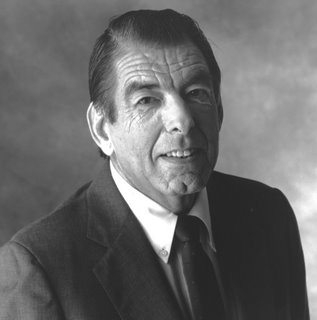
Breaking with WCCO just might be an acceptable change for one reason: Herb Carneal is winding down his career, and now works about as many innings as Juan Rincon each season. Maybe it’s best if the Twins essentially left Herb, rather than the other way around.
Carneal is so rarely part of summer’s soundtrack these days that sometimes a few batters have swung before a WCCO listener realizes Carneal is in the booth. It takes awhile to notice Carneal because, as former Detroit Tigers’ announcer Ernie Harwell was saying one afternoon a few summers back, good baseball announcers are like good umpires or someone capably driving through traffic.
Harwell was specifically chatting about Carneal.
"I think the real touch of art is making things look easy," Harwell was saying. "In America, everyone thinks he can build a fire, run a hotel, write a song and broadcast a baseball game. There are a lot of things you have to report on in a game, and I think Herb has a degree of ability that’s so consistent and so consistently high that you take him for granted."
Harwell, who did his last broadcast in 2002, and Carneal once traveled with their teams. Harwell favored Carneal as a well-read, fascinating dinner companion who was a student of economics. Yet Harwell struggled to summon an extraordinary anecdote about Carneal.
Bob San has one. After arriving in the U.S. from China at age 16 he found himself working as a janitor at the University of Minnesota while he put himself through college. San has been known to attend dozens of Twins games a season, but he reached college without ever seeing a baseball game.
Night time janitorial work at the U was boring, but a radio was always on. San’s American buddies listened to baseball. Carneal painted pictures as San mopped floors. One day San decided to catch a bus to Metropolitan Stadium to see what this game was all about.
“It was just like Herb Carneal described it,” San recalls. “Herb would talk about the 6-4-3 double play. And there it was. I understood everything perfectly.
 “It was a revelation. Like religion.
“Herb Carneal taught me baseball.”
Imagine explaining something your listener has never seen in their non-native language, and making the subject and jargon understandable. Praise doesn’t get any better than that. Carneal thought high praise might be elusive when he arrived reluctantly in Minneapolis at age 37. He was unknown in the market and uncertain how he would be received in the midwest.
The Richmond, Virginia native had worked in Baltimore since 1957 at a time when Hamm’s Brewery owned the Orioles’ advertising rights. Hamm’s acquired the Twins’ rights in ’61; Carneal was offered a job in the booth starting in ‘62.
It was a potentially great opportunity in a field that fascinated Carneal so much that after playing amateur baseball in Richmond and planning to enroll at Syracuse University he instead found himself knocking on the doors of Syracuse radio stations. One station offered him a job.
It is likely Carneal would be long forgotten had he been a good enough ballplayer to make the major leagues. As an announcer, he has enjoyed remarkable longevity in a single market and has received the National Baseball Hall of Fame’s Ford Frick Award, an honor he shares with 30 other broadcasters, including Harwell.
But the job is a challenge for a man of 82. It wasn’t long ago that Carneal would arrive at the Metrodome around 4:30 p.m., hours before his voice would reach into the night air thick with humidity to greet fans with, “Well, hi, everybody. This is Herb Carneal.”
The ritual would begin with Carneal creating the night’s big-league schedule by penciling teams in pairs onto a yellow legal pad. Computers spit out updated scores during the game, but he preferred this habit. Carneal would then descend steep flights of stairs into the Metrodome’s basement field and chat with players before climbing the steps to the booth to record some segments.
Between bites of a meal and conversation he would study press notes, but not too much. He said announcers who over-prepared tended to inappropriately cram all that knowledge into a broadcast.
Carneal would repeat the pattern on the road, which 20 years ago might mean a late-night getaway flight from Cleveland would take him and the Twins into Hamilton, Canada rather than Toronto. Toronto’s late-night noise curfews restricted early morning travel into the city, so the team would bus 50 miles to Toronto and sleepwalk into the hotel lobby at 5 a.m.
That schedule separates octogenarian announcers from younger counterparts, and Carneal always called himself a man who preferred routine. He said proper rest and a sensible diet smoothed out that lifestyle, which meant he abstained from green onions during the game – against the advice of Halsey Hall. Carneal’s broadcast partner from 1962-72, Hall enjoyed a press box diet of Muriel cigars and onions; he maintained onions were “scavengers of the stomach.”
It might be difficult for Twins’ fans to believe that it’s been nearly three decades since Halsey established residency in Section L, Grave 405 of Fort Snelling National Military Cemetery. So it’s understandable why fans think their team’s association with WCCO has been all too short.
But fans survived Harmon Killebrew signing with Kansas City and Rod Carew going to California; Tommy Herr’s arrival and Frankie Viola’s departure. Kirby Puckett’s death. A baseball team leaving a radio station isn’t the end of the world, and after all, Twins’ fans have been fortunate. Herb Carneal taught us baseball.
Jim Thielman covered the Minnesota Twins from 1977 to 1993. His book about the 1965 Minnesota Twins is available at www.cooloftheevening.com.
Standing on his Field of Dreams corn patch with the ghost of Joe Jackson leering at his movie wife, Kevin Costner is told the one constant through all the years has been baseball. Costner's 30-something Iowa screen character lives in Twins' Territory, so more precisely, the one constant for him has been Twins' broadcasts on WCCO radio.
The Twins have been heard on AM 830 since they arrived in Minnesota in 1961, despite coming close to leaving the station twice in the past 10 years. It was long anticipated this summer that their association with WCCO would end when rights expired at the end of 2006.

Teams divorcing venerable flagship radio stations is the trend in baseball.
For 52 years KMOX beamed St. Louis Cardinals games farther than, well, Minneapolis. The Cardinals jumped that 50,000-watt flagship station for 5,000-watt KTRS this season. It was such big news that two St. Louis television stations interrupted programming to carry the news conference.
It was not a first.
The Detroit Tigers left WJR three years ago. Next season, the Red Sox will move from WEEI to WRKO for $13 million, according to the Wall St. Journal. That's the largest such deal ever, and a meaningful one because local broadcast revenue is exempt from baseball's revenue sharing model. The Sox keep every sack of cash.
If the Twins move to KSTP, that would mark four teams to leave megawatt stations for signals with less reach. WCCO’s signal is a 50,000-watt fastball while KSTP’s electromagnetic waves have a knuckleball’s wobble.
What's the story? Well, the flagship station's value has been diluted. MLB.com streams games over the Internet. That and XM satellite radio mean a Seattle native in Miami can tune in every Mariners' game. This dilution was KMOX’s concern.
So KMOX proposed a revenue sharing plan that offered less guaranteed money but allowed the Cardinals to more than make up the difference in advertising sales. The Cards instead purchased a half stake in KTRS, a niche station looking to boost its Arbitron ratings and willing to bid higher for sports programming. The Cardinals gained more control over ad sales; XM radio plugs the holes in the KTRS network.
After XM Satellite Radio agreed last year to broadcast every major league game over the next 11 seasons for $650 million, subscribers vaulted from 2.5 million to 6 million. An XM survey found that 23 percent of those signed on primarily because of baseball. At a subscription fee of $12.95 per month, that's $120 million per year in new XM revenue directly attributable to baseball.
Radio is just playing catch up. About 15 years ago 80 percent of locally broadcast baseball was available with a set of rabbit ears. Today, pay TV carries about 80 percent of those games. The world changes.
Breaking with WCCO just might be an acceptable change for one reason: Herb Carneal is winding down his career, and now works about as many innings as Juan Rincon each season. Maybe it’s best if the Twins essentially left Herb, rather than the other way around.
Carneal is so rarely part of summer’s soundtrack these days that sometimes a few batters have swung before a WCCO listener realizes Carneal is in the booth. It takes awhile to notice Carneal because, as former Detroit Tigers’ announcer Ernie Harwell was saying one afternoon a few summers back, good baseball announcers are like good umpires or someone capably driving through traffic.
Harwell was specifically chatting about Carneal.
"I think the real touch of art is making things look easy," Harwell was saying. "In America, everyone thinks he can build a fire, run a hotel, write a song and broadcast a baseball game. There are a lot of things you have to report on in a game, and I think Herb has a degree of ability that’s so consistent and so consistently high that you take him for granted."
Harwell, who did his last broadcast in 2002, and Carneal once traveled with their teams. Harwell favored Carneal as a well-read, fascinating dinner companion who was a student of economics. Yet Harwell struggled to summon an extraordinary anecdote about Carneal.
Bob San has one. After arriving in the U.S. from China at age 16 he found himself working as a janitor at the University of Minnesota while he put himself through college. San has been known to attend dozens of Twins games a season, but he reached college without ever seeing a baseball game.
Night time janitorial work at the U was boring, but a radio was always on. San’s American buddies listened to baseball. Carneal painted pictures as San mopped floors. One day San decided to catch a bus to Metropolitan Stadium to see what this game was all about.
“It was just like Herb Carneal described it,” San recalls. “Herb would talk about the 6-4-3 double play. And there it was. I understood everything perfectly.
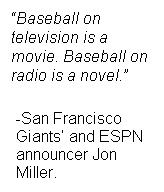 “It was a revelation. Like religion.
“Herb Carneal taught me baseball.”
Imagine explaining something your listener has never seen in their non-native language, and making the subject and jargon understandable. Praise doesn’t get any better than that. Carneal thought high praise might be elusive when he arrived reluctantly in Minneapolis at age 37. He was unknown in the market and uncertain how he would be received in the midwest.
The Richmond, Virginia native had worked in Baltimore since 1957 at a time when Hamm’s Brewery owned the Orioles’ advertising rights. Hamm’s acquired the Twins’ rights in ’61; Carneal was offered a job in the booth starting in ‘62.
It was a potentially great opportunity in a field that fascinated Carneal so much that after playing amateur baseball in Richmond and planning to enroll at Syracuse University he instead found himself knocking on the doors of Syracuse radio stations. One station offered him a job.
It is likely Carneal would be long forgotten had he been a good enough ballplayer to make the major leagues. As an announcer, he has enjoyed remarkable longevity in a single market and has received the National Baseball Hall of Fame’s Ford Frick Award, an honor he shares with 30 other broadcasters, including Harwell.
But the job is a challenge for a man of 82. It wasn’t long ago that Carneal would arrive at the Metrodome around 4:30 p.m., hours before his voice would reach into the night air thick with humidity to greet fans with, “Well, hi, everybody. This is Herb Carneal.”
The ritual would begin with Carneal creating the night’s big-league schedule by penciling teams in pairs onto a yellow legal pad. Computers spit out updated scores during the game, but he preferred this habit. Carneal would then descend steep flights of stairs into the Metrodome’s basement field and chat with players before climbing the steps to the booth to record some segments.
Between bites of a meal and conversation he would study press notes, but not too much. He said announcers who over-prepared tended to inappropriately cram all that knowledge into a broadcast.
Carneal would repeat the pattern on the road, which 20 years ago might mean a late-night getaway flight from Cleveland would take him and the Twins into Hamilton, Canada rather than Toronto. Toronto’s late-night noise curfews restricted early morning travel into the city, so the team would bus 50 miles to Toronto and sleepwalk into the hotel lobby at 5 a.m.
That schedule separates octogenarian announcers from younger counterparts, and Carneal always called himself a man who preferred routine. He said proper rest and a sensible diet smoothed out that lifestyle, which meant he abstained from green onions during the game – against the advice of Halsey Hall. Carneal’s broadcast partner from 1962-72, Hall enjoyed a press box diet of Muriel cigars and onions; he maintained onions were “scavengers of the stomach.”
It might be difficult for Twins’ fans to believe that it’s been nearly three decades since Halsey established residency in Section L, Grave 405 of Fort Snelling National Military Cemetery. So it’s understandable why fans think their team’s association with WCCO has been all too short.
But fans survived Harmon Killebrew signing with Kansas City and Rod Carew going to California; Tommy Herr’s arrival and Frankie Viola’s departure. Kirby Puckett’s death. A baseball team leaving a radio station isn’t the end of the world, and after all, Twins’ fans have been fortunate. Herb Carneal taught us baseball.
Jim Thielman covered the Minnesota Twins from 1977 to 1993. His book about the 1965 Minnesota Twins is available at www.cooloftheevening.com.
Monday, July 24, 2006
Links of the Day for 7/25/06
Powered by Intern Thomas
MLB.tv is one of the single greatest inventions known to mankind. Ok, ok, I’ll admit it that’s an overstatement. Why? Because MLB.tv, despite allowing me to watch my beloved Twins whenever I want out here in Washington, D.C. (and I mean whenever, since you can watch archived broadcasts), also brings some of the worst broadcasters in the world right to my desktop. I’m not trying to imply that Dick ‘n’ Bert are in Vin Scully’s class, but they aren’t Hawk Harrelson and DJ. These two make me pine for the dulcet tones of Jack Buck and the insight of Tim McCarver or even Joe Morgan. If there’s a hell, those two will be doing the play by play.
Now, there are many of you who probably don’t understand what I’m talking about. You’re the lucky ones; the ones who get to sit down on their couch, tune into FSN North or WFTC and just enjoy the game. You don’t know what it’s like. And you should be thankful that you and your family aren’t subjected to the travesty that is the White Sox broadcast team. So you might not believe me. You might even think I’m exaggerating. Well guess what? White Sox fans agree with me. So when Bert is on a circling jag, or going on about pitch counts, be glad you aren’t stuck watching MLB.tv and trying to decide how best to break things after you hear “the Hawk” yell “He GONE” or “PUT IT ON THE BOARD!!!! YESSS!!!!”
Now that I’m done ranting (bonus points if you can tell which inning of tonight’s game I started writing this), it’s time for some quick links:
MLB.tv is one of the single greatest inventions known to mankind. Ok, ok, I’ll admit it that’s an overstatement. Why? Because MLB.tv, despite allowing me to watch my beloved Twins whenever I want out here in Washington, D.C. (and I mean whenever, since you can watch archived broadcasts), also brings some of the worst broadcasters in the world right to my desktop. I’m not trying to imply that Dick ‘n’ Bert are in Vin Scully’s class, but they aren’t Hawk Harrelson and DJ. These two make me pine for the dulcet tones of Jack Buck and the insight of Tim McCarver or even Joe Morgan. If there’s a hell, those two will be doing the play by play.
Now, there are many of you who probably don’t understand what I’m talking about. You’re the lucky ones; the ones who get to sit down on their couch, tune into FSN North or WFTC and just enjoy the game. You don’t know what it’s like. And you should be thankful that you and your family aren’t subjected to the travesty that is the White Sox broadcast team. So you might not believe me. You might even think I’m exaggerating. Well guess what? White Sox fans agree with me. So when Bert is on a circling jag, or going on about pitch counts, be glad you aren’t stuck watching MLB.tv and trying to decide how best to break things after you hear “the Hawk” yell “He GONE” or “PUT IT ON THE BOARD!!!! YESSS!!!!”
Now that I’m done ranting (bonus points if you can tell which inning of tonight’s game I started writing this), it’s time for some quick links:
- This analysis of Joe Mauer’s swing is one of the coolest things ESPN has done in a really long time. I probably wouldn’t be so sick of their brand of sports “coverage” if they replaced most of their fluff with analysis like that.
- Brad Radke has confirmed that he is going to retire at the end of the year because of the pain in his shoulder. In and of itself, his turnaround has been remarkable, but doing it while pitching through a shoulder injury that requires off season surgery? Now that is gritty folks. (And now there is one more reason to win it all this year—it’s Rad Brad’s last chance.)
- I like this idea, I like it very much.
- Remember when Sandy Alomar Jr. was good? Me neither. Luckily he’s a White Sox now. Despite Kenny Williams managing to pick up such a veteran presence, I have to say that the Twins probably still have the edge when it comes to backstops.
Sunday, July 23, 2006
Links of the Day for 7/24/06
Powered by Intern Sam
The Twins’ astonishing turnaround that began in early June is continuing, and that’s undoubtedly making life very difficult for GM Terry Ryan, who has about a week left to decide whether it might be worth sacrificing a prospect or two (if there are any left in the system) in an effort to acquire the puzzle piece that might just put the team over the top and into the playoffs. (At this point, intelligent people can clearly disagree on whether the Twins are buyers or sellers as the July 31 deadline approaches.)
If baseball occurred in a one-year vacuum, this would be a much easier decision, but Ryan will also need to be thinking well into the future. Livan Hernandez is available, and the Twins desperately need another reliable starting pitcher (although many observers are saying that they’re more likely to go after an outfielder.) But what if Washington wants, say, Denard Span or Matt Moses? That might be a higher price tag than Ryan’s willing to pay, but with Brad Radke’s admission to the beat writers this weekend that he really is hanging it up after this season, that starting pitcher becomes important not only for the current stretch run, but for next season as well.
Speaking of the dearth of starting pitching on our favorite ball club, someone should get to work on a catchphrase on the order of “Spahn and Sain and pray for rain,” partly because it would make the Twins seem old school, but mostly because everybody loves a good catchphrase. Intern Sam took a stab at it, but damned if he can get anything to rhyme with Liriano. Hmmmm… Frisco and Johan and pray for… um, a wonton? A really big pointy wonton that can bring down the roof at the Dome? Needs work, I know. Anyone else care to give it a shot? Scott Baker may not be working out the way everyone had hoped, but apparently, some good things are going on down in Rochester. If the Twins fall out of contention between now and the end of August, it’s a good bet we’ll be seeing Matt Garza and Glen Perkins at the Dome when rosters expand in September. Not that this means anything in particular, but the Twins have moved up to 6th in ESPN’s “Power Rankings” of all 30 MLB teams. Just two months ago, they were 22nd on that same list. ESPN also points out that Minnesota has the third-best run differential in all of baseball for July, having scored 23 more runs than they’ve given up. As much as we Minnesotans love tradition, and as fine a song as “We’re Gonna Win Twins” surely is, we can perhaps agree that it doesn’t really go very far in the intimidation department. It’s not exactly the Superbowl Shuffle, is what we’re saying. More like a toothpaste commercial than a fight song, really, and that’s a shame, because we are nothing if not a state fond of praising our sports heroes in song.
If baseball occurred in a one-year vacuum, this would be a much easier decision, but Ryan will also need to be thinking well into the future. Livan Hernandez is available, and the Twins desperately need another reliable starting pitcher (although many observers are saying that they’re more likely to go after an outfielder.) But what if Washington wants, say, Denard Span or Matt Moses? That might be a higher price tag than Ryan’s willing to pay, but with Brad Radke’s admission to the beat writers this weekend that he really is hanging it up after this season, that starting pitcher becomes important not only for the current stretch run, but for next season as well.
While Intern Sam would never think of suggesting that we throw the old darling on the scrap heap entirely, wouldn’t it be something special if, instead of running out on the field to the strains of what sound like the Lawrence Welk singers, the Twins tried something like this? We’re just saying…
Saturday, July 22, 2006
Links for the Weekend
Powered by Intern Sharkey
I’m sorry if this weekend’s Links don’t live up to your expectations. I’m still recovering from my night on the town with Mike James.
I’m sorry if this weekend’s Links don’t live up to your expectations. I’m still recovering from my night on the town with Mike James.
- Another day, another dubya. Silva got slapped around, but it didn’t matter, as the Twins pounded out 14 runs on 18 hits.
- Rondell White had another big night, continuing his sudden resurgence. For The Love of the Game runs down what White means to this team here.
- The White Sox and Yankees also dropped their games last night. The Twins are now 3 and 1 behind in the loss column, respectively. Are we starting to believe?
- Nick Punto continues to be a key part of the Twins’ lineup. Will writes on Punto’s new found extra-base power (and overall hot bat) here.
- If we play our cards right, maybe we won’t have to wait until 2010 for that new stadium.
- Woody Paige lays out his case for Halladay over Liriano in the Cy Young race. An airtight argument, to be sure.
- And finally, remember to exercise your right to vote.
Tuesday, July 18, 2006
Where is The Cavalry?
Powered by Twins Geek
For the umpteenth time this season, the Twins called up a player from Rochester, and that player immediately provided a boost to the Twins offense. Jason Tyner had six hits in his first twelve at-bats and drove in five runs, including the game-winning run in the bottom of the tenth inning on Saturday.
It’s a great story, but Tyner isn’t really a prospect, since prospects aren’t 29 years old. That doesn’t mean Tyner can’t be a major league player. His track record suggests that he would be a very capable fourth outfielder on most major league teams, especially if he can recapture some of that speed that produced 31 stolen bases with Tampa Bay in 2001.
A more significant question is whether he can be a major league starting centerfielder. It would behoove the Twins to get an answer to that question when Jason Kubel’s knees quit barking. Moving Tyner to center field would get Kubel back in the lineup, and give them a chance to evaluate whether Tyner can be their center fielder in 2007.
But Jason Tyner isn’t going to provide an extended offensive boost that the Twins will need in Hunter’s absence. That’s going to fall to the other weekend call-up, Rondell White. White was supposed to be a better hitter than Hunter before the season started, and had the history and stats to back that claim up. His season-long struggles were unforeseen, a mystery that may have been solved by the realization that his surgically repaired shoulder was still a concern.
The mystery was solved, but the problem still needed to be fixed. The Twins passed over White several times to give him the full twenty days he could squeeze out of his injury rehabilitation time in Rochester, but finally relented when Stewart was placed on the Disabled List. It isn’t clear from the minor league reports whether White has made the necessary adjustments to allow his shoulder to catch up with fastballs again, but the home run this weekend is an optimistic sign.
The Twins should certainly hope so. Their cupboard at the minor league level is nearly bare, as seen by the recalls of Tyner and 27-year-old Josh Rabe. The Twins tentative position in the playoff race probably limits Terry Ryan’s desire to part with the prospects necessary for a big name at the trade deadline. Bounceback second halves by under-performing veterans, like White and Carlos Silva, will need to fuel any large leap in performance.
Tampa Bay: Jae Seo (2-7, 5.07 ERA)
- 2005: 8-2, 90.1 IP, 59 K, 2.59 ERA
- 2006: 87 IP, 93 H, 57 K, 34 BB, 16 HR
- Just acquired a couple of weeks ago in a trade with the Dodgers. He’s pitched much better in his three starts with the Rays.
- Can struggle with control. Prior to this year, he was with the Mets where he was effective without great stuff. It may take awhile for the AL to catch up with him.
Minnesota: Brad Radke (7-7, 4.97 ERA)
- 2005: 9-12, 201.2 IP, 117 K, 4.04 ERA
- 2006: 112.1 IP, 148 H, 60 K, 26 BB, 18 HR
- Relies primarily on an average fastball and a good changeup; also throws a curve.Why don’t you give up on a struggling veteran pitcher with an ERA over 7 in May? Because there is a reason he’s a veteran pitcher – he knows how to make adjustments. Radke’s adjustment has apparently been made. In June, Radke’s ERA was 2.09
For the umpteenth time this season, the Twins called up a player from Rochester, and that player immediately provided a boost to the Twins offense. Jason Tyner had six hits in his first twelve at-bats and drove in five runs, including the game-winning run in the bottom of the tenth inning on Saturday.
It’s a great story, but Tyner isn’t really a prospect, since prospects aren’t 29 years old. That doesn’t mean Tyner can’t be a major league player. His track record suggests that he would be a very capable fourth outfielder on most major league teams, especially if he can recapture some of that speed that produced 31 stolen bases with Tampa Bay in 2001.
A more significant question is whether he can be a major league starting centerfielder. It would behoove the Twins to get an answer to that question when Jason Kubel’s knees quit barking. Moving Tyner to center field would get Kubel back in the lineup, and give them a chance to evaluate whether Tyner can be their center fielder in 2007.
But Jason Tyner isn’t going to provide an extended offensive boost that the Twins will need in Hunter’s absence. That’s going to fall to the other weekend call-up, Rondell White. White was supposed to be a better hitter than Hunter before the season started, and had the history and stats to back that claim up. His season-long struggles were unforeseen, a mystery that may have been solved by the realization that his surgically repaired shoulder was still a concern.
The mystery was solved, but the problem still needed to be fixed. The Twins passed over White several times to give him the full twenty days he could squeeze out of his injury rehabilitation time in Rochester, but finally relented when Stewart was placed on the Disabled List. It isn’t clear from the minor league reports whether White has made the necessary adjustments to allow his shoulder to catch up with fastballs again, but the home run this weekend is an optimistic sign.
The Twins should certainly hope so. Their cupboard at the minor league level is nearly bare, as seen by the recalls of Tyner and 27-year-old Josh Rabe. The Twins tentative position in the playoff race probably limits Terry Ryan’s desire to part with the prospects necessary for a big name at the trade deadline. Bounceback second halves by under-performing veterans, like White and Carlos Silva, will need to fuel any large leap in performance.
On The Hill
Tampa Bay: Jae Seo (2-7, 5.07 ERA)
- 2005: 8-2, 90.1 IP, 59 K, 2.59 ERA
- 2006: 87 IP, 93 H, 57 K, 34 BB, 16 HR
- Just acquired a couple of weeks ago in a trade with the Dodgers. He’s pitched much better in his three starts with the Rays.
- Can struggle with control. Prior to this year, he was with the Mets where he was effective without great stuff. It may take awhile for the AL to catch up with him.
Minnesota: Brad Radke (7-7, 4.97 ERA)
- 2005: 9-12, 201.2 IP, 117 K, 4.04 ERA
- 2006: 112.1 IP, 148 H, 60 K, 26 BB, 18 HR
- Relies primarily on an average fastball and a good changeup; also throws a curve.Why don’t you give up on a struggling veteran pitcher with an ERA over 7 in May? Because there is a reason he’s a veteran pitcher – he knows how to make adjustments. Radke’s adjustment has apparently been made. In June, Radke’s ERA was 2.09
Monday, July 17, 2006
7 Reasons to Care about the Devil Rays.
“Did you know they have a baseball team in Tampa Bay? It’s true.”
- TwinsGeek.com, nearly every time it mentioned the Devil Rays since 2002
It’s been a running gag for years for a franchise that has become a running gag for major league baseball.
The deck was stacked against the Devil Rays from the beginning. They are an expansion team that plays in an indoor monstrosity (always a solid way to hold down revenue). Their fan base consists of retirees (who are always known for their free-spending ways) and they share that fan base with another expansion team. As the finishing touch, they were placed in the American League East, a division with the top two spending teams in major league baseball. Ok, guys - ready, set, compete!
Not too surprisingly, they’ve floundered. They tried building around speed. They tried signing aging sluggers. They bought a coaching legend. They’ve still never had a .500 record. In fact, they’ve never finished within 10 games of .500. They’ve finished last in their division every year of their existence except one.
This year they’re on pace to continue every one of those depressing trends. And yet, there are reasons for Tampa Bay’s fans to start banging their walkers in excitement. There are also at least seven reasons for Twins fans to care about the Devil Rays, starting with…
7. The Sale – With all the success that the Rays’ franchise had had, you’ll be shocked to hear that they were owned by a cheapskate owner named Vince Naimoli. Whoulda thunk? But in May of 2004, a huge stake in the franchise was bought by a new ownership group led by 45-year-old Wall Street investor and “baseball junkie” Stuart Steinberg.
6. They’re trading aggressively – Steinberg inherited a minor league system loaded with prospects, but a front office loaded with stagnation, so he cleaned house. New GM Andrew Friedman has been far more aggressive than his predecessor in trading players while they still have some value for other teams, mostly for young pitching. Within the last month he’s traded Joey Gathright (who was crowded out of TB’s talented outfield) to the Royals and Aubrey Huff (who becomes a free agent this offseason) to the Astros for three talented pitching prospects.
5. They would be an ideal trading partner for the Twins – The Devil Rays wouldn’t make a great trading partner for the kind of deal that is most commonly mentioned on sports radio around here – dumping Kyle Lohse, Shannon Stewart or Torii Hunter - but they’re almost a perfectly complimentary organization. The Twins minor leagues are loaded with young pitching that the Devil Rays need, and the Devil Rays organization is loaded with top-shelf hitting talent that the Twins could use. Could the Twins pry away infielder B.J Upton for Boof Bonser and Kevin Slowey? That’s not the kind of deal that happens at the trading deadline, but the two teams are a great fit for an offseason deal.
4. They’re rebuilding like the Twins – Ok, maybe “re”-building isn’t correct, since it implies there was something built in the first place. But Tampa Bay is no longer following in the footsteps of the Baltimore Orioles and Toronto Blue Jays, who have thrown around money without a plan so they can finish in third place behind two teams spending at least $40 million more. The Devil Rays are trying to build a core of youngsters who will become stars, and then fill in the gaps, much like the Twins did in 1999 and 2000.
3. Their outfield is fun to watch – The Devil Rays outfield has a chance to become special, like when the Royals outfield consisted of a young Johnny Damon, Jermaine Dye and Carlos Beltran. In center field is 24-year-old Rocco Baldelli who has 30 home run/30 stolen base potential. In right field is 24-year-old Carl Crawford, who already has 13 home runs and 32 stolen bases this year. (By the way, the Rays have contracts with both players through at least 2010). They should be joined later this year by baseball’s #1 prospect Delmon Young, who is just 20 years old and will likely end up being better than either of them.
2. Their AAA Club is reminiscent of Animal House – Young and their minor league talent might have a chance to shine if Dean Wormer doesn’t catch him and the rest of the Deltas violating their double-secret probation. So far this year, Upton has been arrested for DUI, Elijah Dukes has been suspended for 15 games for an “unspecified action”, and Young has been suspended for fifty games for throwing his bat at an umpire.
1. They’ve got Don Zimmer – How can you not love 75-year-old Don Zimmer, who is a little like a mascot for Major League Baseball, complete with muppet-like features. “Zim” left the Yankees staff after the 2004 season and became a Senior Baseball Advisor for the Devil Rays. He doesn’t travel with the team, which is a shame, because he has some history with baseball in our state. In 1965, Jim Kaat struck him out to deliver the Twins first American League pennant. Second, it was during his time playing with the St. Paul Saints that he was hit in the head by a pitched ball, which resulted in the celebrated metal plate in his head.
Hmmm. Or maybe he’s not so disappointed that he can’t come back to visit…
Tampa Bay: Scott Kazmir (10-6, 3.27 ERA)
- 2005: 10-9, 186 IP, 174 K, 3.77 ERA
- 2006: 115.2 IP, 108 H, 125 K, 44 BB, 12 HR
- He’s having his breakout season and getting plenty of attention for it. That’s unusual for a player in a small market, but New York Mets fans closely watch Kazmir because the Mets traded him two years ago in one of the few deals where Tampa’s management looked like geniuses. As the Mets search high and low for pitching, Kazmir’s success (which resulted in an All-Star appearance last week) is salt in Mets fans’ wounds.
- Kazmir is 22 years old and is second in the AL in strikeouts. Looks like the Rays have their future ace.
Minnesota: Francisco Liriano (10-2, 2.12 ERA)
- 2005: 1-2, 24.2 IP, 33 K, 5.70 ERA
- 2006: 93.1 IP, 68 H, 108 K, 26 BB, 8 HR
- Everyone thought he’d be good, but this is just silly. He’s the best pitcher in the American League right now, and nobody’s particularly close, not even Johan Santana. If the second half of the year is anything like the first, the only thing that can keep the Cy Young away from him is some quibbles about how many innings he’s pitched.
- His last start was not good. If it points to a second half where he’s human, the Twins are done. No pressure, kid.
- Please, god, keep this kid healthy.
- TwinsGeek.com, nearly every time it mentioned the Devil Rays since 2002
It’s been a running gag for years for a franchise that has become a running gag for major league baseball.
The deck was stacked against the Devil Rays from the beginning. They are an expansion team that plays in an indoor monstrosity (always a solid way to hold down revenue). Their fan base consists of retirees (who are always known for their free-spending ways) and they share that fan base with another expansion team. As the finishing touch, they were placed in the American League East, a division with the top two spending teams in major league baseball. Ok, guys - ready, set, compete!
Not too surprisingly, they’ve floundered. They tried building around speed. They tried signing aging sluggers. They bought a coaching legend. They’ve still never had a .500 record. In fact, they’ve never finished within 10 games of .500. They’ve finished last in their division every year of their existence except one.
This year they’re on pace to continue every one of those depressing trends. And yet, there are reasons for Tampa Bay’s fans to start banging their walkers in excitement. There are also at least seven reasons for Twins fans to care about the Devil Rays, starting with…
7. The Sale – With all the success that the Rays’ franchise had had, you’ll be shocked to hear that they were owned by a cheapskate owner named Vince Naimoli. Whoulda thunk? But in May of 2004, a huge stake in the franchise was bought by a new ownership group led by 45-year-old Wall Street investor and “baseball junkie” Stuart Steinberg.
6. They’re trading aggressively – Steinberg inherited a minor league system loaded with prospects, but a front office loaded with stagnation, so he cleaned house. New GM Andrew Friedman has been far more aggressive than his predecessor in trading players while they still have some value for other teams, mostly for young pitching. Within the last month he’s traded Joey Gathright (who was crowded out of TB’s talented outfield) to the Royals and Aubrey Huff (who becomes a free agent this offseason) to the Astros for three talented pitching prospects.
5. They would be an ideal trading partner for the Twins – The Devil Rays wouldn’t make a great trading partner for the kind of deal that is most commonly mentioned on sports radio around here – dumping Kyle Lohse, Shannon Stewart or Torii Hunter - but they’re almost a perfectly complimentary organization. The Twins minor leagues are loaded with young pitching that the Devil Rays need, and the Devil Rays organization is loaded with top-shelf hitting talent that the Twins could use. Could the Twins pry away infielder B.J Upton for Boof Bonser and Kevin Slowey? That’s not the kind of deal that happens at the trading deadline, but the two teams are a great fit for an offseason deal.
4. They’re rebuilding like the Twins – Ok, maybe “re”-building isn’t correct, since it implies there was something built in the first place. But Tampa Bay is no longer following in the footsteps of the Baltimore Orioles and Toronto Blue Jays, who have thrown around money without a plan so they can finish in third place behind two teams spending at least $40 million more. The Devil Rays are trying to build a core of youngsters who will become stars, and then fill in the gaps, much like the Twins did in 1999 and 2000.
3. Their outfield is fun to watch – The Devil Rays outfield has a chance to become special, like when the Royals outfield consisted of a young Johnny Damon, Jermaine Dye and Carlos Beltran. In center field is 24-year-old Rocco Baldelli who has 30 home run/30 stolen base potential. In right field is 24-year-old Carl Crawford, who already has 13 home runs and 32 stolen bases this year. (By the way, the Rays have contracts with both players through at least 2010). They should be joined later this year by baseball’s #1 prospect Delmon Young, who is just 20 years old and will likely end up being better than either of them.
2. Their AAA Club is reminiscent of Animal House – Young and their minor league talent might have a chance to shine if Dean Wormer doesn’t catch him and the rest of the Deltas violating their double-secret probation. So far this year, Upton has been arrested for DUI, Elijah Dukes has been suspended for 15 games for an “unspecified action”, and Young has been suspended for fifty games for throwing his bat at an umpire.
1. They’ve got Don Zimmer – How can you not love 75-year-old Don Zimmer, who is a little like a mascot for Major League Baseball, complete with muppet-like features. “Zim” left the Yankees staff after the 2004 season and became a Senior Baseball Advisor for the Devil Rays. He doesn’t travel with the team, which is a shame, because he has some history with baseball in our state. In 1965, Jim Kaat struck him out to deliver the Twins first American League pennant. Second, it was during his time playing with the St. Paul Saints that he was hit in the head by a pitched ball, which resulted in the celebrated metal plate in his head.
Hmmm. Or maybe he’s not so disappointed that he can’t come back to visit…
On the Hill
Tampa Bay: Scott Kazmir (10-6, 3.27 ERA)
- 2005: 10-9, 186 IP, 174 K, 3.77 ERA
- 2006: 115.2 IP, 108 H, 125 K, 44 BB, 12 HR
- He’s having his breakout season and getting plenty of attention for it. That’s unusual for a player in a small market, but New York Mets fans closely watch Kazmir because the Mets traded him two years ago in one of the few deals where Tampa’s management looked like geniuses. As the Mets search high and low for pitching, Kazmir’s success (which resulted in an All-Star appearance last week) is salt in Mets fans’ wounds.
- Kazmir is 22 years old and is second in the AL in strikeouts. Looks like the Rays have their future ace.
Minnesota: Francisco Liriano (10-2, 2.12 ERA)
- 2005: 1-2, 24.2 IP, 33 K, 5.70 ERA
- 2006: 93.1 IP, 68 H, 108 K, 26 BB, 8 HR
- Everyone thought he’d be good, but this is just silly. He’s the best pitcher in the American League right now, and nobody’s particularly close, not even Johan Santana. If the second half of the year is anything like the first, the only thing that can keep the Cy Young away from him is some quibbles about how many innings he’s pitched.
- His last start was not good. If it points to a second half where he’s human, the Twins are done. No pressure, kid.
- Please, god, keep this kid healthy.
Links of the Day for 7/17/06
Powered by Intern Tom
All those injuries kind of put a damper on the Twins taking three of four from the Indians, didn’t it? While they managed to cut the White Sox lead in the Wild Card to only 6.5 games, it still seems like an insurmountable deficit now that the Twins’ outfield consists of Cuddyer and a lot of players who probably shouldn’t be patrolling the outfield.
Then again, as some have pointed out, so long as Kubel’s knees don’t keep him out of the DH spot, the Twins are still trotting out their 1-5 hitters and with Jason Bartlett in the 9 hole, they still have a lineup better than the one they began the season with. And, it seems, they only have to wait two weeks for Torii to get back. Of course, since that means he can’t play until July 31st, it effectively removes the option of trading him this year.
So what should the Twins do about Torii? Well, Jim Souhan thinks they should definitely pick up his option now. I’m still not sure how he manages to conclude that a stress fracture eliminates all of the other options, but it looks to me that the Twins could still trade Torii in the offseason (after he shows he’s over the fracture in the last two months of the season) or let him walk if they so chose. Then again, there’s a reason that Deadspin spotlighted him in their ongoing “Why Your Hometown Columnist Sucks” feature.
And now some quick links:
All those injuries kind of put a damper on the Twins taking three of four from the Indians, didn’t it? While they managed to cut the White Sox lead in the Wild Card to only 6.5 games, it still seems like an insurmountable deficit now that the Twins’ outfield consists of Cuddyer and a lot of players who probably shouldn’t be patrolling the outfield.
Then again, as some have pointed out, so long as Kubel’s knees don’t keep him out of the DH spot, the Twins are still trotting out their 1-5 hitters and with Jason Bartlett in the 9 hole, they still have a lineup better than the one they began the season with. And, it seems, they only have to wait two weeks for Torii to get back. Of course, since that means he can’t play until July 31st, it effectively removes the option of trading him this year.
So what should the Twins do about Torii? Well, Jim Souhan thinks they should definitely pick up his option now. I’m still not sure how he manages to conclude that a stress fracture eliminates all of the other options, but it looks to me that the Twins could still trade Torii in the offseason (after he shows he’s over the fracture in the last two months of the season) or let him walk if they so chose. Then again, there’s a reason that Deadspin spotlighted him in their ongoing “Why Your Hometown Columnist Sucks” feature.
And now some quick links:
- I have to say that this comparison by the folks over at 10,000 Takes is an apt one. Hopefully Stewart is the only Twin whose plane goes down over the Sea of Japan.
- Is it just me, or is Bert going to be begging Terry Ryan to sign this pitcher when he comes over from Japan? If the Twins do, we’ll never have to listen to him complain about pitch counts anymore. (And we might get to see a gyroball!)
- Finally, Peter Gammons was released from the hospital today, and he’s starting his rehab assignment. I, for one, can’t wait for ESPN’s only competent baseball analyst to get back on his feet and back to Baseball Tonight where he belongs.
Sunday, July 16, 2006
Erosion
Powered by Twins Geek
Is this how it ends? Not with a dive into the turf, or with a leap over the baggy, but quietly, from a routine outfield sprint? Or maybe it ended more spectacularly last July in Boston, only we didn’t realize it, or didn’t want to realize it.
When Torii Hunter pulled up lame on Saturday night with what was eventually diagnosed as a stress fracture in his foot, it may have been the last straw the ends his career with the Minnesota Twins. He could get healthy and finish the year with the Twins – they certainly will have trouble trading him prior to the July 31st trade deadline given his questionable health – but it greatly reduced the number of scenarios in which Hunter could return in 2007.
That didn’t appear to be a question prior to the latest injury. There had been a deafening silence concerning trade rumors surrounding Hunter, both locally and nationally. The Twins, needing a solid centerfielder and right-handed power, looked poised to keep Hunter, whether it was by renewing the $2 million contract option they have or working towards a long-term deal. Hunter was having another year where he looked to provide exceptional defense, 25+ home runs and a .270 batting average (while occasionally making Twins fans pull out their hair). And the Twins payroll, assuming Brad Radke really retires, could have accommodated Hunter’s salary.
Instead, there are probably too many questions. The Twins must be wondering if Hunter’s surgically repaired left ankle will ever truly be healthy. Can they nurse it through a 162 game season with some rest (something Hunter and the Twins have not done this season)? And can they gamble $12 million next year on the answer?
But the Twins aren’t the only ones who have questions. Hunter has consistently said his heart is in Minnesota, but he’s always been cautious about playing on that damnable Metrodome turf. It’s certainly possible that the unnatural surface helped cause the stress fracture, and he may not experience the same problems if he plays eighty-one home games on grass. This injury might make his regrettable decision for him. There’s no amount of money a team can offer to replace a half dozen years of a players’ career.
It is a lose/lose situation for everyone. Hunter will face unanswerable questions in his first offseason as a free agent (and probably his last opportunity for a huge contract). The Twins will need to address a position that is thin both inside and outside of their organization. A fracture so small that x-rays were inconclusive could lead to a schism between the team and their most popular player. It’s a situation that nobody wants.
Least of all the fans. For several years, Hunter was able to negate the sterility of the Metrodome with his slugging, catching and smiling. It appears that again, the Metrodome will have the last laugh. Not by producing a spectacular flameout, but by utilizing quiet, debilitating erosion.
Is this how it ends? Not with a dive into the turf, or with a leap over the baggy, but quietly, from a routine outfield sprint? Or maybe it ended more spectacularly last July in Boston, only we didn’t realize it, or didn’t want to realize it.
When Torii Hunter pulled up lame on Saturday night with what was eventually diagnosed as a stress fracture in his foot, it may have been the last straw the ends his career with the Minnesota Twins. He could get healthy and finish the year with the Twins – they certainly will have trouble trading him prior to the July 31st trade deadline given his questionable health – but it greatly reduced the number of scenarios in which Hunter could return in 2007.
That didn’t appear to be a question prior to the latest injury. There had been a deafening silence concerning trade rumors surrounding Hunter, both locally and nationally. The Twins, needing a solid centerfielder and right-handed power, looked poised to keep Hunter, whether it was by renewing the $2 million contract option they have or working towards a long-term deal. Hunter was having another year where he looked to provide exceptional defense, 25+ home runs and a .270 batting average (while occasionally making Twins fans pull out their hair). And the Twins payroll, assuming Brad Radke really retires, could have accommodated Hunter’s salary.
Instead, there are probably too many questions. The Twins must be wondering if Hunter’s surgically repaired left ankle will ever truly be healthy. Can they nurse it through a 162 game season with some rest (something Hunter and the Twins have not done this season)? And can they gamble $12 million next year on the answer?
But the Twins aren’t the only ones who have questions. Hunter has consistently said his heart is in Minnesota, but he’s always been cautious about playing on that damnable Metrodome turf. It’s certainly possible that the unnatural surface helped cause the stress fracture, and he may not experience the same problems if he plays eighty-one home games on grass. This injury might make his regrettable decision for him. There’s no amount of money a team can offer to replace a half dozen years of a players’ career.
It is a lose/lose situation for everyone. Hunter will face unanswerable questions in his first offseason as a free agent (and probably his last opportunity for a huge contract). The Twins will need to address a position that is thin both inside and outside of their organization. A fracture so small that x-rays were inconclusive could lead to a schism between the team and their most popular player. It’s a situation that nobody wants.
Least of all the fans. For several years, Hunter was able to negate the sterility of the Metrodome with his slugging, catching and smiling. It appears that again, the Metrodome will have the last laugh. Not by producing a spectacular flameout, but by utilizing quiet, debilitating erosion.
On the Hill
Tampa Bay: Tim Corcoran (4-0 1.57 ERA)
- 2005: 0-0, 22.2 IP, 13 K, 5.96 ERA
- 2006 (AAA): 5-1, 37.2 IP, 32 K, 1.91 ERA
- 2006: 23 IP, 19 H, 15 K, 9 BB, 1 HR
- Last year he was a reliever, and this year he was shelled in spring training, starting the year in AAA-Durham. Something good happened there. The 28-year-old had a great start and was called up in June to work in the Rays’ bullpen. A week later he was inserted in the rotation, where he’s continued to thrive.
Minnesota: Scott Baker (2-5, 6.06 ERA)
- 2005: 3-3, 54.2 IP, 32 K, 3.35 ERA
- 2006 (AAA): 3-2, 49.1 IP, 41 K, 2.92 ERA
- 2006: 49 IP, 66 H, 41 K, 8 BB, 10 HR
- Welcome back, Scott.
- “Keep the ball down” is a mantra to pitching coach Rick Anderson, and Baker didn’t do it his first time around, as evidenced by those hit and home run numbers. It looks like he was able to do that at Rochester, or maybe hitters there couldn’t make him pay like they could here. We’ll find out soon.
Links of the Day for 7/17/06
Powered by Intern Sam
Okay, first off, in the interest of full disclosure, we should mention that Intern Sam is putting together this post a full day in advance of its appearance on the GameDay site, due to circumstances beyond his control that will require him to be the hell out of this insane oven of a city on Sunday, attending to family business while sipping sangria in a lounge chair on the shores of beautiful Lake Hubert.
So nowhere in this filing will you find the very latest up-to-the-minute info on Torii Hunter’s ankle, Shannon Stewart’s plantar fascism (whatever – Bert can’t pronounce it either,) Jason Kubel’s exploded knee, Terry Tiffee’s newly arrived offspring, or Ron Gardenhire’s impending coronary. However, because we love you, we have put together a helpful Google News search which we believe should be most effective in locating any pertinent new injury tidbits. You’re welcome.
Okay, first off, in the interest of full disclosure, we should mention that Intern Sam is putting together this post a full day in advance of its appearance on the GameDay site, due to circumstances beyond his control that will require him to be the hell out of this insane oven of a city on Sunday, attending to family business while sipping sangria in a lounge chair on the shores of beautiful Lake Hubert.
So nowhere in this filing will you find the very latest up-to-the-minute info on Torii Hunter’s ankle, Shannon Stewart’s plantar fascism (whatever – Bert can’t pronounce it either,) Jason Kubel’s exploded knee, Terry Tiffee’s newly arrived offspring, or Ron Gardenhire’s impending coronary. However, because we love you, we have put together a helpful Google News search which we believe should be most effective in locating any pertinent new injury tidbits. You’re welcome.
- Apparently, Terry Ryan is still looking to acquire a veteran power bat, and he has not been in the least deterred by Exhibits Batista, White, and Sierra. Welcome to the family, Erubiel Durazo…
- The news this week that the Twins will be cutting ties with WCCO radio this offseason and taking its radio rights in-house (with games to air on KSTP 1500 beginning in 2007) has not apparently sat well with the demographic Intern Sam likes to refer to as “Crazy Old Minnesota Coots.”
If there’s anything positive to be gained from the changeover from the fan’s perspective, it might be that teams often use flagship changes as an excuse to rejigger their broadcast team. With a little luck, we might finally get a play-by-play man who gives the score occasionally and spends more time describing the game than he does laughing hysterically at nothing and hollering “TOUCH ‘EM AAAAAAAWWWLLL” in reference to quartz countertops.
As for all the hand-wringing over the once-mighty (and strong signaled) WCCO losing the Twins after lo these many years, everyone should probably relax. It’s not as if KSTP is some nowhere station no one can hear – it’s a 50,000-watt station (admittedly without the long-range nighttime reach of WCCO,) family-owned and with a long history in the area. And while some Twins fans may not be altogether enamored of their team being on a station known primarily for right-wing talk, you’ve gotta love the idea of The Mischke Broadcast serving as a lead-in to the old ballgame… - Twins Ballpark 2010 (not affiliated with the Twins) is soliciting fan input as to what the team’s priorities ought to be in designing their new home, and so far, it seems that what worked for the Wild might just work for the Twins as well: embracing the area’s sporting history as a way of tapping into the sometimes subsumed passion for Minnesota sports.
- The Twins are not a perfect organization, as we all know, but on occasion, it’s nice to be reminded of what a truly pathetic baseball franchise looks like, and how it differs from a basically successful team with a miserly and somewhat disengaged ownership. Intern Sam grew up a Phillies fan, and he is here to tell you that absolutely nothing about this sordid tale came as any kind of surprise to him or anyone else who spent their childhood in the 700 level of old Veterans’ Stadium.
- Finally, from the boys at The Brushback comes news that the Chicago Cubs actually intend to show some life before the calendar year ends. Punching someone in the head doesn’t actually sound particularly productive in a baseball sense, but at this point, we suspect that the long-suffering Wrigley faithful would take it.
Saturday, July 15, 2006
Links for the Weekend
Powered by Intern Sharkey
This weekend’s links brought to you by Francisco Liriano’s glove…
Enjoy the ESPYs, everyone. See you next week.
This weekend’s links brought to you by Francisco Liriano’s glove…
- You know, it really is a shame that WCCO is losing its Twins flagship status. That means we’re going to be deprived of future brilliance in investigative reporting.
- A look back at the first half of the season, courtesy of the Phat Phree, home of the internet’s finest preseason predictions.
- Speaking of the internet, we all know how complicated and confusing this new technology seems to the layperson. Thankfully, we have Senator Ted Stevens to explain to all of us how our internets work.
- My crack research staff has informed me of the following: this article appeared in Friday morning’s New York Times. The Auburn admissions department received Gary Russell’s application at 12:38 PM.
- Barry Bonds is back in a spot of trouble. For the best coverage of the ongoing story, I would suggest Only Baseball Matters.
- For anyone still waiting for the Tigers to fade, history is not on your side.
- And finally, your Audio Daily Double. The Target Center will be basking in the glory of MJ this winter. No, not that MJ. The Mike James MJ. Chad Hartman had the thrilling announcement live on his show, and you can find the audio here and here. Definitely worth twenty minutes of your time. Among other topics, Mike discusses losing at Golden Tee, betting on black, and cheap prostitutes. Also, anyone that can explain to me why James’ pregnant wife is “sleeping with the enemy” wins a free paragraph in next weekend’s links.
Enjoy the ESPYs, everyone. See you next week.
Thursday, July 13, 2006
The Right Way™
Powered by Twins Geek
This weekend the Twins will begin their quest to recapture the title of American League Central’s resident dynasty of the “oughts”, and will do so against the AL Central’s dynasty of the nineties. Popular perception for Cleveland’s recent domination of the division is that they did it The Right Way™, by developing young players and signing them to long-term contracts. That perception is half right.
It’s true that Cleveland’s talented teams were largely home grown. It’s also true that they further developed the practice of offering long-term, guaranteed contracts to promising young players in return for a hometown discount. On the other hand, some of those contracts, like those for Carlos Baerga, Kenny Lofton or Roberto Alomar, eventually became loadstones around their neck. And the practice of giving away countless prospects, without acquiring the ace starter they seemingly needed, will likely haunt Indian fans until their next chance at a world championship.
Regardless, the front office fielded dominant teams from 1995-2001 and the Indians won six division titles. But guess what else Cleveland did from 1995 – 2001?
Cleveland started spending in 1992, and kept increasing their payroll until 2002. This was almost entirely fueled by their new ballpark, Jacobs Field, which opened in 1994. Previously, they had never spent more than $20 million on payroll. By the end of their run, they had more than quadrupled that number.
Pop quiz, hotshot. What’s the difference between a three-year streak and a seven-year dynasty?
Answer: Revenue.
The Twins are attempting to do now what Cleveland did in the late 90’s – renew a dynasty as one generation of players replaces another. Those departures weren’t due to the player development side. They were driven by limitations surrounding marketing and sales. The Twins have relied on the same revenue sources they relied on in the nineties: namely, attendance in a crappy indoor stadium and TV contract in a market that is monopolized by a single regional sports channel.
The new ballpark is one attempt by the Twins to change that paradigm, and the contract negotiations with WCCO are another. Their failed attempt at Victory Sports was yet one more. Whether you think the Twins are justified or not in these endeavors, whether you think the Twins are competent in their effort in these areas, and whether or not you think some moral high ground exists surrounding these issues, you can't argue with one point:
Winning consistently takes money. It's the gas that fuels continued success.
So understand that you can't have it both ways. You can't complain about the Twins being small market, or never signing a big free agent, and also complain about the passed stadium bill, or wax nostalgic about your history with a particular AM frequency. They're two sides of the same coin.
But Carl is RICH!! He's a billionaire, for Chrissakes! He can't take that money with him - why not spend an extra $20 million??!!??"
Indeed, he is rich. And he probably could shake half that much just out of the cushions of his couch. Of course, he could also give that $20 million to the fine arts. Or to homeless shelters. Or maybe children's cancer research. Hmmm....maybe we should let him decide what to do with his money.
Cleveland did it The Right Way™ all right - they used the success of their team to harvest additional sources of revenue, and used that revenue to continue to fuel the success of their team. It's a cycle that feeds itself until the talent dries up. At which point, you scale back, stock the minor leagues, rinse, lather and repeat.
As for our favorite small market team, the Twins success for this year will rest on the shoulders of Terry Ryan, the coaching staff and the farm system. But the Twins success for this decade and the next is resting on the efforts of the rest of the organization, like President Dave St. Peter. This realization is Cleveland's true lesson for small market teams.
This weekend the Twins will begin their quest to recapture the title of American League Central’s resident dynasty of the “oughts”, and will do so against the AL Central’s dynasty of the nineties. Popular perception for Cleveland’s recent domination of the division is that they did it The Right Way™, by developing young players and signing them to long-term contracts. That perception is half right.
It’s true that Cleveland’s talented teams were largely home grown. It’s also true that they further developed the practice of offering long-term, guaranteed contracts to promising young players in return for a hometown discount. On the other hand, some of those contracts, like those for Carlos Baerga, Kenny Lofton or Roberto Alomar, eventually became loadstones around their neck. And the practice of giving away countless prospects, without acquiring the ace starter they seemingly needed, will likely haunt Indian fans until their next chance at a world championship.
Regardless, the front office fielded dominant teams from 1995-2001 and the Indians won six division titles. But guess what else Cleveland did from 1995 – 2001?

Cleveland started spending in 1992, and kept increasing their payroll until 2002. This was almost entirely fueled by their new ballpark, Jacobs Field, which opened in 1994. Previously, they had never spent more than $20 million on payroll. By the end of their run, they had more than quadrupled that number.
Pop quiz, hotshot. What’s the difference between a three-year streak and a seven-year dynasty?
Answer: Revenue.
The Twins are attempting to do now what Cleveland did in the late 90’s – renew a dynasty as one generation of players replaces another. Those departures weren’t due to the player development side. They were driven by limitations surrounding marketing and sales. The Twins have relied on the same revenue sources they relied on in the nineties: namely, attendance in a crappy indoor stadium and TV contract in a market that is monopolized by a single regional sports channel.
The new ballpark is one attempt by the Twins to change that paradigm, and the contract negotiations with WCCO are another. Their failed attempt at Victory Sports was yet one more. Whether you think the Twins are justified or not in these endeavors, whether you think the Twins are competent in their effort in these areas, and whether or not you think some moral high ground exists surrounding these issues, you can't argue with one point:
Winning consistently takes money. It's the gas that fuels continued success.
So understand that you can't have it both ways. You can't complain about the Twins being small market, or never signing a big free agent, and also complain about the passed stadium bill, or wax nostalgic about your history with a particular AM frequency. They're two sides of the same coin.
But Carl is RICH!! He's a billionaire, for Chrissakes! He can't take that money with him - why not spend an extra $20 million??!!??"
Indeed, he is rich. And he probably could shake half that much just out of the cushions of his couch. Of course, he could also give that $20 million to the fine arts. Or to homeless shelters. Or maybe children's cancer research. Hmmm....maybe we should let him decide what to do with his money.
Cleveland did it The Right Way™ all right - they used the success of their team to harvest additional sources of revenue, and used that revenue to continue to fuel the success of their team. It's a cycle that feeds itself until the talent dries up. At which point, you scale back, stock the minor leagues, rinse, lather and repeat.
As for our favorite small market team, the Twins success for this year will rest on the shoulders of Terry Ryan, the coaching staff and the farm system. But the Twins success for this decade and the next is resting on the efforts of the rest of the organization, like President Dave St. Peter. This realization is Cleveland's true lesson for small market teams.
Wednesday, July 12, 2006
Looking for Hope
Powered by Twins Geek
Can the Twins can really make a run at the nine game deficit that they face for a playoff spot? With two weeks left to determine if they’re going to be buyers or sellers at the trade deadline, answering that question isn’t just fun, it’s necessary. So, let’s look at the remaining 76 games and see if the schedule maker is going to help them out…
Good news: 22 games versus the White Sox and Tigers, 13 of which are at home. It’s not often that a team is excited to play nearly a third of their remaining games versus the two best teams in the major leagues. For this team, it’s their best hope.
Bad news: Fourteen games versus Cleveland. They’re a much better team than they appear in the standings, having outscored their opponents by 45 runs this year. They also have a trio of left-handed pitchers that could give the Twins fits.
Good news: Eleven games versus Kansas City, seven of which are at home. The Royals are playing better, but we’ll see how motivated they are as they sniff that upcoming five-month vacation.
Bad news: Six games versus the Yankees and Red Sox on the road. Strangely, they’re not on the same road trip. The Twins face the Yankees Labor Day weekend, and travel to Fenway Sept 19-21.
Good news: Seven games versus the Devil Rays. Did you know Tampa Bay has a baseball team? It’s true. Though it’s worth noting that the Twins have been beat-up by the D-Rays in recent years.
Coin Flip: Seven games versus Baltimore on the road. Four versus Toronto at home. Three versus the Athletics at home. Six games versus Texas.
The schedule has more good news than bad for a team trying to make up ground. The schedule leans towards home games, is heavy on teams below .500, and leaves lots of chances to play the teams the Twins are chasing. In addition, the White Sox and the Tigers still have most of their head-to-head match-ups (12 games) remaining on their schedule. The opportunity is still there for the Twins this year, if they care to seize it.
"If he hits .400, I’ll buy him a car."
- Torii Hunter, on what he'll do if Joe Mauer hits .400 (as reported by the Kansas City Star)
"A Hyundai."
- Hunter, when asked what kind of car
We were warned about this “catchers wear down” thing, and we may have seen the first signs of it as the All-Star Break approached. Chairman Mauer went 3-18 on the last road trip, though two of those three hits were home runs. More telling were some plays not made behind the plate, such as some wild pitches that shouldn’t have been, and a clean miss of a one-hop throw that would have assasinated a Royal in Kansas City.
This probably says more about our expectations than Mauer’s performance. He was fighting a stomach ailment, hitting third, playing catcher on the road in July in Kansas City and Texas, and dealing with the attention that comes from his first All-Star selection. Oh, and he’s 23 years old. Given all that, it’s amazing that we can categorize a four game lapse as a “slump”. That’s how other-wordly his performance has been so far this year. 2005: 18-5, 202 IP, 143 K, 3.79 ERA
2006: 109.2 IP, 127 H, 73 K, 31 BB, 17 HR
Came in 4th for the Cy Young award last year. He was that good.
You never want to see bigger numbers next to “H” than you seen next to “IP”. For the first time in his career, Lee has been really hittable, and too many of those hits have been home runs. After a very tough May, the Tribe thought he was tipping his pitches, and he had a fair amount of success in June.
However, in his last two starts versus Cincinnati and the Yankees, he had very mediocre outings, giving up four earned runs in six innings in each start.
Gave up five runs in five innings in a 6-5 loss versus Minnesota on 5/23. 2005: 1-2, 24.2 IP, 33 K, 5.70 ERA
2006: 88.1 IP, 63 H, 102 K, 23 BB, 5 HR
Everyone thought he’d be good, but this is just silly. He’s the best pitcher in the American League right now, and nobody’s particularly close, not even Johan. If the second half of the year is anything like the first, the only thing that can keep the Cy Young away from him is some quibbles about how many innings he’s pitched. Please, god, keep this kid healthy.
Can the Twins can really make a run at the nine game deficit that they face for a playoff spot? With two weeks left to determine if they’re going to be buyers or sellers at the trade deadline, answering that question isn’t just fun, it’s necessary. So, let’s look at the remaining 76 games and see if the schedule maker is going to help them out…
Good news: 22 games versus the White Sox and Tigers, 13 of which are at home. It’s not often that a team is excited to play nearly a third of their remaining games versus the two best teams in the major leagues. For this team, it’s their best hope.
Bad news: Fourteen games versus Cleveland. They’re a much better team than they appear in the standings, having outscored their opponents by 45 runs this year. They also have a trio of left-handed pitchers that could give the Twins fits.
Good news: Eleven games versus Kansas City, seven of which are at home. The Royals are playing better, but we’ll see how motivated they are as they sniff that upcoming five-month vacation.
Bad news: Six games versus the Yankees and Red Sox on the road. Strangely, they’re not on the same road trip. The Twins face the Yankees Labor Day weekend, and travel to Fenway Sept 19-21.
Good news: Seven games versus the Devil Rays. Did you know Tampa Bay has a baseball team? It’s true. Though it’s worth noting that the Twins have been beat-up by the D-Rays in recent years.
Coin Flip: Seven games versus Baltimore on the road. Four versus Toronto at home. Three versus the Athletics at home. Six games versus Texas.
The schedule has more good news than bad for a team trying to make up ground. The schedule leans towards home games, is heavy on teams below .500, and leaves lots of chances to play the teams the Twins are chasing. In addition, the White Sox and the Tigers still have most of their head-to-head match-ups (12 games) remaining on their schedule. The opportunity is still there for the Twins this year, if they care to seize it.
Trusting Our Eyes
"If he hits .400, I’ll buy him a car."
- Torii Hunter, on what he'll do if Joe Mauer hits .400 (as reported by the Kansas City Star)
"A Hyundai."
- Hunter, when asked what kind of car
This probably says more about our expectations than Mauer’s performance. He was fighting a stomach ailment, hitting third, playing catcher on the road in July in Kansas City and Texas, and dealing with the attention that comes from his first All-Star selection. Oh, and he’s 23 years old. Given all that, it’s amazing that we can categorize a four game lapse as a “slump”. That’s how other-wordly his performance has been so far this year.
So let people quote the numbers about how few catchers have won batting titles, just like they used to tell us how few 6’ 4” catchers had any kind of baseball career. While they’re at it, they should probably add some trivia demonstrating how difficult it is to hit .400. It’s fine to understand the history, but my eyes tell me I’m watching something different.
Status Report
Cleveland: You might never see another team that’s 16.5 games out of the playoff race and is this good. They’ve actually outscored their opponents by 45 runs this year, and yet they’re 40-47 and in fourth place of the AL Central. They’ve even started to trade players away to contenders, looking towards next year, which still looks bright.
Minnesota: After a memorable, if not historical, hot streak, they stumbled on their last road trip before the All-Star Break. They’re 47-39, 11 games behind the Tigers in the AL Central.
On The Hill
Cleveland: Cliff Lee (8-6 4.76 ERA)
Minnesota: Francisco Liriano (10-1, 1.83 ERA)
Links of the Day for 7/13/06
Powered by Intern Snarky
What do baseball fans do during the all star break? Surely we can't spend our time reading articles like this and this?
How about some mid-season grades? Jesse at Twinkie Town and Nick N. and Nick and Nick's have assigned grades to the players. It's actually pretty scary how similar their grades are. The largest deviation between them is their assessment of Torrii and Lew's performance to date.
Are you losing interest in your twinkies? Team Assessments given by the Twins themselves are, not surprisingly, upbeat- we're still in this! If you're not convinced by Kelly Thesier's article, Twins Territory and Sethspeaks have given us some reasons to continue to watch. Mlb.com has also given us an excuse to watch - the shear greatness of Joe.
I suppose if you're reading this, your the type of fan who'd tune in even if Ron Coomer was our only all-star.
Oh, and there was a game yesterday. We won. I bet Mark Redman will sleep a lot better knowing that the AL has home field advantage in the World Series this year.
What do baseball fans do during the all star break? Surely we can't spend our time reading articles like this and this?
How about some mid-season grades? Jesse at Twinkie Town and Nick N. and Nick and Nick's have assigned grades to the players. It's actually pretty scary how similar their grades are. The largest deviation between them is their assessment of Torrii and Lew's performance to date.
Are you losing interest in your twinkies? Team Assessments given by the Twins themselves are, not surprisingly, upbeat- we're still in this! If you're not convinced by Kelly Thesier's article, Twins Territory and Sethspeaks have given us some reasons to continue to watch. Mlb.com has also given us an excuse to watch - the shear greatness of Joe.
I suppose if you're reading this, your the type of fan who'd tune in even if Ron Coomer was our only all-star.
Oh, and there was a game yesterday. We won. I bet Mark Redman will sleep a lot better knowing that the AL has home field advantage in the World Series this year.
Monday, July 10, 2006
Links of the Day for 7/11/06
Powered by Intern Thomas
- It’s official—Fransisco Liriano is an All Star! After Jose Contreras bowed out with a bit of “Pedroitis”, Ozzie Guillen named the Cisco Kid, otherwise known as the “biggest All Star snub” to the team. Whether or not that will push him back in the rotation is a question that has yet to be answered. Hopefully, the game falls on the same day that he normally throws between starts, so that the Indians get to enjoy the experience of futile flailing at Fransisco’s filthy fastball (and slider—did you enjoy reading that alliteration as much as I enjoyed writing it?).
- If you’re free tomorrow around 1pm (CST), make sure you tune in to Bud Selig’s Live chat from the All Star game festivities. Before you do that, make sure you can come up with some quality questions for Budzilla, which you can submit here. If you need some help thinking of something to Stump the Selig, check out Deadspin for some ideas. Personally, I’d like to know what he’d do if the All Star game ended in a tie again this year.
- Oh Ruben, we hardly knew ye.
- Finally, if you’re like me, you took in the World Cup Final yesterday. And what a final it was, ending when the Italians defeated the French on penalty kicks. That being said, it was all overshadowed by French star Zinedine Zidane head butting an Italian player in extra time. Surprised? Horrified? Laughing out loud? Well, as the saying goes, don’t judge a man before you’ve walked a mile in his shoes. Or in this case, until you’ve played a flash game starring him. (Move Zidane with your mouse and click to head butt the Italians).
Sunday, July 09, 2006
Links of the Day for 7/10/06
Powered by Intern Sam
- Halfway through the season, and we’re already running out of ways to describe Joe Mauer’s prowess. But even as we become (unfairly?) accustomed to Mauer’s dominance, there’s still little question that we’re seeing a performance that ranks with the all-time great seasons by a catcher. At the halfway mark, Mauer is on pace for the best batting average by a catcher in major league history; is threatening the all-time on-base mark set by Mickey Cochrane in 1933; and is even on pace to shatter Mike Piazza’s record of 201 hits in a season. And even with all that, there still seem to be Twins fans who would like to see Mauer moved to another position on the flimsy notion that it would extend his career. What that idea misses, of course, is that Mauer is also one of the outstanding defensive catchers of his generation, and he handles his pitching staff as well as any catcher currently in the majors. Even if he never again approaches the offensive level he has achieved in the first half of 2006, his value behind the plate should continue to thrill Twins fans for years to come.
- Speaking of people named Mauer, those with a sentimental bent will doubtless enjoy this online package put together by the Strib…
- How good has Francisco Liriano been since joining the starting rotation? So good that people in New York have actually heard of him, and are writing articles about him without even once speculating as to whether he will wind up playing for the Yankees or the Red Sox three years down the line. Since there is considerable evidence to suggest that people in New York are actually unaware that the western border of the U.S. is not on the Pennsylvania-Ohio state line, this is a remarkable measure of Liriano’s accomplishments.
- One of the more under-covered aspects of the Twins’ new ballpark story has been the role of the “ballpark authority” which will oversee the planning and development of the park, and which will eventually be in charge of the venue. Late last week, Minnesota State Auditor Pat Awada made a surprising announcement that she would (unilaterally, as far as anyone can tell) assume an oversight role with the authority, acting as a “watchdog” for taxpayers.
Depending on whom you ask, Awada’s insertion of herself into the process was either a stunning overreach by an ambitious politician running for reelection, or a much needed reminder to the Twins that the state intends to insure that its investment is protected. Of course, there’s no state money in the project, so Awada would likely be treading on shaky legal ground if she attempted to intervene in any significant way.
The upshot of those legal questions is hard to assess: if the cynics are right, Awada has no real intention of making herself a part of the ballpark effort and is merely hoping to garner a few votes from the Taxpayers’ League crowd; but if she really does start making noise over specific aspects of the design and construction of the park, more than a few sparks could fly. Stay tuned... - Over at the PiPress, Gordon Wittenmeyer (who, for Intern Sam’s money, has established himself as the best baseball writer in the Twin Cities,) is writing what looks like an excellent series examining the precipitous decline in the number of African-American baseball players. Among the highlights of Sunday’s opening salvo, which follows Torii Hunter’s efforts to spark an inner-city baseball revival, is the controversial assertion that Americans simply don’t have the interest in racial equality that we once did:
"Through the civil rights movement, I think a lot of critics of American race relations have seen the black experience in that same trajectory,'' [Douglas] Hartmann said. "You have this high point in the '50s and '60s where Americans as a nation realized the faults of slavery and Jim Crow and stood up against that and started creating policies to sort of reverse those trends. The effects are you start to see improvements in employment and income and education status.
"And starting sometime in the '80s, as people are willing to spend less money on those specific programs, you start to see gains African-Americans have made at least stagnate if not decline.''
What did Major League Baseball do at this time? Nothing, really. Which might be part of the issue. - On a less serious note, LaVelle E. Neal III is getting a wee bit tired of the All-Star Game and all its attendant silliness.
- In minor league news, the whole bobblehead thing is officially out of control. Way, way, way out of control.
Links of the Weekend
- Twins phenom and FreeDarko favorite Francisco Lirano put together another ho-hum start Saturday night: 7 innings, 4 hits, 3 walks, 8 strikeouts. Those seven innings re-qualified Kid K for the league’s ERA lead, giving the leaderboard a Minnesota flavor.
- Of course, it wasn’t enough to land Liriano in the Tuesday’s All-Star Game. Nick and Nick chime in on the flawed selection process here.
- frightwig writes an excellent bit here running down some of the Twins’ All-Star history. The immortal Ron Coomer takes home the crown for worst Twins All-Star of all time.
- Friday night may not have been the most pleasant of games for Twins fans, but it did feature the debut of rookie Pat Neshek. Sporting one of the strangest deliveries in the league and a history of two-inning saves, it will be interesting to see how he’s used. You can get to know him here.
- Roger’s latest Minor League Report is up. I always make a bee-line for New Britain’s section to check on pitchers Matt Garza and Kevin Slowey, both of whom continue to pitch well.
- From the Continuing Items Department: minor league teams have the best promotions.
- And finally, the All Star companion: the MLB “They’re Still Playing? Team”.
Enjoy the Celebrity Softball Game!
Subscribe to:
Posts (Atom)

 Posts
Posts


